

Skip to Navigation Skip to Content

Ask A Vet: How Can I Deworm Feral Cats?

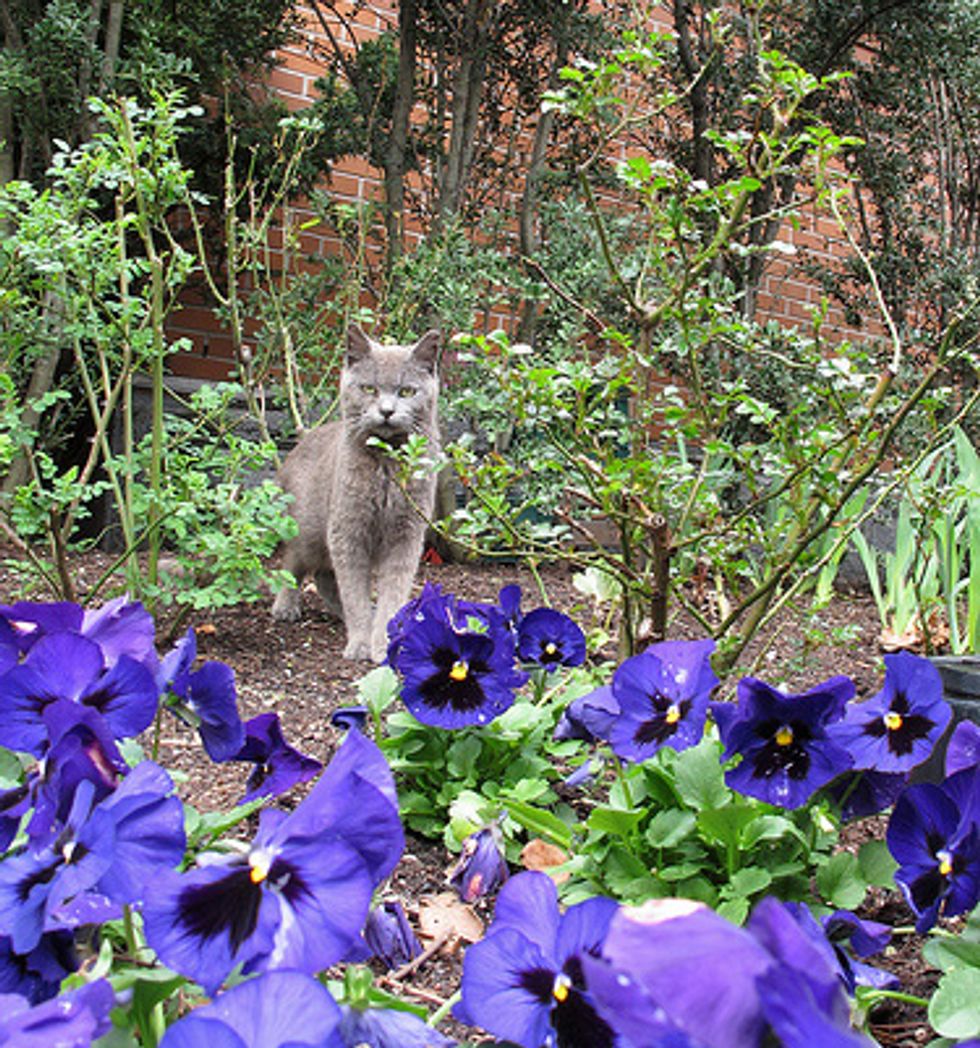
Photo via Kristine Paulus on Flickr.com

Welcome to our weekly 'Ask a Vet from the SF SPCA' feature on 7x7.com. They've enlisted their Co-President, Dr. Jennifer Scarlett, to answer your questions every week. Got a question for Dr. Scarlett? Ask away in the comments!

Q: I take care of two feral outdoor cats. I want to give them tapeworm meds because they probably have worms, but my vet won't sell me the tapeworm meds unless he sees the cat! Is there anything I can buy over the counter that I can slip into the feral cats' food to treat them?
 
A: If your cats (or dogs) have what looks like pieces of rice stuck on the hair around their bum then Viola! They have tapeworms.  And if they have tapeworms they must have been exposed to fleas. All in all, tapeworms are the nicest worms to have—well nicer than the blood sucking hook and round worms. Over time, tapeworm infestations will lead to weight loss which is why some people have turned to them to help shed a few pounds–yuck—and not without risk.

Ok, now back to your cats. Here’s the good news on the tapeworms: you can buy a tapeworm (doesn’t work for rounds and hookworms) dewormer called Praziquantal over the counter and circumvent a visit to the vet. The bad news is that it’s just as (or more) important to keep the flea count down on your ferals and there’s no easy way to do it. I have witnessed full grown cats die from severe anemia from heavy, chronic flea infestations. At this time, the best longer-acting flea preventatives are topical (there is a safe, long-acting, effective oral medication for dogs but only a short acting product for cats) and I don’t know how you could apply topical products on truly feral cats without confinement and/or sedation. So, go ahead and deworm them but if you noticed weight or hair loss you may need to trap and take them in for a good check up—under sedation of course!
 
Thanks so much for keeping an eye on these ferals.  We, and many shelters have a TNR program (Trap-Neuter-Release) wherein we rely on the community and amazingly dedicated volunteers to identify feral colonies, let us know about them and spay and neuter the bunch.  TNR is a critical component to reducing the number of homeless cats and keeping new generations of kittens out of shelters. Bravo to you and everyone who has a hand in TNR. Learn more about our Community Cats program and how you can get involved.

While we can’t answer all of the questions here, please feel free to ask us during our Friday Twitter Ask the Vet Chat. Follow us at @SFPSCA. If your animal’s problem is of an immediate nature, please call your vet or you can reach the SF SPCA at 415-554-3030 to make an appointment.


Some further information to help you do the RIGHT thing. ALL the required laws that you need to deal with this problem are already in place and have been for decades most everywhere.

Cats listed in THE TOP 100 WORST INVASIVE-SPECIES OF THE WORLD in the "Global Invasive-Species Database": http://www.issg.org/database/species/ecology.asp?si=24&fr=1&sts=sss

Cats are _NOT_ exempt from invasive-species laws.

IT IS YOUR CIVIC AND MORAL RESPONSIBILITY TO DESTROY ANY INVASIVE-SPECIES WHEN FOUND AWAY FROM SAFE CONFINEMENT AND OUT IN A NON-NATIVE HABITAT. In fact, it is against the law to NOT destroy an invasive-species on-site. Since cats are genetically engineered through selective-breeding and no longer have ANY native habitat ANYWHERE on earth, these laws include cats. This is precisely how they are dealt with on my own land, destroyed by using any and all humane methods** (see note).

For an example of how invasive-species laws are properly followed and enforced: It is highly illegal for a person to transport an African Cichlid fish species to just the other side the road if you catch one in the canals of the Everglades when fishing. THEY MUST BE DESTROYED ON-SITE. Yet Cichlids are often kept as pets, that's how they wrongly got into the canals to begin with. There are hefty fines in place for anyone found transporting these invasive-species alive if caught in the wild. (Interestingly, these Cichlids are FAR FAR LESS damaging to the environment and all other native wildlife than ANY cat.)

All of this much to the dismay of criminally irresponsible and psychotic cat-lovers who are desperately trying to raise these invasive-species cats to some absurd level of "Community Cats". If they do that then I'll just raise "Community Pet Piranha" and release them in all your lakes and pools, or "Community Pet Black-Mambas" and release them in all your backyards and parks, then claim the exact same protections for them as cat-advocates want for their invasive-species cats. It'd only be fair! Are you starting to see just how absurd and ludicrous these cat-advocates are yet?

** (Though to be perfectly honest, considering how cats cruelly torture and destroy all other animals by ripping the skins off of live animals or disemboweling them for slowly dying and twitching cats' play-toys (not even using them for food), I'm not sure why cats should be given the privilege of a humane death. I've been drawn to many animal screams in my woods to find their cats shredding another animal to death; which I had to then quickly put that animal out of its misery, torment, and suffering caused by that cat. Lucky for those I found so fast from their screams. Other wildlife that I'd find days later had died a slow and agonizing death from wounds after being shredded by their cats. I guess I'm just more humane than all cat-lovers and their cats, that's why their cats get shot and die instantly instead of equitably and justifiably tortured to death. If cat-advocates want REAL justice for their cats then any cat found outdoors would have to be cruelly tortured to death the same way their cats cruelly torture all other animals -- something that I couldn't do. Maybe that's why TNR-advocates don't mind that their cats slowly suffer to death by means of "attrition" -- by disease, attacks, exposure, starvation, road-kill, etc., on ad-infinauseum.)

While it only kills fleas ON the cat, and doesn't prevent re-infestation, Capstar pills are good for ferals. They can be ground and put in tuna, for example. Program is the only orally administered monthly flea control I know of, but it can also be put in food (though it's a little trickier because it is pretty goopy and icky). I've used both for ferals successfully.

Both Capstar and Program are by prescription, but if you have a relationship with your vet, you should be able to buy them.

While it only kills fleas ON the cat, and doesn't prevent re-infestation, Capstar pills are good for ferals. They can be ground and put in tuna, for example. Program is the only orally administered monthly flea control I know of, but it can also be put in food (though it's a little trickier because it is pretty goopy and icky). I've used both for ferals successfully.

Both Capstar and Program are by prescription, but if you have a relationship with your vet, you should be able to buy them.

While it only kills fleas ON the cat, and doesn't prevent re-infestation, Capstar pills are good for ferals. They can be ground and put in tuna, for example. Program is the only orally administered monthly flea control I know of, but it can also be put in food (though it's a little trickier because it is pretty goopy and icky). I've used both for ferals successfully.

Both Capstar and Program are by prescription, but if you have a relationship with your vet, you should be able to buy them.