


With 2010 about to fade into our rearview, it's time to pay our respects to a year that produced its share of very good movies, but precious few great ones. It was a year dominated by memorable performances in supporting roles – Christian Bale as a crack-addicted burnout in The Fighter, John Hawkes as a rough-and-tumble hillbilly in Winter's Bone, Jacki Weaver as an insidious matriarch in the overlooked Australian import Animal Kingdom – and the visual bravura of Inception, Scott Pilgrim vs. the World and TRON: Legacy.
It was also a year highlighted by the emergence of Jesse Eisenberg, whose turn as cold-blooded Facebook co-founder Mark Zuckerberg powered The Social Network, and the continued reign of Leonardo DiCaprio, the emotional anchor of two movies, Inception and Martin Scorsese's Shutter Island, that tested the elasticity of our imaginations. And, finally, it was the year of the documentary, spearheaded by filmmakers like Alex Gibney (Client 9: The Rise and Fall of Eliot Spitzer), Berkeley High graduate Amir Bar-Lev (The Tillman Story) and San Francisco native Charles Ferguson (Inside Job), whose incisive wit informed some of the screen's most fascinating and infuriating true-life stories.
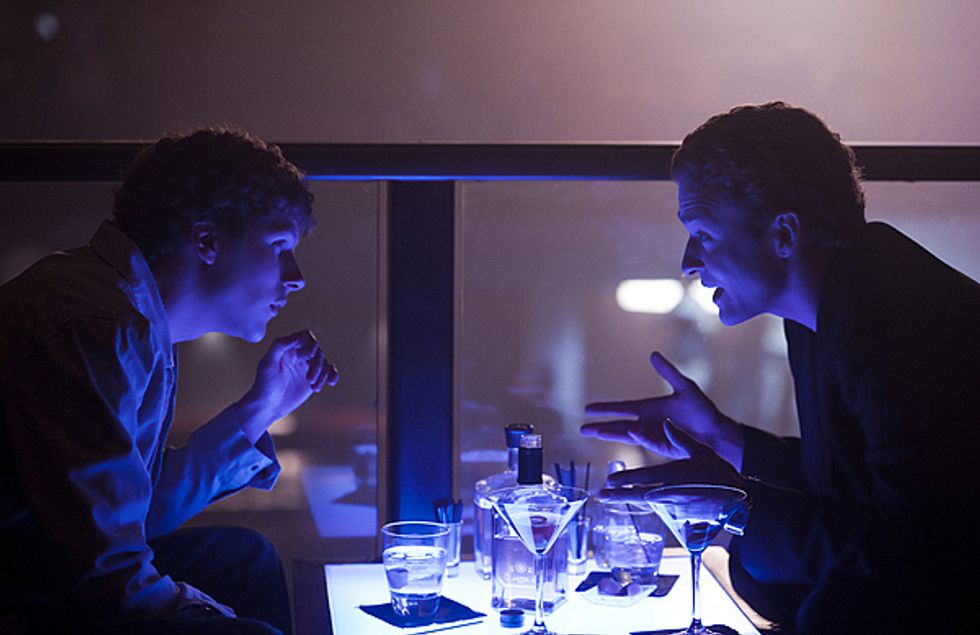
1. The Social Network
Until recently, Mark Zuckerberg, the man most responsible for the world’s largest online clubhouse, managed to remain largely anonymous outside his circle of business associates, who should never be confused with his buddies. David Fincher’s The Social Network changed all that. Never recruited to join any of Harvard’s famously discriminating final clubs, the Facebook co-founder is determined to create his own club, where he not only belongs, but wields absolute power. Did Zuckerberg draw his tireless motivation to succeed from repeated rejections? Was he a misfit looking to fit? What The Social Network makes clear is that Zuckerberg’s former partners, like the girls who couldn't wait to get away, came to see him as a condescending,
status-obsessed geek who holds a grudge. And in some ways Fincher, who has portrayed serial killers both fictional (Seven) and real (Zodiac), has never presented a character as soulless as the implacable cyberpunk. Whether the portrait is accurate is hard to know, but Fincher and Sorkin have forcefully stated their case.

2. Winter's Bone
Winner of the Grand Jury Prize at this year's Sundance Film Festival, Debra Granik's subtle, suspenseful thriller finds Jennifer Lawrence (The Burning Plain) braving the frigid Ozarks and their criminal underworld as she searches for her father, a methamphetamine cooker gone missing after his latest arrest. If the premise sounds familiar – a gritty slice of rural Americana embedded in the fabric of a grim coming-of-age fable – Granik's understated execution and Lawrence's fierce, unaffected performance effortlessly transcend caricature and cliché. So too does John Hawkes (Me and You and Everyone We Know), as her father's ruthless brother, in a chilling supporting turn sure to earn him overdue Oscar consideration.
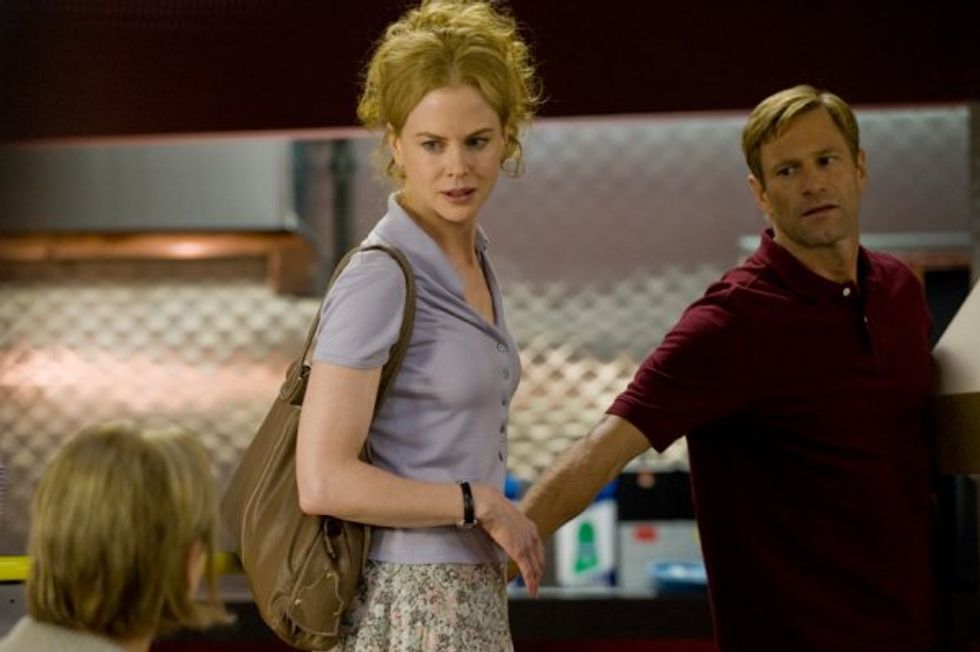
3. Rabbit Hole
John Cameron Mitchell (Hedwig and the Angry Inch) directs Nicole Kidman and Aaron Eckhart, playing a couple coping with the recent loss of their four-year-old son, in this thoughtful, cautiously upbeat adaptation of David Lindsay-Abaire’s Pulitzer Prize-winning play. Rather than wallowing in their misery, which threatens to drag them down but not the movie, Rabbit Hole focuses on the healing processes that divide parents so consumed by individual grief that neither is attuned to the other’s needs. It's not easy to watch, this moving portrait of lives ruined by an unkind twist of fate, but even at its most agonizing, the movie sounds no false notes.
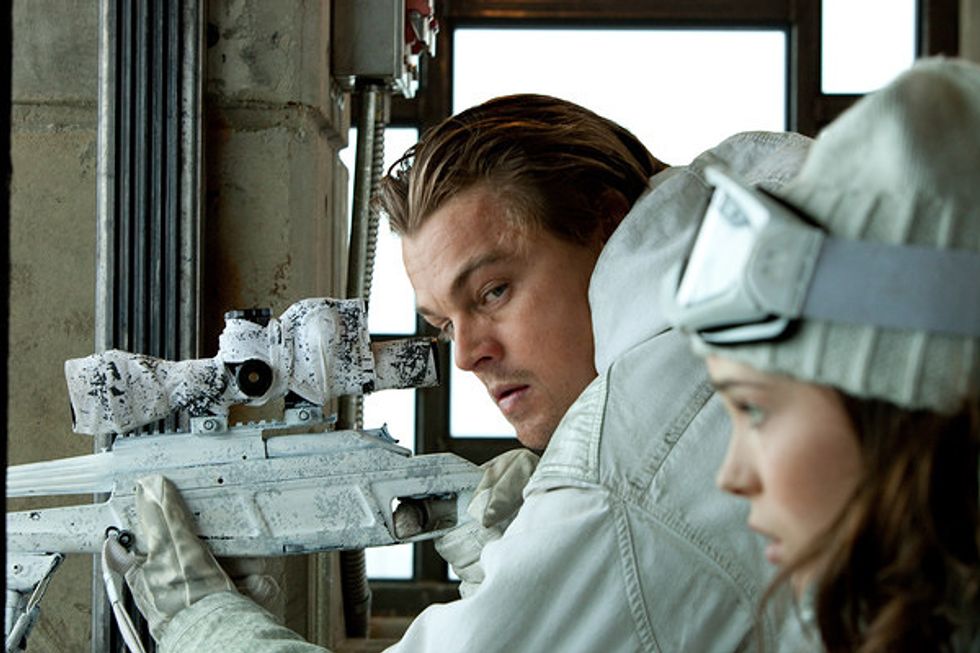
4. Inception
The premise of Christopher Nolan's thriller sounds deceptively simple: If it were possible to infiltrate the subconscious through people’s dreams, where their most intimate secrets could be stolen, wouldn't it be possible to plant new ideas there as well? Dominic Cobb (Leonardo DiCaprio) thinks so, but even the world's savviest dream thief is unprepared for the confounding adventure that springs from his daring scheme. Nolan (The Dark Knight) has called Inception his version of a heist film, which speaks only in the most basic terms to the elegantly layered mystery on the screen. With all its breakneck twists and nerve-rattling turns, the director's latest is as much a rapidly unraveling riddle as a raw human drama. It confirms him as a filmmaker of the highest order – a fearless dreamer, undaunted by the limits of possibility, whose future is far brighter than Bruce Wayne’s shadowy Gotham netherworld.

5. The Tillman Story
In a year dominated by chronicles of wayward politicians, crooked financiers, the root causes of America's financial collapse and the tattered legacy of the Bush administration, The Tillman Story targeted its outrage at the outrageous exploitation of a single soldier: Pat Tillman, the former NFL star gunned down by fellow U.S. combatants in Afghanistan, in a hail of "friendly fire." What followed – a cover-up, orchestrated by the army, to turn a senseless death into pro-military propaganda – galvanized Tillman's family in their search for the truth, and put them squarely at odds with a government cynically determined to use the onetime linebacker to promote an unpopular war.
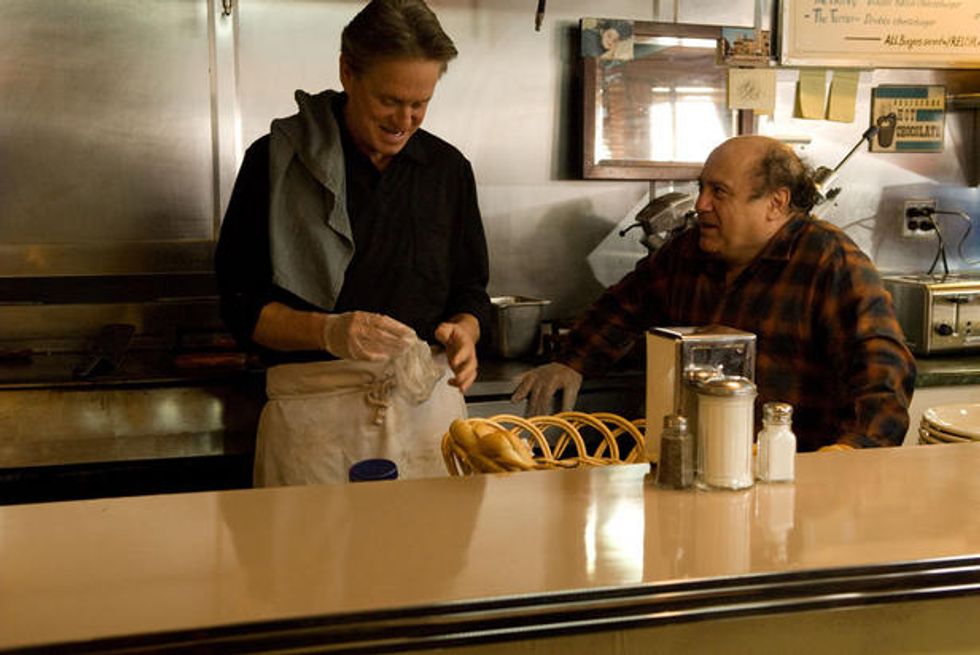
6. Solitary Man
Ben Kalmen, played by Michael Douglas as a cross between Gordon Gekko and the more affable professor he played in 2000's Wonder Boys, is not the guy you’d want dating your daughter, your mom or even a casual friend. At the beginning of Solitary Man, the disgraced car dealer is warned that his heart might be failing him; six-and-a-half years later, he is mired in a quest to recover his youth by sleeping with any woman willing to share his bed. Yet Man is not the belated coming-of-age story you might expect – that would suggest Kalmen learns something along the way. One of the movie’s great strengths, in its convincing portrayal of a man unable or unwilling to put the brakes on his decline, is that Kalmen’s redemption is left as unfinished business. He is a lout, but Douglas, in a masterfully nuanced performance , pulls off a neat trick: He makes Kalmen likable, with a late-emerging grace the character probably doesn’t deserve.
7. 127 Hours
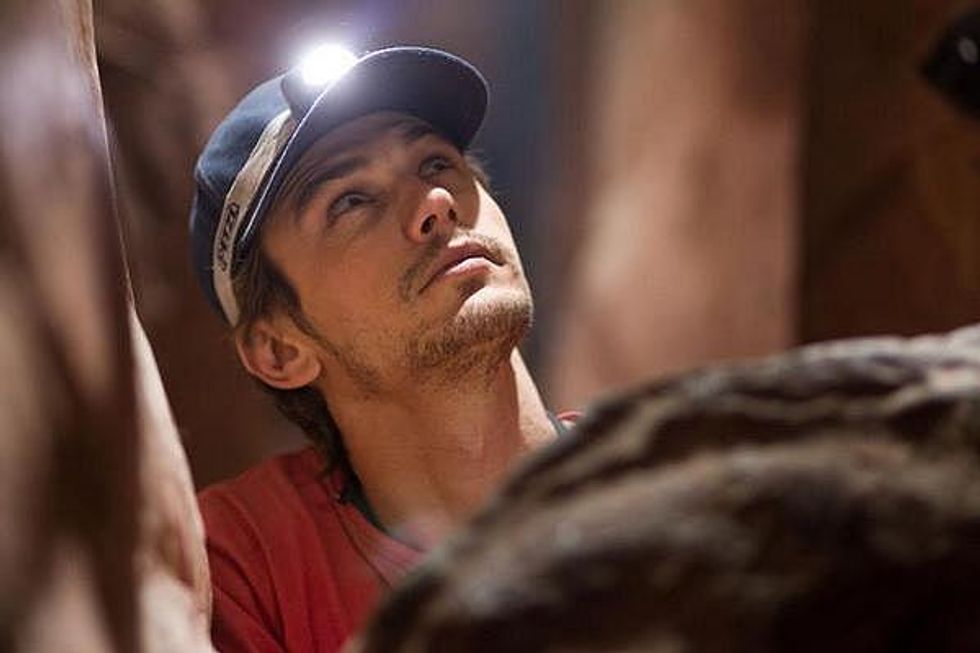
In 2003, a boulder pinned mountain climber Aron Ralston to the wall of Utah's Blue John Canyon for nearly five days, forcing the Indiana native, then 27, to amputate his right arm in a desperate bid to survive. In bringing his story to the screen, Danny Boyle (Slumdog Millionaire) deftly navigates the obvious stumbling blocks, transforming a mostly one-man show with a well-publicized conclusion into arresting, often transcendent drama that speaks not only to Ralston's will but also to the durability of the human spirit. James Franco, in a performance sure to be honored come awards season, is indispensable, portraying Ralston as a self-absorbed but sympathetic victim of circumstance.
8. The Art of the Steal
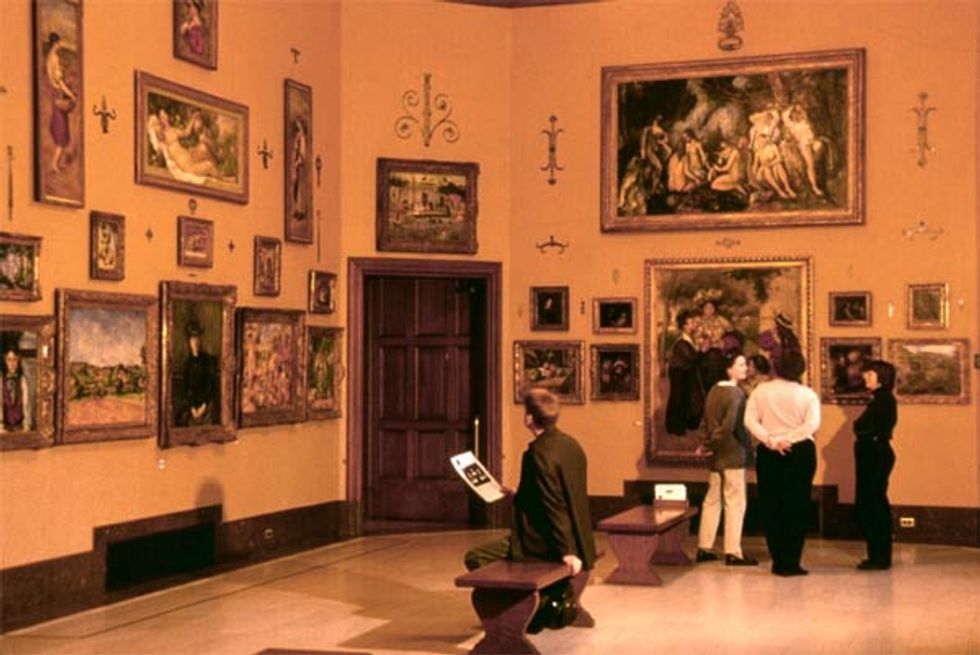
You don’t have to be an art enthusiast to appreciate The Art of the Steal, Don Argott’s remarkable account of, as one observer puts it, a theft committed in broad daylight. The story Argott tells is heartbreaking and infuriating, an impressively detailed illustration of how opportunistic politicians and well-connected profiteers acted in concert to despoil an American treasure – the Barnes Foundation, one of the finest art collections in the world, located in a picturesque Philadelphia suburb – and, in doing so, flouted the wishes of the man who created it. If the subject sounds too arcane to leave viewers outraged, don’t be deceived. Steal is an important film, and not simply because it affirms the cynical adage that you can’t fight city hall. The lesson here is more chilling – that if you have something worth stealing, no contract, however sacrosanct or ostensibly binding, can protect it. Want your legacy to be honored after you’ve gone? Try living forever.
9. Shutter Island
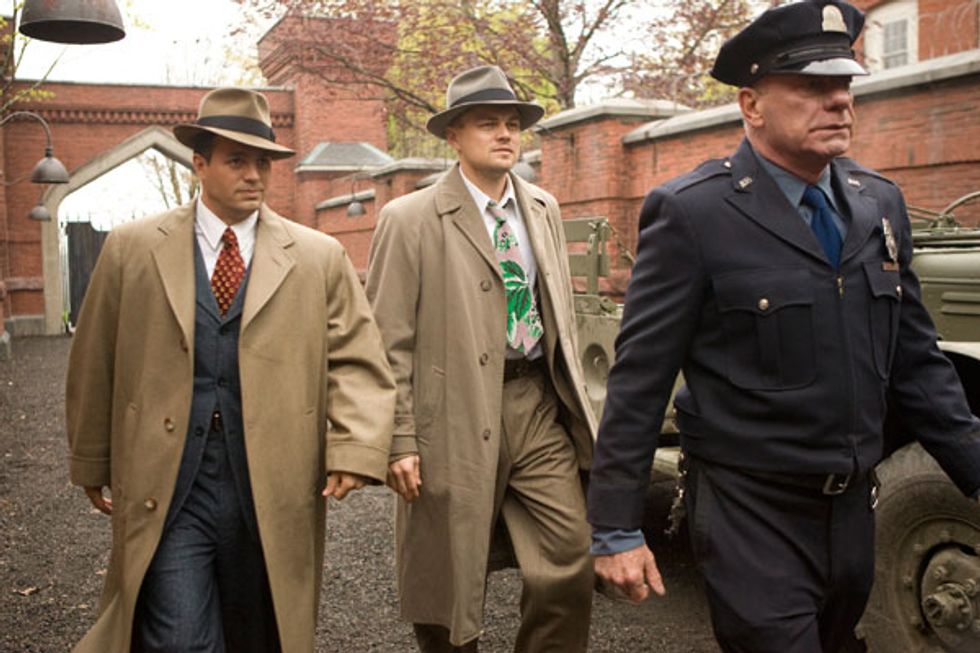
It is a testament to Martin Scorsese’s prolific gifts as a storyteller that he could venture so far out of his comfort zone – or what is perceived as such – and respond with a film as mesmerizing as Shutter Island. Scorsese has descended into the criminal underworld so often, in movies like Mean Streets and Goodfellas, we need to be reminded from time to time that he isn’t condemned to stay there. Here, in his haunting adaptation of Dennis Lehane's 2003 novel, he explores a different underworld – the hellish confines of the Ashecliffe Hospital for the Criminally Insane, which is just as inhospitable as it sounds. The story, about the increasingly frenzied search for an escaped patient, moves briskly, ushering us deeper into a mystery that seems more complex by the minute. When Scorsese yanks the rug out from beneath us, the shock is genuine – it’s not the sort of trickery you expect from a director who tends to play it straight. But give him this: Playing by a new set of rules, he has once again mastered the game.
10. Kick-Ass
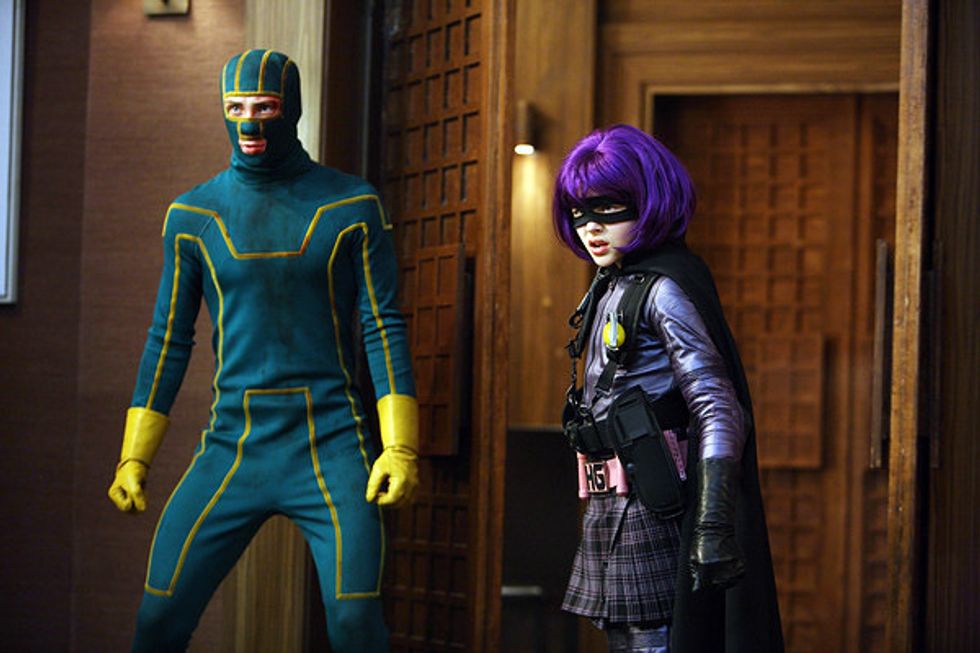
Nobody who’s ever dreamed of being a caped crusader should miss Kick-Ass, a soaring adventure, and a winning coming-of-age comedy, that contemplates the conflicted life of a masked misfit every bit as thoroughly as The Dark Knight, without the brooding overtones. It’s dark, but hardly tortured. There have been grumblings that the movie tries too hard, balancing too many plates at once, but taken on its own delightfully twisted terms, it is bold and uncompromising. It knows how its audience speaks and thinks, and delivers a fable for the ages, deliciously uncensored.
Second Opinions

There is no scientific formula available to critics who struggle to summarize 52 weeks of cinema with an easily sortable end-of-the-year list. Movies are sometimes overlooked. Opinions are molded and inevitably reconsidered over time. Even now, I'm troubled by the nagging suspicion that True Grit, Joel and Ethan Coen's beautifully shot, superbly acted reimagining of the John Wayne classic, belongs somewhere among the year's 10 best.
As I mentioned before, 2010 treated us to so many very good movies, and trying to rank them sometimes seems like a pointless proposition. How could you compare the year's funniest, most lighthearted comedies, Hot Tub Time Machine and Easy A, with A Film Unfinished, Yael Hersonski's powerful deconstruction of Hitler's propaganda machine? The simple answer is that you can't. A comedy that keeps us laughing has achieved its goals just as successfully as a drama that moves us to tears, or a horror film that keeps us awake at night. Which you prefer boils down to a matter of personal taste.
That said, those four movies and several others deserve honorable mention for making our trips to the theater worthwhile. Among them: American: The Bill Hicks Story; Animal Kingdom; Brooklyn's Finest; Client 9: The Rise and Fall of Eliot Spitzer; Cyrus; The Disappearance of Alice Creed; Four Lions; The Ghost Writer; How to Train Your Dragon; Joan Rivers: A Piece of Work; The King's Speech; Let Me In; The Oath; the Red Riding trilogy; and The Town.