

Harvest may be over, but now is arguably one of the best times of the year to visit Sonoma County Wine Country.
Goatlandia’s Bottle Babies Breakfast Club kicks off November 1st, and trust us, it’s not something you want to miss.
“There's one thing that brings everybody together, and it's baby animals,” says Ashley Armstrong-Radke, executive director of Goatlandia Farm Animal Sanctuary.
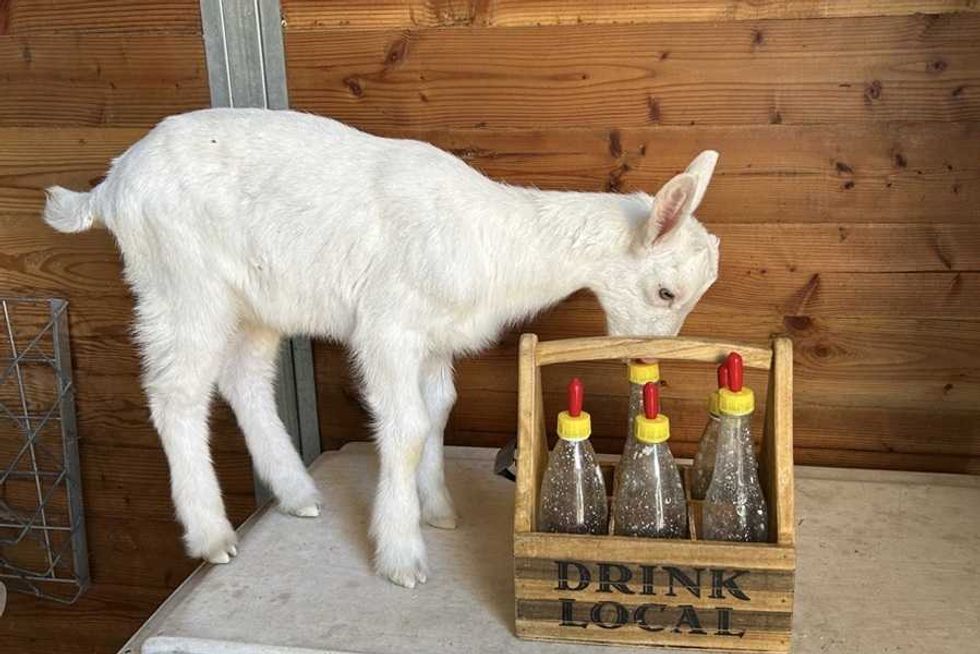 (Courtesy of Goatlandia Farm Animal Sanctuary)
The Sebastopol sanctuary rescues farm animals that are commonly eaten; on any given day, you can meet cows, sheep, chickens, ducks, and horses. (There are also a handful of cats.) But twice a year, typically in the fall and spring, baby goats arrive, and folks in the know sign up to experience the sheer joy these animals can bring, hands-on.
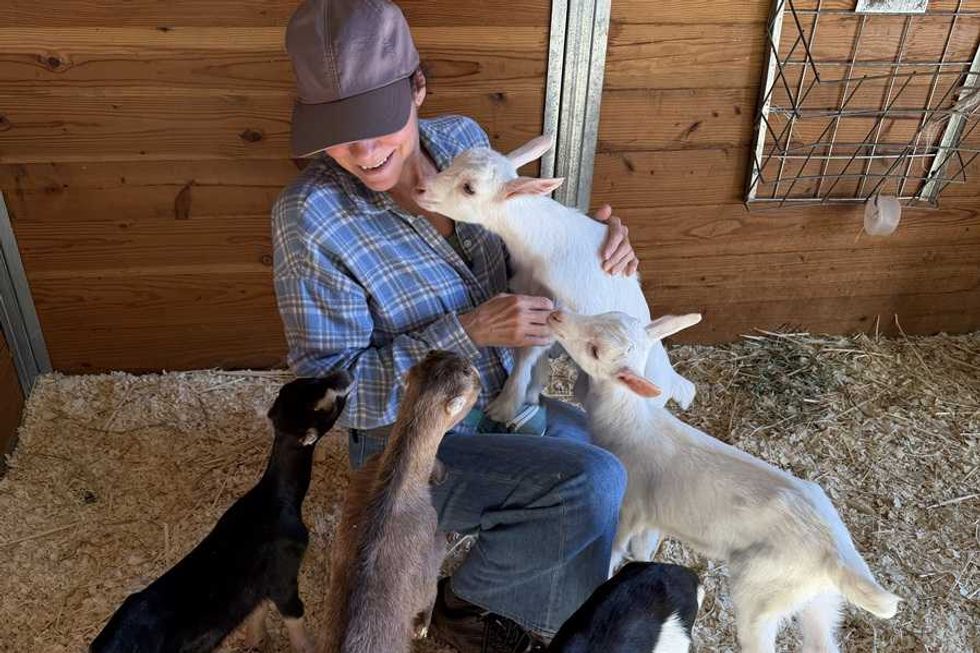
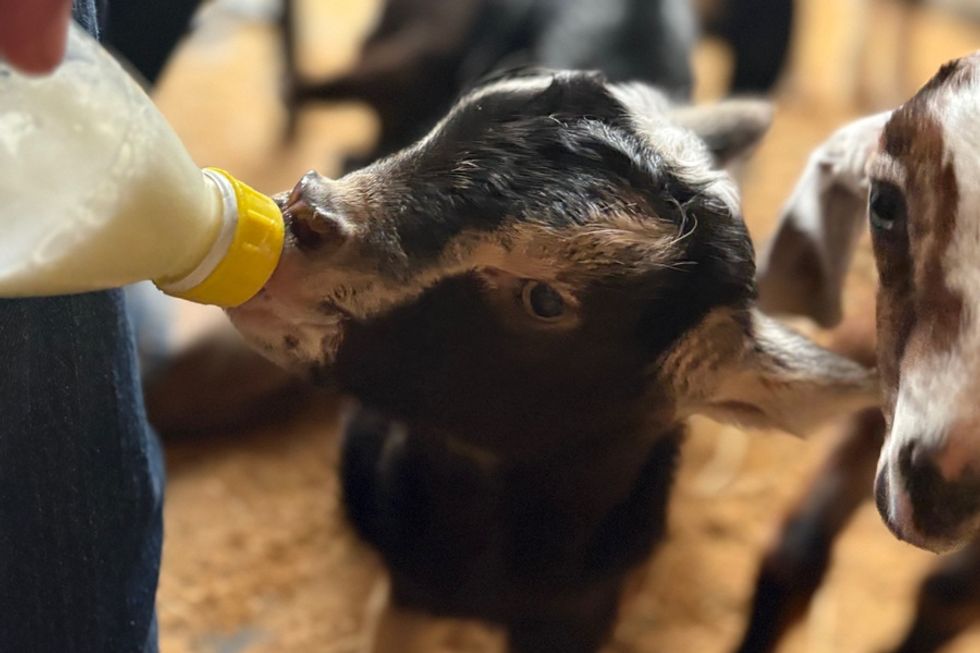
A half-dozen baby goats born in mid-October have just arrived at Goatlandia. Getting them from an itty-bitty four pounds to 40 pounds in the next month or so requires bottle feedings six to eight times a day. That’s a lot of milk—and a lot of hands needed to keep these kids happy and healthy.
For a $250 donation, you and a handful of your closest friends get to spend an hour on the farm bottle-feeding and cuddling these tail-wagging, bouncing bundles of joy. It’s an instant dose of happiness that’s hard to understand until you experience it.
“It's magic. Sometimes you can't even put it into words because it's just the best thing ever. It’s the definition of painfully cute,” says Armstrong-Radke.
 (Courtesy of Goatlandia Farm Animal Sanctuary)
No two Bottle Babies Breakfast Club experiences are the same. They begin with bottle feedings, but what happens next is up to you, the visitor. These guys are hungry, so the actual feedings go fast. (If you want photos, I recommend having your phone on camera mode from the moment you walk in the barn.) Once the bottles are drained and everyone’s tummies are full, you can enjoy hanging out and cuddling with the little guys for the rest of the hour and relish moments of being among the most popular kids in the room, or in this case, barn.
But if you can tear yourself away—it will be hard, don’t say we didn’t warn you—save some time to meet the other animals that call the Sebastopol sanctuary home: the list of charismatic characters is lengthy.
Along with providing a safe place for rescued farm animals, Goatlandia strives to educate the public about a plant-based diet. The sanctuary offers private tours year-round. Group tours will pause for the winter in late November and resume in the spring.
The vast majority of the baby goats the nonprofit rescues are males discarded by the dairy industry because they can’t produce milk. Goatlandia takes in as many as it can, raises them, and then finds them forever homes. But raising a baby goat is expensive, perhaps more expensive than you might think. Milk, veterinary care, labor—it all adds up to about $5,000 per goat. Every visit helps support the cost of their care.
 (Courtesy of Goatlandia Farm Animal Sanctuary)
“The goal is always for these guys to get them adopted so we can save our spaces for more medically fragile animals that really need the care of the sanctuary,” says Armstrong-Radke. “Our last group, they all found adoptive homes. They're used as pets. Sometimes people will adopt them and use them for fire mitigation because goats eat everything, which is wonderful.”
This latest group is likely headed to private homes, but in the past, Goatlandia rescues have joined the herd at San Francisco’s City Grazing, a nonprofit that utilizes goats for sustainable land management.
Goatlandia’s Bottle Babies Breakfast Club runs through December 1st, and possibly later depending on how these guys grow and how hungry they are, so be sure to check the website for the latest. Sessions are available seven days a week, as early as 10am and as late as 4:30pm. And if you can’t make it this fall, pencil it in on the calendar for spring. Yes, it’s great for the goats, but don’t underestimate how therapeutic it can be for you.
// 1567 Cunningham Rd. (Sebastopol), goatlandia.org