

Of all the Russian composers, James Gaffigan likes Sergei Prokofiev best: The music makes him feel like he’s observing a painting.
“It's all these different emotions and characters that you can relate to, but somehow you're on the outside of it, looking in,” Gaffigan explains. “I love the way he wrote for orchestra and for solo instruments, and I think it's an exciting way for people who don't necessarily know that kind of music to get more interested in the rest of the repertoire because it speaks to people right away.”
Gaffigan looks forward to conducting the San Francisco Symphony on November 19th to 21st—and it’s not just because Prokofiev’s Sinfonia concertante is on the program.
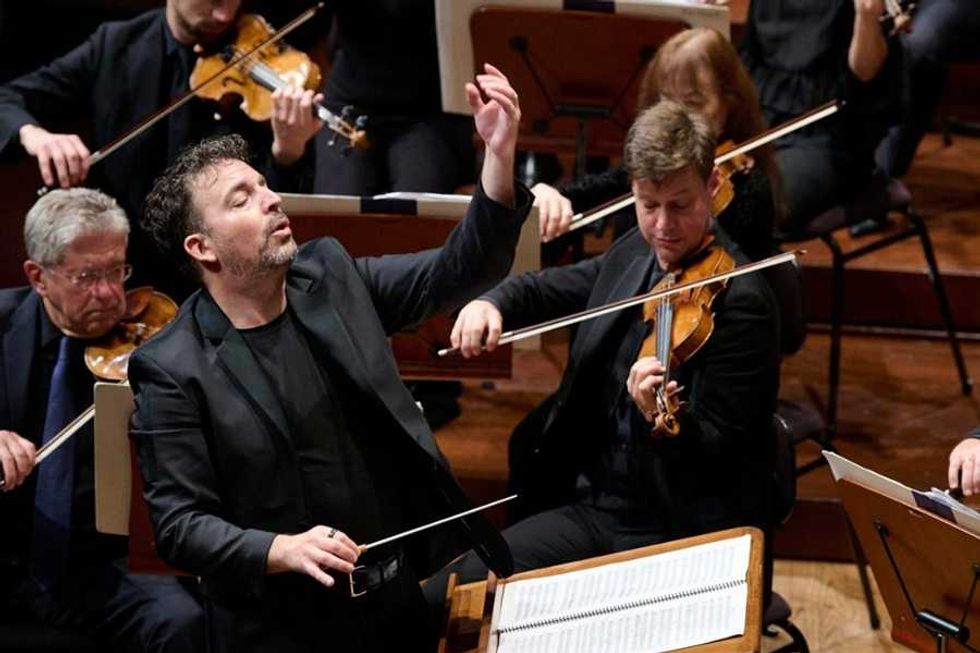 Conductor James Gaffigan with the SF Symphony(Courtesy of @sfsymphony/@james.gaffigan)
With the other two works they’re performing, Claude Debussy’s Prélude à L’Après-midi d’un faune and Aaron Copland’s Suite from Appalachian Spring, Gaffigan will experience something he never has before as a conductor: live dance onstage by Alonzo King Lines Ballet.
“For an audience of a symphonic program to experience ballet is highly unusual,” he says. “The fact that we're doing these two major ballet pieces that are played all the time in orchestras all around the world, then to have the physicality of dance with that at such a high level is very unusual.”
He’s not kidding about the high level. King, who founded the San Francisco company in 1982, has been named a Master of Choreography by the Kennedy Center and one of America’s “Irreplaceable Dance Treasures” by the Dance Heritage Coalition, along with a slew of other awards and honors.
These pieces are new for the company, says King, but the partnership with the Symphony is not. He calls it a wonderful institution and compares working with them to going on a beloved family vacation.
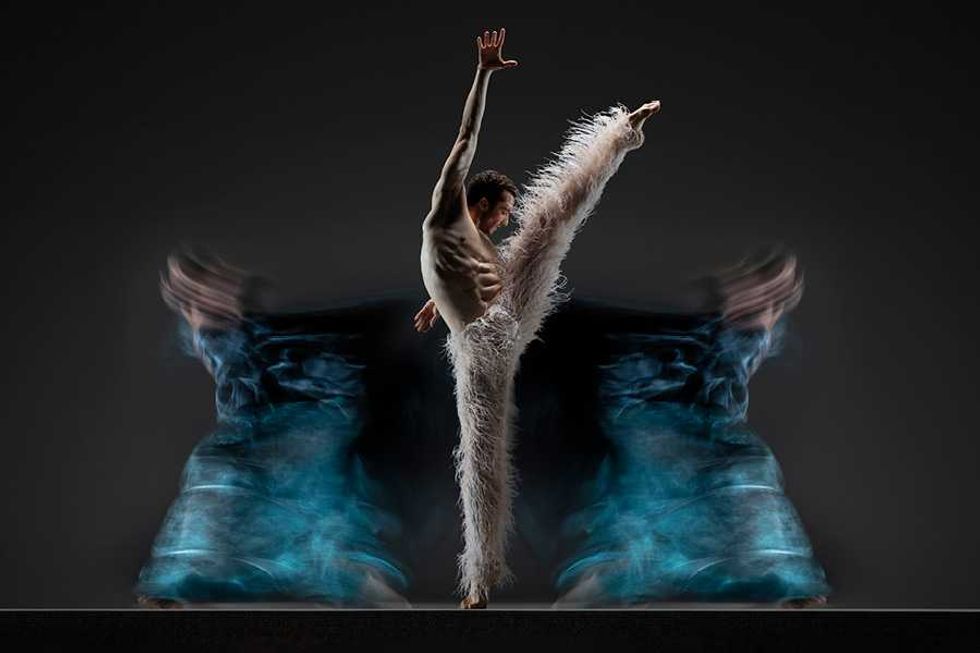 Performers with the Lines Ballet(Courtesy of SF Symphony)
“It's like a spot we've been going to, and it's always sunny,” he says. “The water is good, and we love the wonderful people's smiles and efficiency.”
King enjoys choreographing for this music: “These works are so beautiful and so hopeful and so uplifting. These are symphonic heart songs. They're about valor and mystery and following a dream and the potential of pioneer America.”
King points out that he won’t be the first to choreograph these pieces. Vaslav Nijinsky previously choreographed Debussy’s Prélude and Martha Graham created the original choreography for Copland’s Suite from Appalachian Spring. So, is it daunting or exciting to take on works done by other masters?
“Both,” he says. “You’re a little nervous, and then you get on with it. Because when you're nervous, you're really thinking about yourself. So, it's like, ‘Shut up and get out of the way. We have a bigger thing to do.’”
This is a program that’s special all around, Gaffigan says. The principal cellist of the SF Symphony, Rainer Eudeikis, will be the soloist on the Prokofiev piece. He’s a wonderful cellist, Gaffigan says, and audiences always get excited when the soloist is part of the home company. True to its name, the Sinfonia concertante is like a symphony that unfolds as a conversation between the soloist and the orchestra.
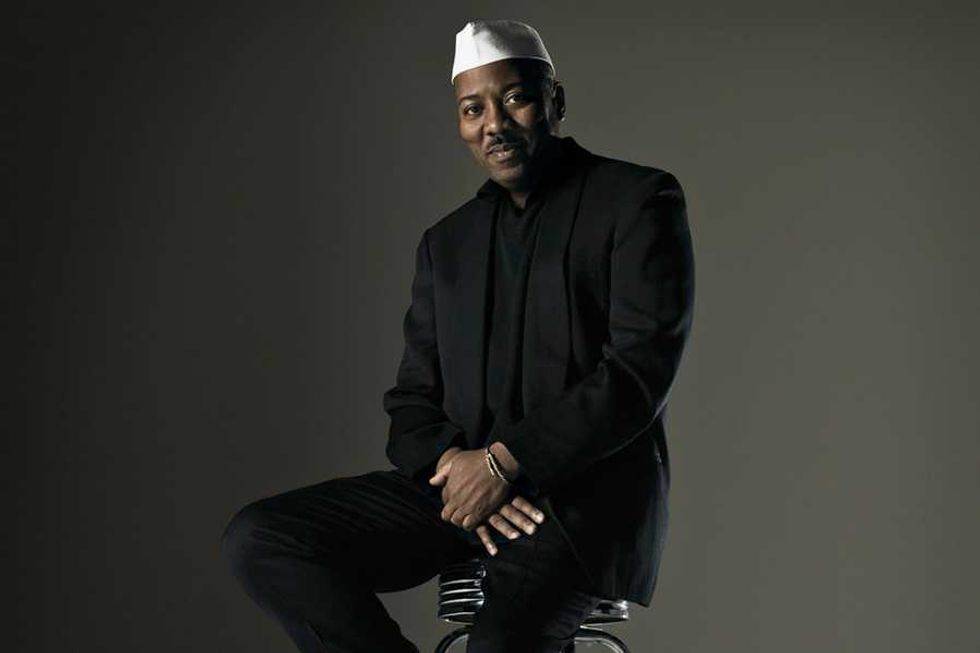 Legendary choreographer Alonzo King(RJ Muna)
The orchestration on this piece is massive, Eudeikis says. No one plays backup. Rather, all the musicians are involved in the work’s entire 40 or so minutes—unusually long for a concerto.
“It grabs you from the start and doesn’t let go until the end,” he explains. “It’s intense and exciting, and it certainly has the most thrilling, exciting ending of any cello concerto we play. It has all the elements that make a piece great.”
Eudeikis says he is always thinking about what will make him a better cellist, and the challenge of playing the piece is part of what he likes about it. It’s like climbing a mountain just to see if you can.
“I think everyone who is involved with this is at such a high level that it's definitely going to be a success,” says Eudeikis.
This is the only performance by the SF Symphony this season with dance onstage, but not the only one featuring ballet music. In Marie Jacquot’s debut with SF Symphony on November 13th to 15th, she will conduct Prokofiev’s Romeo and Juliet, which was originally commissioned to translate William Shakespeare’s play into dance. The program will also include Ottorino Respighi’s Concerto gregoriano and Andromède by Augusta Holmès, a relative unknown who Jacquot likes to highlight.
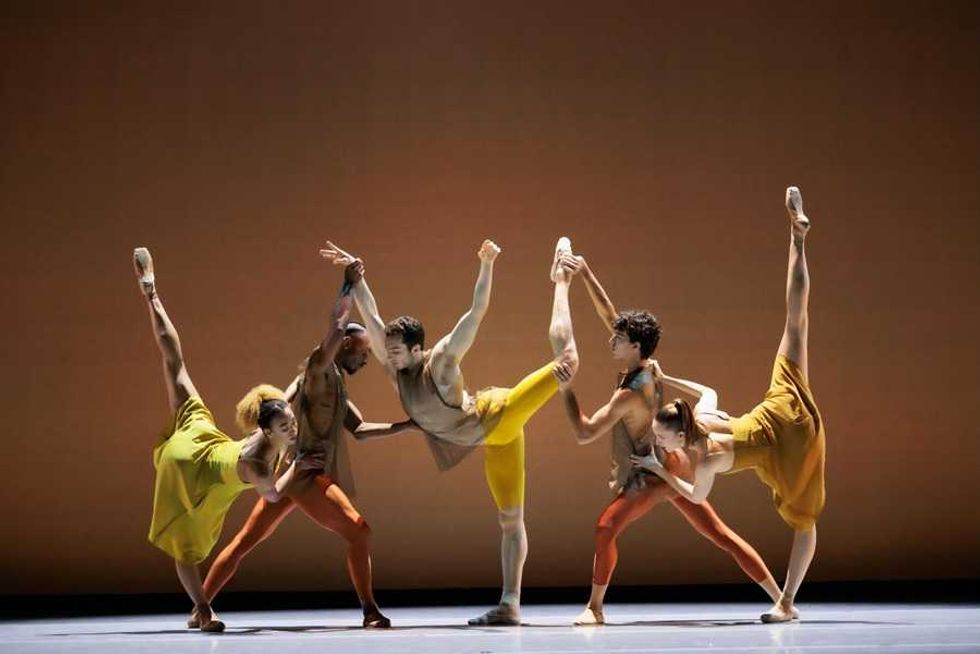 Performers with the Lines Ballet(Courtesy of @nobadance/@linesballet)
Jacquot says she has heard only good things about the SF Symphony and looks forward to working with them.
She played tennis in the junior category in the French Open and studied trombone before switching to conducting. Now she is chief conductor of the Royal Danish Theatre, which stages both opera and ballet. She says she feels connected to pieces that tell a story, like Romeo and Juliet.
“It allows us to interpret the story more clearly,” says Jacquot. “And more to the point, it’s easier also to make the connection to the public. Romeo and Juliet is a very well-known story by Shakespeare. Prokofiev’s music, through different colors, I think adds something more to the text.”
// Prokofiev ‘Romeo and Juliet’ is November 13-15 and Alonzo King Lines Ballet and ‘Appalachian Spring’ is November 19-21; 201 Van Ness Ave. (Civic Center), sfsymphony.org