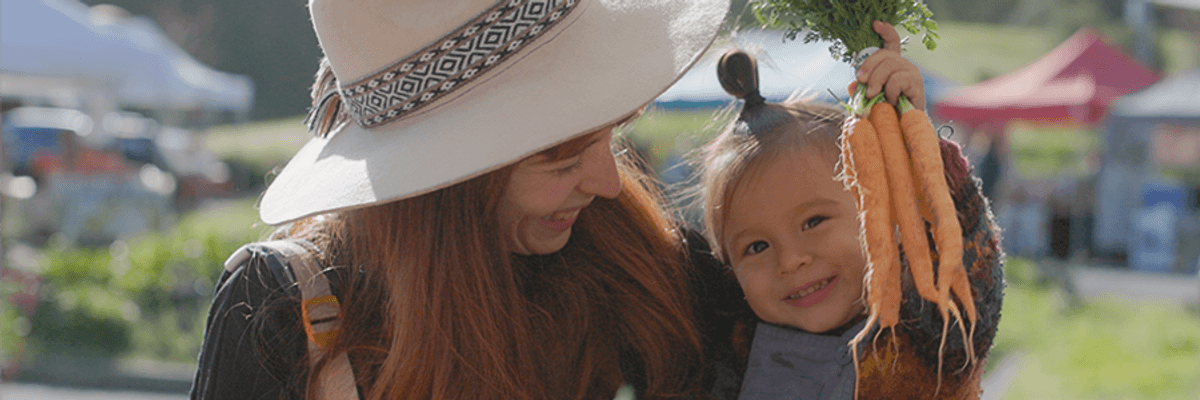


Incarceration inflicts a thousand small indignities on those behind bars. For many, the terrible food is among the worst, especially around the holidays.
“We work with a lot of formerly incarcerated folks in our apprenticeship programs, and it’s one of the things we’ve heard,” says Hayley Nielsen, co-executive director at Farming Hope.
It’s not just about taste. Food served in jails and prisons are low-quality, highly-processed, and nutritionally dubious enough to have a long-term impact on those who have no choice but to consume it. “One apprentice mentioned that when they went in they were healthy, and when they left jail they had high blood pressure and diabetes,” Nielsen continues. “So that’s part of why we focus on that in this season.”
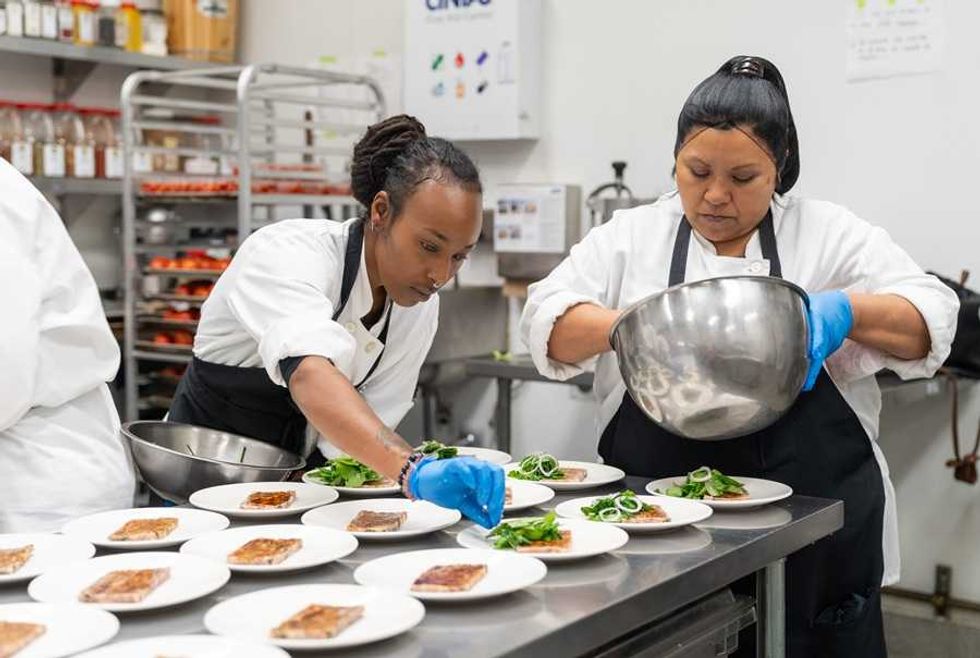 In the kitchen at the Refettorio San Francisco(Courtesy of Farming Hope)
With the help fo the San Francisco Archidoces, more than 1,200 people in San Francisco County jails will be eating Farming Hope’s cooked-from-scratch Thanksgiving meals this season. “It’s a wonderful experience for apprentices to provide this for folks who have been in a similar situation,” says Nielsen.
Farming Hope calls that opportunity to give back “feeding it forward,” and it’s at the core of the philosophy that drives the nonprofit.
In addition to the incarcerated individuals, around 100 families will participate in the Thanksgiving meal the organization prepares and serves at their community food hub, Refettorio San Francisco. An accompanying grocery distribution will provide them with holiday groceries for home, including less traditional staples and ingredients like masa.
“Everyone celebrates the holidays with food and ensuring that folks that we serve can celebrate in a culturally appropriate way is really important,” says Nielsen. “That’s something we really care about deeply here.”
Many of those working to provide these holiday meals and groceries have, themselves, experienced food insecurity. Around 20 individuals overcoming challenges like incarceration, homelessness, and addiction enroll in Farming Hope’s 12-week paid apprenticeship program three times a year. At the Refettorio, they work alongside chef instructors to prepare, cook, and portion around 4,500 meals a week for individuals at transitional housing sites, shelters, and other nonprofits. On Tuesdays, Wednesdays, and Thursdays, they staff and serve at the organization’s free three-course dinners, dignified affairs for which families book a reservation and check in at the host stand when they arrive the same way they would at any restaurant around town.
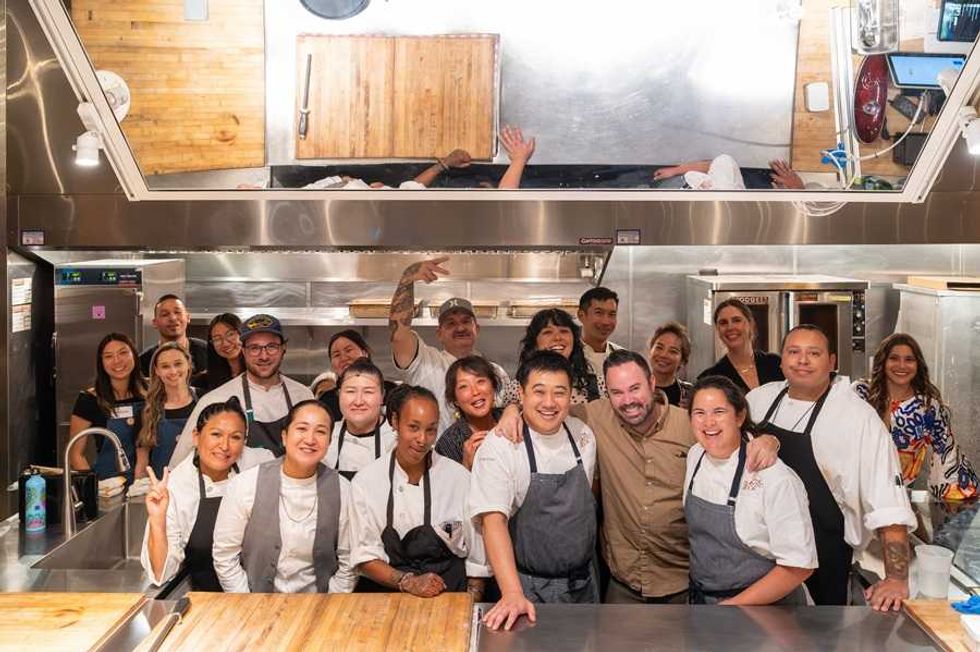 Chefs and apprentices at the Refettorio San Francisco(Courtesy of Farming Hope)
“Our apprentices are a huge part of creating that meal,” Nielsen says. “It’s wonderful training for what it’s like in a restaurant, and also to see the impact on the community that you’re having.” Farming Hope can be a springboard to employment at a restaurant or commercial kitchen but “even if they don’t stay in the food industry, no one is upset about learning to cook.”
The food provided to families in need (around one-in-four families are facing food insecurity in San Francisco) and the job training and sense of purpose provided to individuals who were formerly on the fringes of society are two prongs of Farming Hope’s approach to social justice. The third is making sure that nutritious, edible food goes to people instead of landfill.
“Around 40 percent of the food grown in the U.S. goes to waste,” Nielsen explains. “It’s a big problem environmentally. It also wastes a lot of the labor and love that goes into that food. We want to make sure that’s being captured.”
The organization rescues around 50,000 pounds of imperfect-looking produce each year, offering the highest quality items to low-income families through their “client choice” grocery. Anything too blemished or too close to its expiration date to go on the shelf is cooked into meals. The apprentices use no ultra-processed ingredients; everything is made in-house.
The methodology is a win-win-win: a triple whammy for food justice in which everyone plays a role in building more inclusive, less wasterful communities. That’s true year-round, but there’s something extra special about being able to give back around the holidays, especially for the apprentices who may not have had the opportunity to do so in the past.
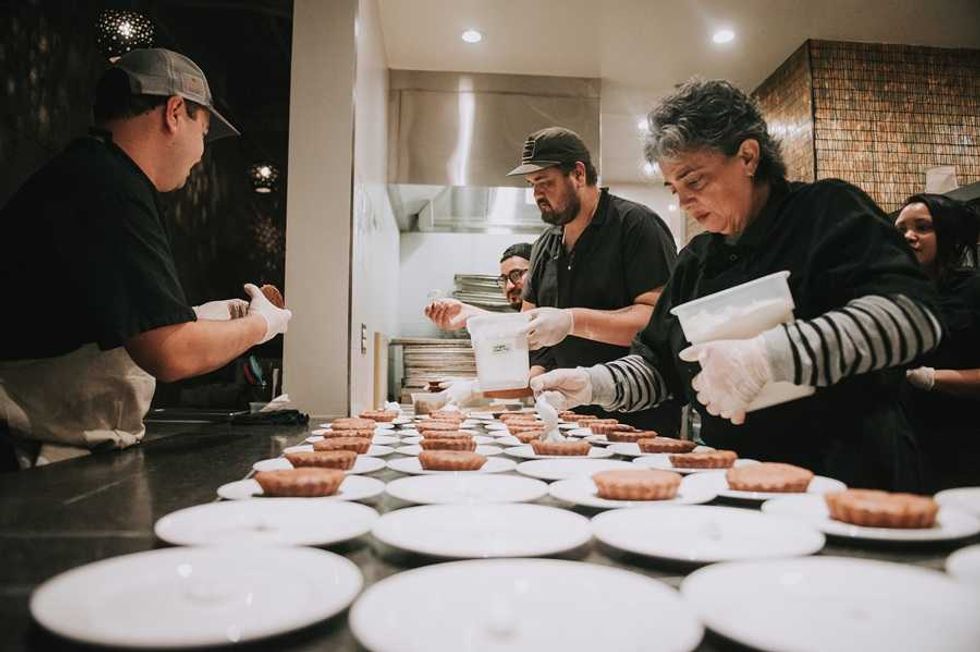 Farming Hope staff, apprentices, and volunteers plate dishes.(Courtesy of Farming Hope)
“Last year we had an apprentice who was part of our program during our holiday party who had been incarcerated for so long that he kind of forgot what that season had been like,” says Nielsen. His shock and appreciation when he received a gift from the organization was “a really good moment to be a part of.”
This Saturday, November 7th, Farming Hope will be celebrating a decade of moments like these at their 10th anniversary Feed It Forward, a fundraising gala at which an army of top chefs (think Kim Alter of Nightbird, Nelson German of Meski, Ravi Kapur of Liholiho Yacht Club, Melissa Perello of Octavia, and many more) do the cooking for the organization’s supporters. Tickets are still available for the night (starting at $400/person), which also includes a culinary auction, as well as for an After Party ($100/person) with dancing and an open bar.
All procceds are invested back into Farming Hope’s programs to ensure that no one goes hungry or feels isolated at the holidays, and every day of the year.
// For more information and tickets to the gala, visit farminghope.org