

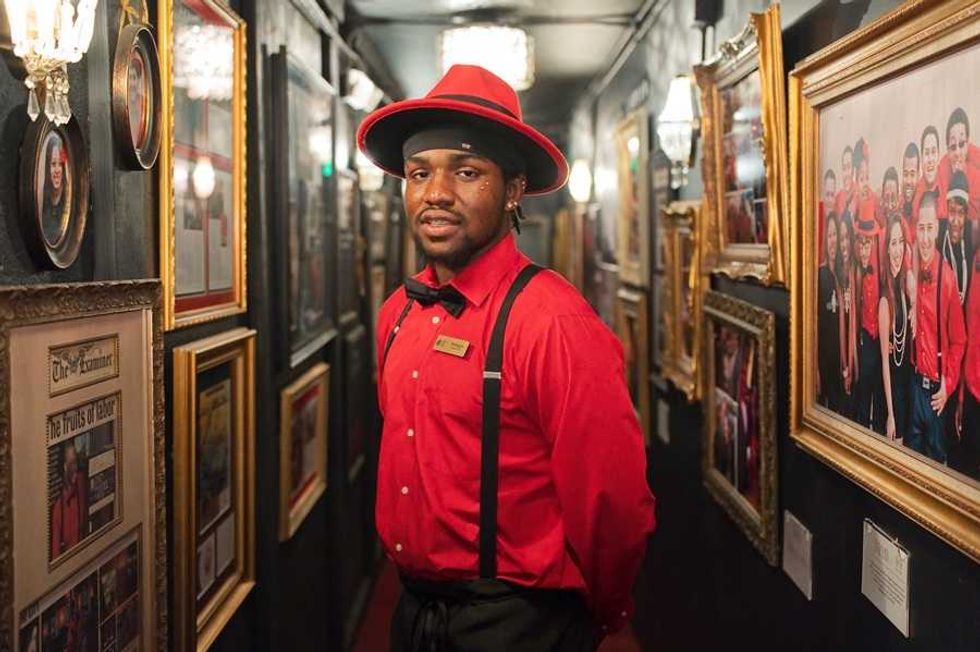
Through a nondescript door on a bustling Third Street corner, down a hallway lined with framed photos and news clippings, unfolds a modern-day speakeasy.
Through the darkened room roam the notes of live music, a young pianist on the wraparound balcony and a percussionist downstairs keeping perfect time across the lofted space. On the lower floor, red velveteen banquettes curve alluringly around large wooden tables. The heavy red drapery, the gilded mirrors, the crystal pendants that hang from candelabras and chandeliers glinting in the glow of their (electric) flames—it all makes the Jazz Age-inspired supper club feel lost somewhere in time.
But first impressions only scratch the surface. Old Skool Cafe is not a relic of the past; it is a vision of the future.
 (Courtesy of Old Skool Cafe)
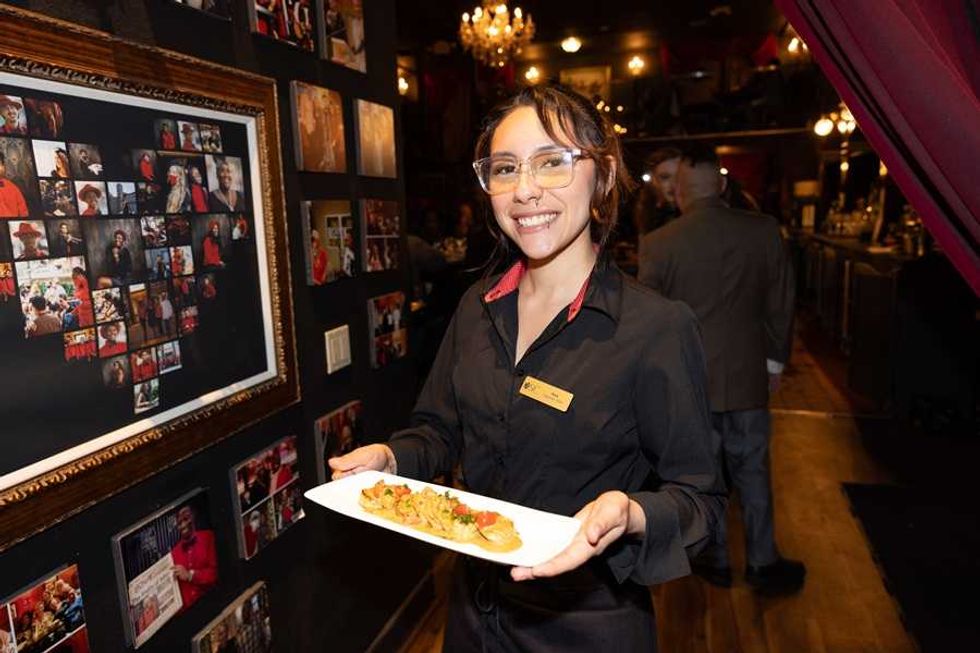
Everything at the nonprofit restaurant, from the kitchen to the bar, is run by at-risk youth ages 16 to 22, including those who’ve been caught up in the systems of foster care and incarceration. They move around the space with poise and authority, some in the full house uniform of black suspenders and bow ties with button-downs and fedoras the same color red as the decor.
One of them greets us at the host station by the door and guides us up the stairs to a two-top fitted snugly into the narrow balcony. Another follows closely behind with water and a smile. “Is this your first time at Old Skool?” he asks. When we admit that yes, it is, he warmly welcomes us and offers complimentary cornbread bites from the menu of globally inspired soul food.
Old Skool’s two-year youth program isn’t just about on-the-job training in the service industry—though building professional skills in hospitality while earning an average hourly wage between $23 and $24.50 is an essential part of the equation. Here, the young participants get coaching and therapy, life skills classes and résumé building, job interview practice and exercise programs. It’s an approach that addresses the whole person physically, spiritually, emotionally, and financially, says Teresa Goines-Perkins, the former juvenile corrections officer and gang-prevention program leader who first began developing the program in 2004.
“If you have a young person and help them get a job and they’re homeless, how are they going to have clean clothes for work or be rested enough to function? If you’re going through massive trauma, how are you going to be able to put it in a box? If you don’t have a lot of training about how to handle your emotions and you cuss out your boss—there aren’t a lot of employers who are going to like that. So, there’s the job and all the soft skills on how to keep it.”
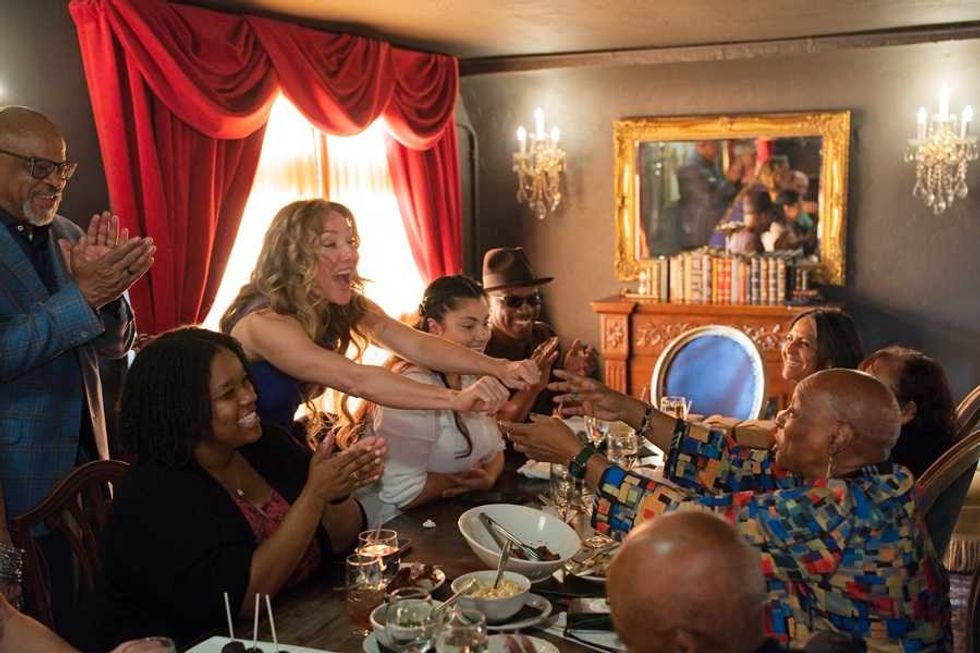 Teresa Goines-Perkins, "Mama T," greets dinner guests at Old Skool Cafe.(Courtesy of Old Skool Cafe)
From our table, the holistic program looks good on them. Though she’s just a teenager, our server is capable and unintimidated. She recommends the sweet-and-sour warrior wings, the fried chicken with housemade gravy, and the mac & cheese—a favorite among the staff. She notes our cocktails of choice, both twists on 1920s classics, then repeats them back to us like a pro.
She is one of around four dozen youth in the 2026 program (there were 51 paid employee apprentices at Old Skool in 2025, a new record for the organization) and, statistically speaking, she’s more than likely already faced a number of systemic barriers: 96 percent of Old Skool’s youth participants come from low-income households, 47 percent have experienced violence, 27 percent have been involved in the criminal justice system, and 20 percent are in or have been through foster care. When she reaches the final stage of the program, she’ll have the opportunity to do a paid externship with one of the nonprofit’s partners in the San Francisco business community, a springboard to her next step toward adulthood.
And for nearly all the youth who complete the program, the result of two years of coaching and mentorship with hands-on work experience and an income of their own is overwhelmingly positive. In the 2025 cohort, 14 of the participants graduated high school and nine went on to college. The recidivism rate for those who’d been incarcerated dropped to just seven percent, way, way below the national average of 70 percent.
“Watching young people who had a felony record, watching those who had never graduated high school and were way behind that are now in college, watching them literally within a few years break that cycle not only for themselves but also for their younger siblings and their children is beautiful,” says Goines-Perkins, whom the youth call “Mama T.”
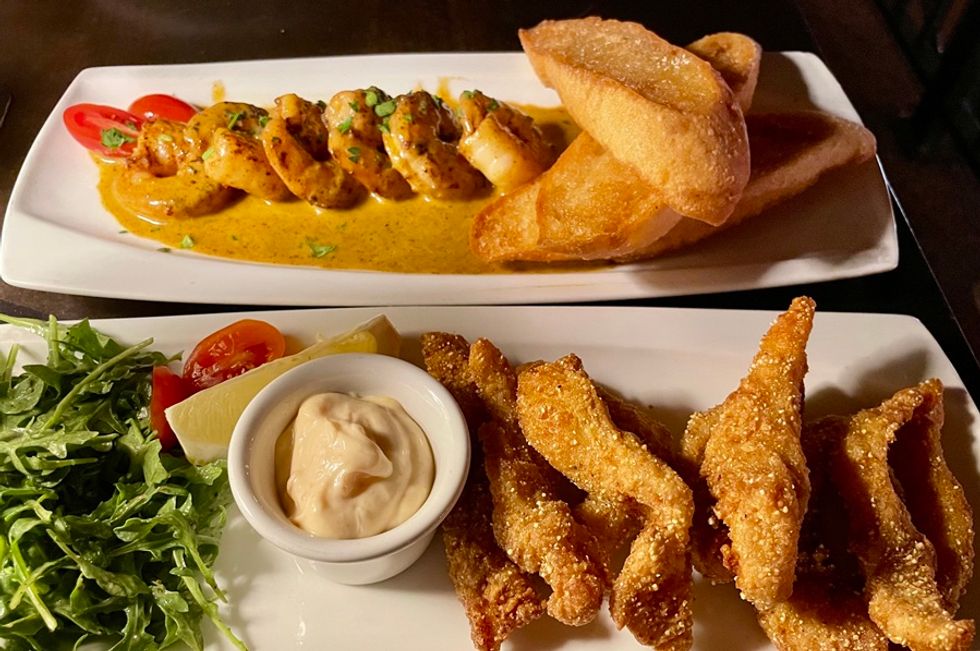 New Orleans-style BBQ jerk shrimp and catfish fingers with remoulade at Old Skook Cafe(Shoshi Parks)
Even if none of this were true, even if Old Skool were just a typical for-profit restaurant with a 1920s-era vibe and a menu full of well-made comfort food, it would be worth a visit for happy hour or dinner. We swoon over the New Orleans-style BBQ jerk shrimp and soak up the creamy, spicy sauce with the crostini with which it’s served. We scoop up generous dollops of remoulade with the crunchy-on-the-outside, buttery-on-the-inside cornmeal-crusted catfish fingers. We confirm that, yes, the mac and cheese is out-of-this-world, and that the whipped garlic potatoes run a close second. We spoon mouthfuls of irresistibly warm date cake with toffee sauce and vanilla bean gelato until we can’t spoon any more.
The experience of a meal well had, in other words, isn’t an afterthought; it’s one of the organization's core principles—and Goines-Perkins would love to see more people around the city making it “their spot” for date night, or dinner meetings, or happy hour get togethers.
“Imagine knowing that every penny of your dinner with live jazz and cocktails goes back into the program,” she muses. Plus, “if you come regularly, you get a chance to watch the youth grow, to see how quickly they thrive and they’re running the restaurant. These young people are showing our society a better way of treating them.”
// Old Skool Cafe is open for dinner Wednesday through Saturday from 5pm to 9pm, with live jazz from 5:45pm to 9pm; 1429 Mendell St. (Bayview-Hunters Point), oldskoolcafe.org
 (Courtesy of Old Skool Cafe)