
Probing The Izakaya Trend: Two Local Japanese Chefs Get Deep
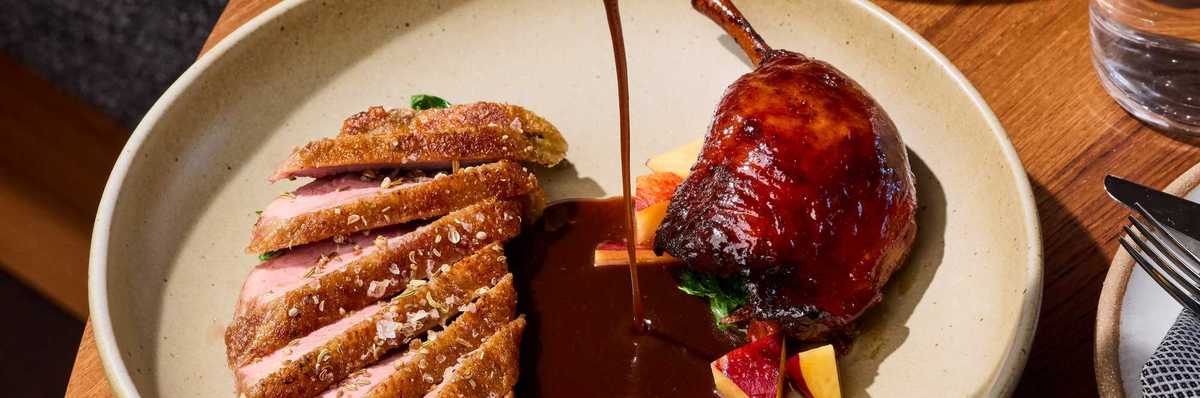
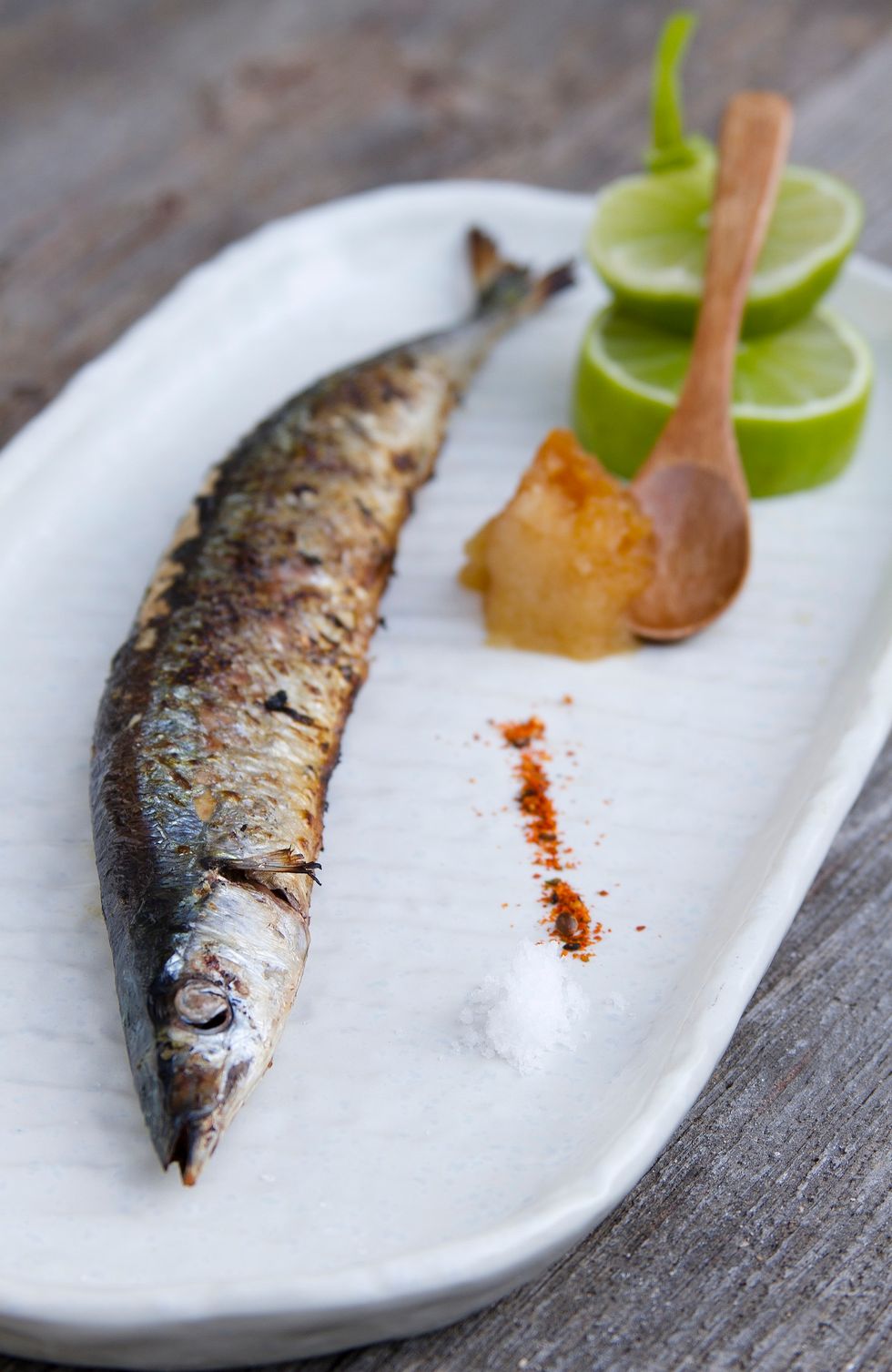
Chotto's sanma: whole pike, daikon, sea salt, lemon. Photo: Meigan Canfeld
A few years ago, nobody around here knew what an izakaya was. The Japanese word literally means "sitting in a sake shop," but it's evolved to encompasses all manner of casual Japanese eating and drinking establishment. Now San Francisco has been hit with a slew of izakayas in the past year or two. We've got Nombe, Nojo, Hecho and Chotto. All of them have simply grilled, seasoned meats that are served on skewers; some have traditional sushi as well. There's also a sustainably minded izakaya called Ki on the way in the Mission. And Sebo, a sushi spot that's long been devoted to the highest quality raw fish, has recently expanded its menu to include cooked items, making it more of an izakaya-type hangout.
So by now, even those who don't have a clue what "izakaya" means, have probably eaten at one. We sat down with two of our city's successful Japanese chefs, Hiro Sone of Ame and Mari Takahashi of Nombe, for a long-overdue schooling in all things izakaya. Here you'll get the male and female perspective on what it all means.
So "izakaya" literally means "sitting in a sake shop?"
Hiro: In Japanese, "iru" means "stay" and "sakaya" means "sake shop." So the direct translation of this word is "staying at sake shop." Back in the Edo period, sake shops started to serve shoppers sake and some quick snacks. It caught on and they started calling these special sake shops "izakaya" to differentiate from regular sake shops. Now the shop part of izakaya is almost gone in Japan. What remains is a very casual drinking and eating place, just like an enoteca in Italy.
Mari: Traditionally, izakayas served to men who went there on the way home from work. They started to build franchised, huge izakayas in the 80s as more women started to go. Some started to serve more Western items to differentiate. Now there are low-end, mostly franchised izakayas and high-end izakayas serving premium drinks and creative items. Trendy izakayas are now called "Dining Bars" in Japan.
Is it normal to have creative cooked items that aren't served on skewers at an izakaya in Japan? Or is that a California creation?
Hiro: Many izakayas in Japan are very creative, you will find all kinds of influences on their menu. They also often have a variety of offal dishes. American people use the word izakaya to signify a Japanese joint; but in Japan today, it's just a casual joint including French bistros, casual Italian trattorias, Spanish tapas places. We call them all izakayas. Of course there are very traditional places as well.
Mari: Yes, it's normal to have creative items. Most items are actually not skewered. Many izakayas create items that are unique to them so they are differentiated. Some serve more Western items such as housemade sausages, house-cured fish. Some serve very Japanese things like fish stew, housemade tofu and yuba.
What's the customary sequence for ordering things at an izakaya?
Hiro: There are no rules.
Mari: Japanese people don't eat rice or drink soup with alcohol. Starch is the last item eaten to sober up and settle your stomach. People often start the night with otsumami (light snacks) or edamame and beer while they decide what to order. Then they move on to salad, meat or fish items, sake and shochu. The finish up with onigiri (rice balls), ochazuke (green-tea-doused rice), miso soup and pickles.
What's the customary dessert?
Hiro: I think there is no such a thing. People who like to drink in Japan don't eat sweets, so usually you don't find dessert.
Mari: Japanese people, especially the young ones, eat many Western desserts. Mochi or traditional Japanese desserts were not common until recently. Now it's trendy. Japanese people use fresh fruit on cakes instead of baking them into cakes. The baked goods are light and not too sweet. Each restaurant picks its style. But you can find ice cream at most izakayas. Many people, especially men would not eat dessert at the end of the night. Instead they eat starch.
Why do you think izakayas are catching on so fast in San Francisco?
Hiro: The interesting thing I have found is that the izakayas in San Francisco opened by American chefs are a more traditional style than the ones Japanese chefs own. I think this is part of the process. Young talented American chefs are learning from masters in Japan to bring back true flavors to America, just like thirty years ago many American chefs went to France to study traditional French cuisine. Ten years ago it was Spain. Now the focus has changed to Japan. Another reason is the casualness. Izakayas usual offer small plates. You can taste so many different bites and its usually lighter fair. It fits our San Francisco lifestyle now.
Still thrown off by some of the Japanese terms used above? Look out for our izakaya 101 coming up on Monday.
under Eat + Drink, Chotto, Hecho, Hiro Sone, izakaya madness, izakayas, Mari Takahashi, Nojo, nombe
More Eat + Drink Postings
Add Comment
Dear Sir/Madam,
I have the pleasure to brief you on our Data Visualization software
"Trend Compass".
TC is a new concept in viewing statistics and trends in an animated
way by displaying in one chart 5 axis (X, Y, Time, Bubble size &
Bubble color) instead of just the traditional X and Y axis. Discover
trends hidden in spreadsheets. It could be used in analysis,
research, presentation etc. In different business sectors, to name a
few we have Deutsche Bank, NBC Universal, RIM, Vanguard
Institutional Investor, Ipsos, Princeton University as our clients.
NBC presentation on TED using Trend Compass exported Videos. Now on
CNN Money / Fortune (Dec 21st,2010):
http://tech.fortune.cnn.com/2010/12/21/from-laughing-to-judging-in-fifty...
The following link is for our new Geographical Trend Compass
(Earthquake in Japan - Mag vs Depth vs Time):
http://www.epicsyst.com/test/v2/japan-earthquake
Link on Ads Monitoring on TV Satellite Channels. Pick Duration (Ads
daily duration) vs Repeat (Ads repetition per day).
http://www.epicsyst.com/test/v2/tv-monitor/
Link showing drilling feature (Parent/Child) - Just double-click on any
bubble:
http://www.epicsyst.com/test/v2/drilling/
Link on UK Master Card vs Visa performance :
http://www.epicsyst.com/test/v2/mastercard_vs_visa/
Links on Funds:
http://www.epicsyst.com/test/v2/best_exchange_traded_funds/
http://www.epicsyst.com/test/v2/us_insurance_funds/
http://www.epicsyst.com/test/v2/aaim_fund_performance/
Link on other KPIs :
http://www.epicsyst.com/test/v2/hospital_performance/
http://www.epicsyst.com/test/v2/international_insurance/
Link on Chile's Earthquake (Feb 27th 2010):
http://www.epicsyst.com/test/v2/EarthQuakeinChile/
This a link on weather data :
http://www.epicsyst.com/test/v2/aims/
This is a bank link to compare Deposits, Withdrawals and numbers of
Customers for different branches over time ( all in 1 Chart) :
http://www.epicsyst.com/test/v2/bank-trx/
Misc Examples :
http://www.epicsyst.com/test/v2/airline/
http://www.epicsyst.com/test/v2/stockmarket1/
http://www.epicsyst.com/test/v2/football/
http://www.epicsyst.com/test/v2/swinefludaily/
http://www.epicsyst.com/test/v2/babyboomers/
This is a project we did with Princeton University on US unemployment :
http://www.epicsyst.com/main3.swf
A 3 minutes video presentation of above by Professor Alan Krueger
Bendheim Professor of Economics and Public Affairs at Princeton
University and currently Chief Economist at the US Treasury using
Trend Compass :
http://epicsyst.com/trendcompass/princeton.aspx?home=1
You can download a trial version. It has a feature to export
EXE,PPS,HTML and AVI files. The most impressive is the AVI since you
can record Audio/Video for the charts you create.
http://epicsyst.com/trendcompass/FreeVersion/TrendCompassv1.2_DotNet.zip
All the best.
ashrafwagdy
Trend Compass Team
Epic Systems
www.epicsyst.com
It serves food to accompany the drinks. Thanks for sharing your ideas. Windows Hosting
There's no real style for izakaya's, that's the beauty of them. They can be dirty, clean, big or small. In my experience in Japan, that's what I saw at least. I'm more interested in the taste of the food. I can take or leave the ambiance. That's not what makes it for me.
The writer clearly has no idea what an Izakaya is....I mean everything is on skewers? That's robata. Desert after drinking all night? That's your fantasy. What a lame, lame article, I feel bad for the chefs.
Go to Vancouver, copy the long running izakayas there... and duplicate them here. no need to try and re-invent the wheel. The SF izakayas are lacking the detail and atmosphere of what makes a good izakaya.
The Big Eat 2012: 100 Things to Try Before You Die
The Big Eat 2011: 100 Things to Try Before You Die
The Big Veg 2011: 50 Vegetarian (Or Vegan) Things to Eat Before You Die
Four Ways To Escape the Cold in Mexico
Jams We Love: Our Weekly Playlists
10 Best Dishes $10 in the Inner Sunset
Rise and Dine: A Guide to Brunch at SF's Best Restaurants
The Best Cheese in SF (Recommendations from Local Cheese Shops)
Refreshingly Unhip: The Best Vanilla Ice Cream in SF
The 20 Best Dishes Under $10 in the Tenderloin & Tendernob
Community Gardens Around the City
Horseback Riding Within 1.5 Hours of SF
Four Awesome Northern California Hot Springs
Refreshingly Unhip: SF's Old-School Pastrami Sandwiches
The 7 Best Carne Asada Burritos in San Francisco
The 10 Best Dishes Under $10 in the Outer Sunset
The 20 Best Dishes Under $10 in the Mission
The 10 Best Dishes Under $10 in Bernal Heights
The 10 Best Dishes Under $10 in the Lower Haight
The 10 Best Lunches in Union Square Under $10
Refreshingly Unhip: The Best Glazed Dougnuts in SF
Expert Advice on Parking in The City