
Of the 48 hills in San Francisco, only seven claim to have been named at the time of the city’s founding—Nob Hill, Russian Hill, Telegraph Hill, Rincon Hill, Twin Peaks, Mount Sutro, and Mount Davidson.
These once wild ridges may have been tamed by an expanding metropolis, but only one—Rincon Hill—has since been leveled. As for the rest, an adventurous spirit remains.
Here's the best way to hike, walk, stair climb, ride, and slide back down SF's most iconic topgraphical resource.
Mount Sutro
(Courtesy of David Yu/Pixabay)
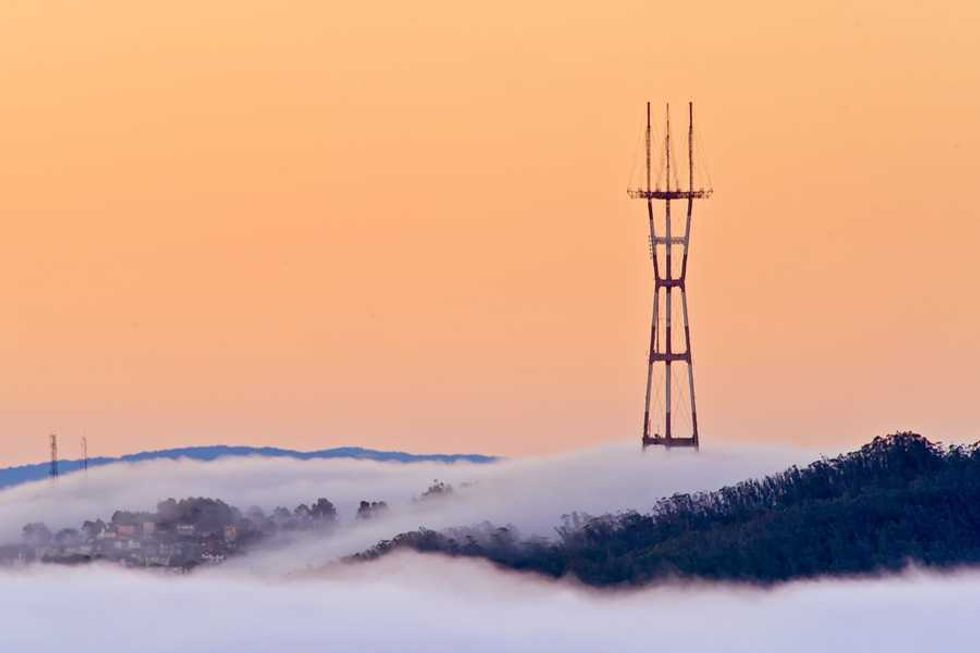
In 1886, future mayor Adolph Sutro began planting trees on a grassy hilltop called Mount Parnassus in celebration of Arbor Day. The hilltop, since renamed in his honor, is now apart of UCSF’s 61-acre public reserve, home to a thick forest of eucalyptus, cypress, and pine. Visitors are welcome to walk the unmarked trails that crisscross the wooded reserve.
Unlike most other hills in the city, there are no picturesque views waiting for you at the peak. Instead, hikers on the East Ridge Trail pass a small building that represents the remains of Nike Missile Site SF-89C, while a walk down Fairy Gates Trail will pass the forested entrance to the mysterious Ishi’s Cave, named after the last member of the Indigenous Yahi tribe, who, after emerging after a lifetime in the wildness in 1911, spent his final years as a research assistant among the anthropologists at UCSF.
When visiting Mount Sutro, dress for the weather—often foggy or rainy—and keep a close watch for birds, wildlife, and poison oak. And when you’re done hiking, walk down Parnassus Avenue to Cole Valley for a warm meal at Zazie (941 Cole St.) or a cool treat at The Ice Cream Bar (815 Cole St.), a '30s style soda fountain.
Telegraph Hill
(Courtesy of Mary Bettini Blank from Pixabay)
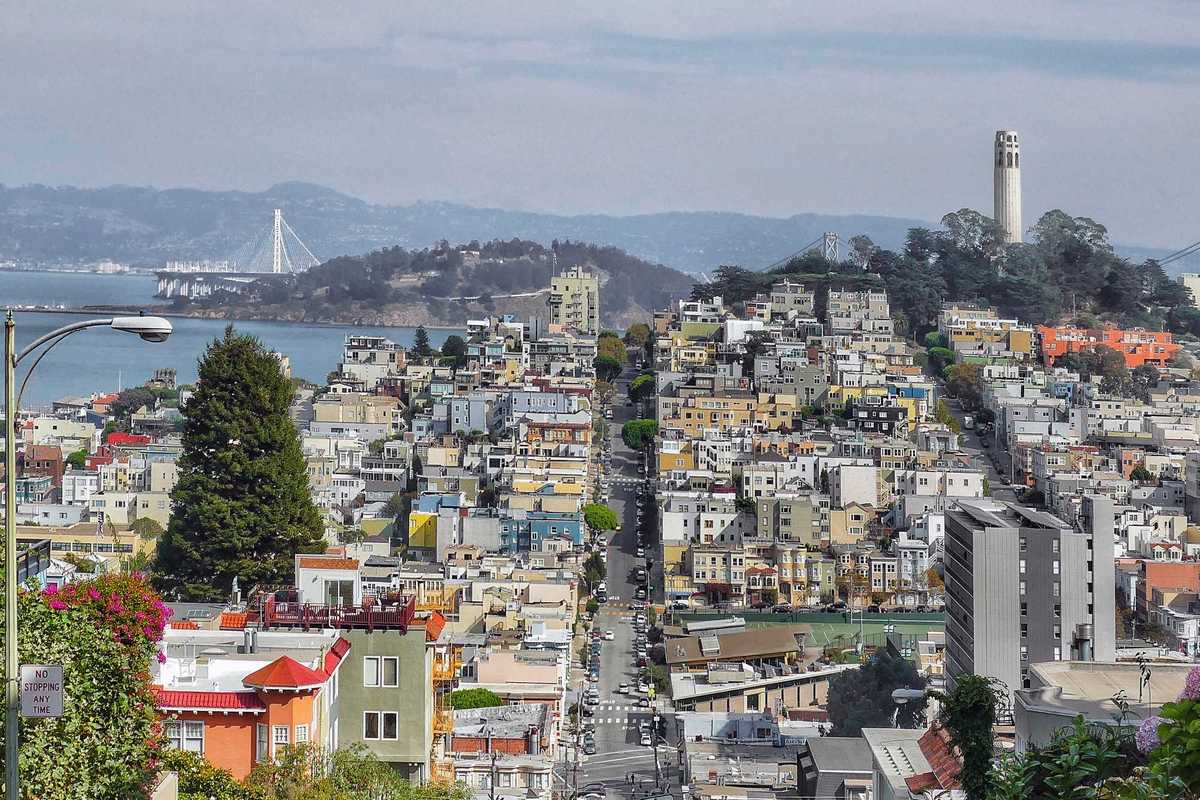
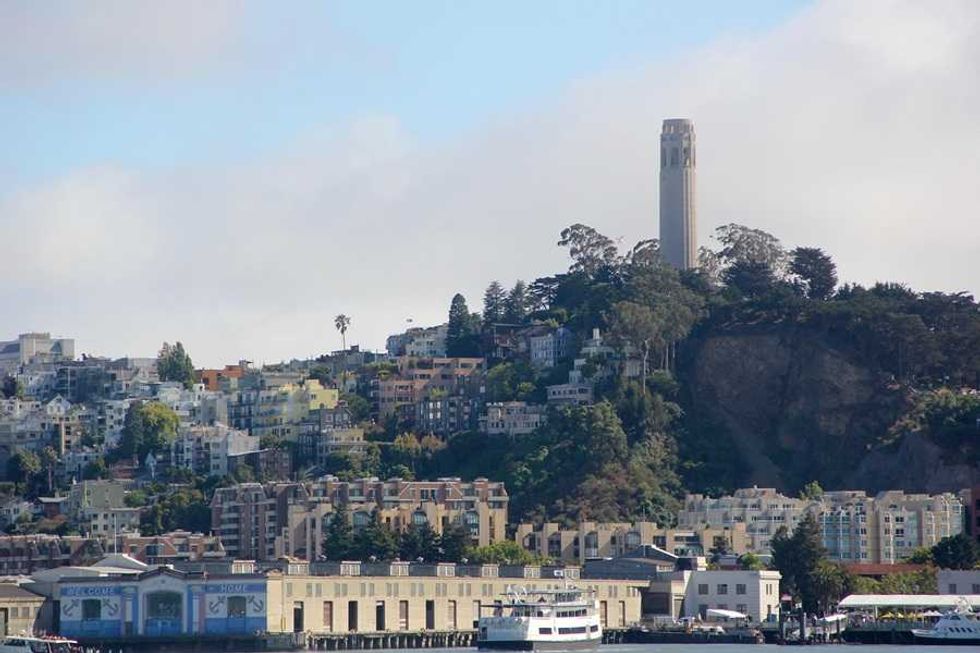
Telegraph Hill was named for the wooden-armed semaphore that signaled the type of vessel entering the bay. Now, it's a beacon for travelers from around the world.
Whether you decide to walk up the lush hillside of the Filbert Steps or the tree-covered gardens of the Greenwich Steps, all paths lead to Pioneer Park, capped by the 210-foot tall Coit Memorial Tower, in honor of the city’s heroic firefighters. In addition to the sweeping views, the tower is also known for its 27 depression-era murals packed into two floors, viewable through docent tours.
While on the hill, listen for the squawks of the parrots of Telegraph Hill and relish in the jubilance of this merry red and green collective. For a window free (and tourist free) view of the city, walk down Montgomery Street to the dead-end at Calhoun Terrace.
Twin Peaks
(Courtesy of Albeebe/Wikimedia)
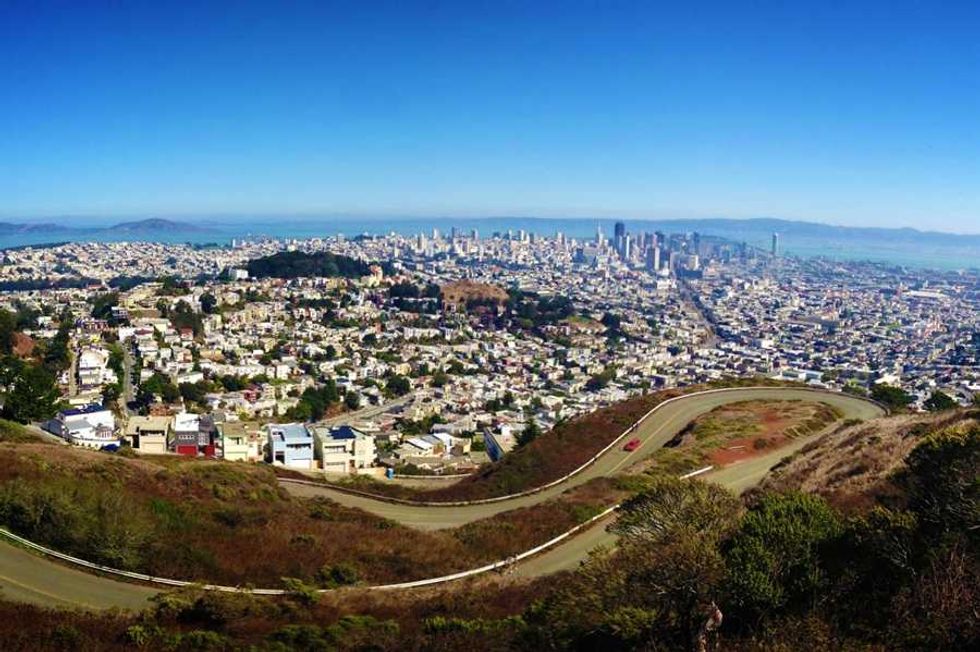
Soaring 922 feet over the city’s center, the northerly Eureka peak and its twin, Noe Peak, offer a potential, Karl-dependent vista from the ocean to Oakland. Grab a pre-hike brunch in the Castro, then head down 19th Street, grab some cardboard from the pile, and take a free ride down the Seward Street Slides (70 Corwin St., Castro).
Once 19th ends at Market, double back on Clayton to reach the Pemberton Place Steps, a three block long stairway through heavenly cottages and privately-owned flower gardens. Crown Terrace will back track to Tank Hill, a quiet place to grab a bench (or a seat on it’s rocky ledge) to simultaneously catch your breath and have it taken away with views that stretch from Cole Valley to the Presidio.
If you've still got energy to burn, cross Clarendon Avenue at the bottom of Tank Hill and walk up Twin Peaks Boulevard and on to the Twin Peaks North Summit and Noe Peak, a little farther on.
Bring a jacket and keep your eyes peeled for the endangered Mission Blue Butterfly among the wildlife and flora that thrive around this epic lookout.
Russian Hill
(Courtesy of Bernard Gagnon/Wikimedia)
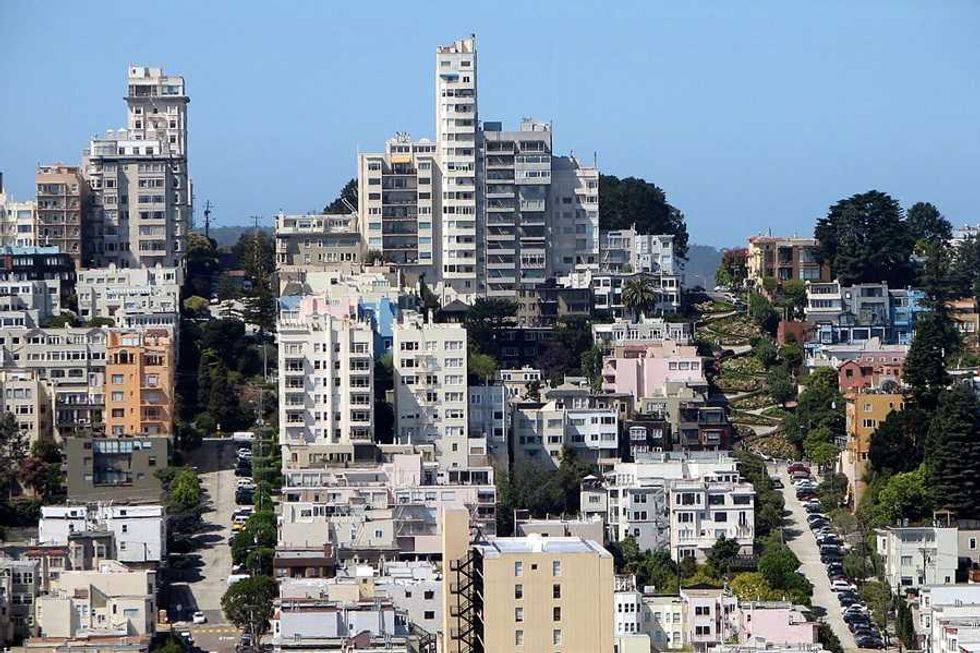
Once home to a small cemetery for Russian sailors and trappers, Russian Hill now welcomes a new generation of explorers to the charming shops of Hyde and Polk streets, grand historical residences, and one-of-a-kind walks.
Whether you’re walking among the blooming hydrangeas and winding red brick of Lombard Street or strolling the tiny cobblestone path of Macondray Lane, every step is framed by beautiful foliage and period homes. (Readers of Armistead Maupin’s Tales of the City may recognize Macondray Lane by its fictional name, Barbary Lane.)
For an intimate view of San Francisco, Ina Coolbrith Park (Vallejo & Taylor Sts.) is a hidden treasure of tree-lined staircases and patches of grass. Named after California’s first poet laureate, its mix of seclusion and stunning bay views will charm even the city's longest-term residents.
Mount Davidson
(Courtesy of Lori D'Ambrosio/Pixabay)
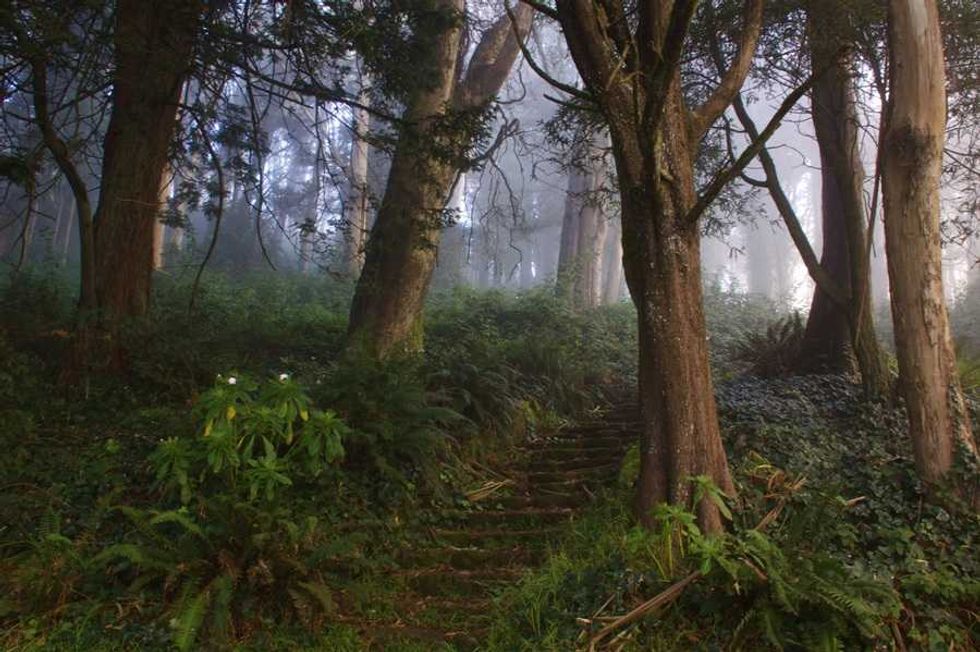
Originally named Blue Mountain, for its 75 species of wildflowers, Mount Davidson’s 938 feet height makes it the tallest geographic point in San Francisco. Like Mount Parnassus, Adolph Sutro encouraged schoolchildren to plant what is now 30 acres of mostly eucalyptus trees, which attracts wildlife and hikers alike to relish the park’s fog covered trails and expansive panoramas.
You hike to the summit through a backcountry of native grasslands and coastal scrub that includes blackberries during summer months. Start from the park entrance at Dalewood and Myra Streets and follow the dirt trail to the peak.
The Mount Davidson Cross at the peak may be the park’s most striking feature. The 103-foot-high monument was the last of several Depression-era attempts to build a memorial honor the California’s pioneers. At the end of a long legal battle over it’s conflicting role as a religious symbol and an historic landmark, the memorial was sold and rededicated to the memory of the 1.5 million victims of the Armenian Genocide.
Continue on to the Mount Davidson Vista Point for expansive views of the city. If you forgot to pack for a picnic in the park, hike back the way you came and over to the cozy West Portal neighborhood for a bite.
Nob Hill
(Courtesy of Aude/Wikimedia)
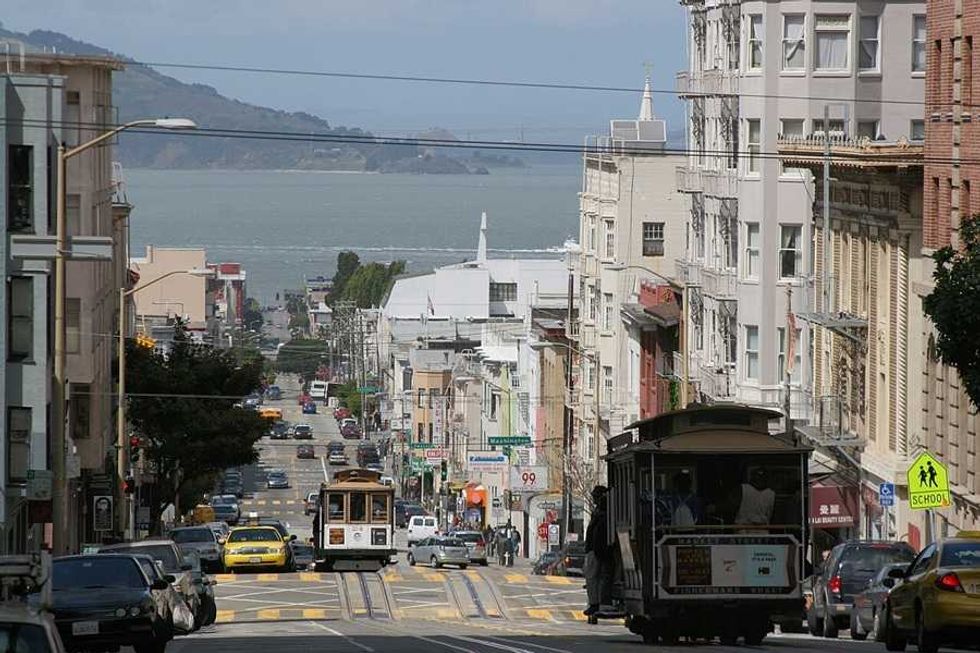
This posh neighborhood atop Union Square is famous for luxurious mansions, hotels, and private clubs. Fortunately for the rest of us, you don’t have to live in Nob Hill to find a good time.
Walk up Powell or, better yet, ride the cable car, to the Cable Car Museum (1201 Mason St., Nob Hill). Housed inside the city’s last cable car barn and powerhouse, history comes alive among the giant wheels and engines that still pull cable cars up our signature hills.
Continue on to Huntington Park and Grace Cathedral (1100 California St., Nob Hill), an arts and cultural pilgrimage for the religious and non-religious alike, with grand bronze doors (a replica of Ghiberti's Gates of Paradise in Florence), gothic arched ceilings, De Rosen mosaics, an Interfaith AIDS Memorial Chapel featuring an altarpiece by Keith Haring, murals, frescos, three organs and 1100 figures rendered in stained glass.
Another historic icon, the Fairmont Hotel (950 Mason St., Nob Hill) is worth poking around, especially during the holidays when their life-sized gingerbread house is up. Don't miss the Tonga Room & Hurricane Bar, a tiki palace whose festive atmosphere includes tropical drinks, Pacific Rim cuisine, an indoor lagoon with a band playing on a floating barge, and the occasional rain storm.