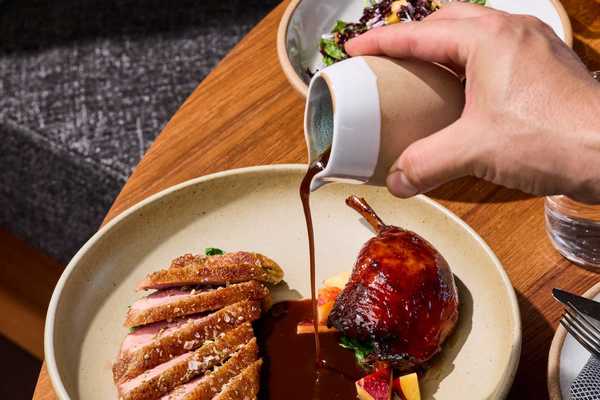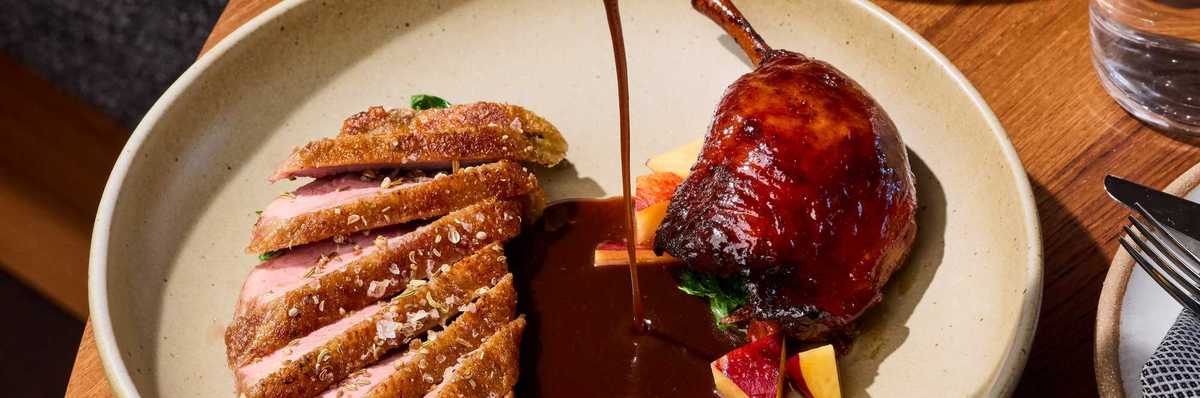

Ohlone tater tots, with aioli from locally grown tarragon, oregano, sage, and chives. A smoked duck sandwich with Mt. Tam Triple Cream cheese and housemade rose hip jam. Chia seed flour brownies with black walnuts and elderflower soda.
These are a few of the reasonably priced seasonal dishes featured at 'ammatka, the new café created by Vincent Medina and Louis Trevino in Berkeley’s Lawrence Hall of Science (1 Centennial Dr.). The two have been dedicated to preserving and sharing their Indigenous culture since opening Cafe Ohlone to much acclaim in Berkeley in 2018, the first restaurant in the world to feature traditional Ohlone cuisine.
Just as an acorn can grow into a mighty oak, that first step caught the attention of several local science museums, which have since invited the pair to collaborate in creative and educational exhibitions including those on traditional medicinal plants, the Chochenyo language, and historic shellmounds, as well as planetarium shows featuring ancient Ohlone astronomy.
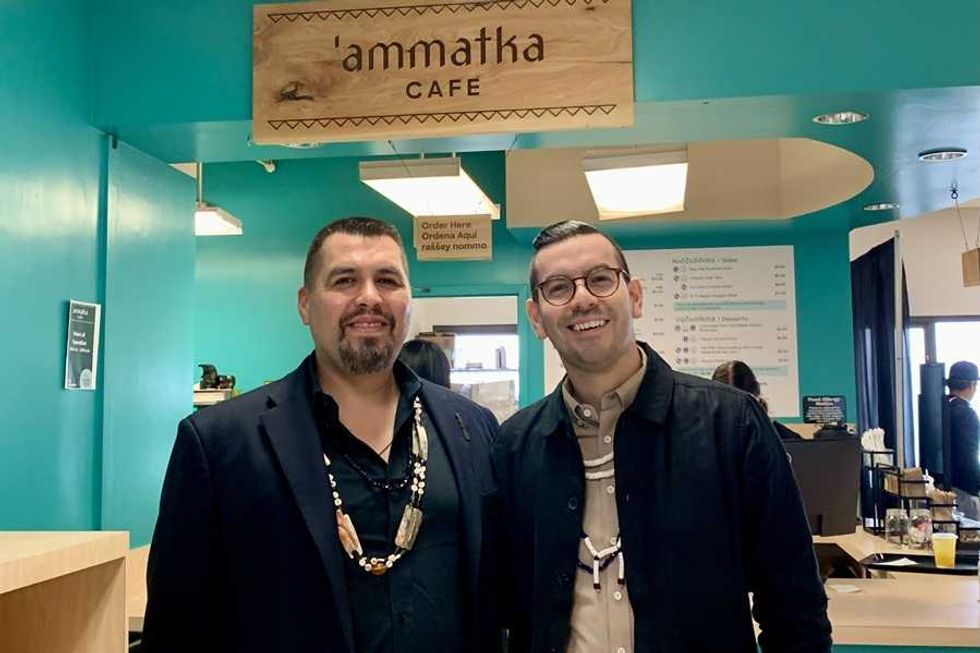 Vincent Medina and Louis Trevino at their new cafe, 'ammatka(Anna Mindess)
Medina and Trevino’s latest creation, an engaging new café with an incomparable view of the Berkeley Hills and xučyun (the Bay), opened in mid-February. Its name, 'ammatka, means "The Dining Place" in the traditional Chochenyo language, which is, itself undergoing a revival. The space, which sat unused for years, is spacious and inviting, with chairs in bright, primary colors. The walls sport questions in English, Spanish, and Chochenyo that serve as food for thought. Much more art is planned, including table covers that tell a story about highlighted ingredients to build an understanding of what people are eating and their specific meaning in Ohlone culture.
'ammatka’s focus is affordable, seasonal, Ohlone-inspired fare with prices all under $15. The menu currently offers sandwiches, salads, snackable bites, desserts, and drinks, including a black sage tea gathered from the Outdoor Nature Lab at the LHS. Dishes like a stinging nettle pizza with chopped spring garlic will be added in the spring.
Their other 25-seat dining space on the patio outside the Anthropology Building at UC Berkeley, now called ‘ottoytak—the name of which comes from the Chochenyo word ottoy, “to repair”—will reopen in the fall to serve elegant, luxurious meals.
Both spots promote what the pair call “Ohlone-forward” cuisine, meaning they feature ingredients that are historically important combined with more timely tastes. The stand-out smoked duck sandwich at ‘ammatka, for example, features traditional, responsibly sourced poultry and homemade rose hip jam, plus Mt. Tam Triple Cream cheese, which Medina says is enjoyed as part of the living Ohlone culture today.
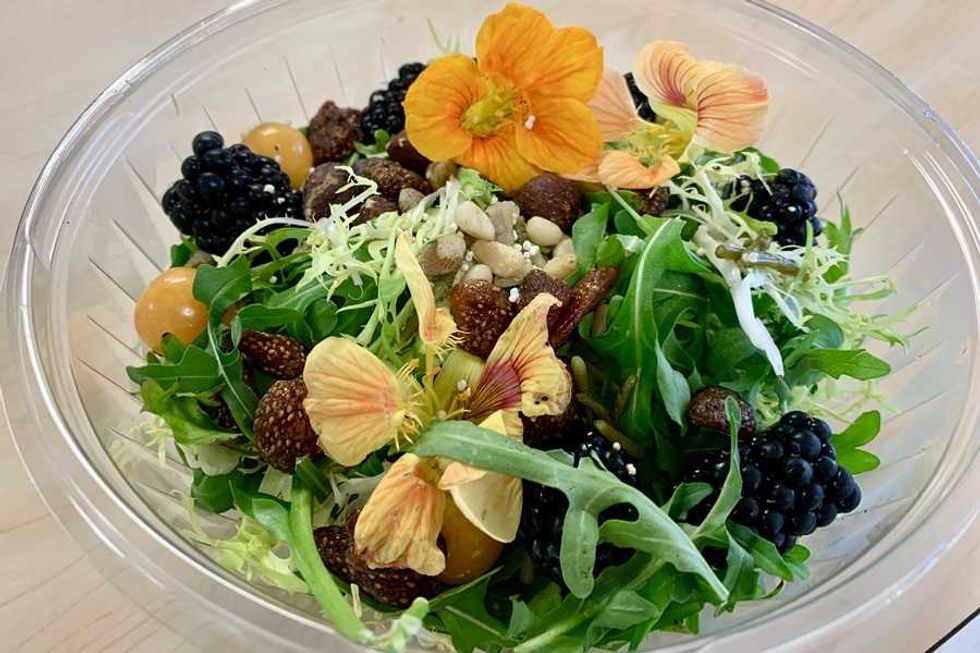 Ohlone salad with pine nuts, blackberries, dried strawberries, East Bay greens, and edible flowers at 'ammatka(Anna Mindess)
Medina and Trevino’s long relationship with the LHS is just one of those they’ve forged with several local museums, making the Ohlone the first Indigenous community in California to achieve such widespread exposure in institutions devoted to science.
In 2023, the pair devised the Exploratorium’s ¡Plántasticas! exhibit, where they emphasized the cultural and medicinal significance of local plants such as valley oak acorns, bay laurel, mugwort, sagebrush, yerba buena, and dogbane, which is used for making twine.
Medina and Trevino’s groundbreaking planetarium show, Ohlone Skies (Mur Taaraxtak) debuted the following year at the Chabot Space and Science Center (10000 Skyline Blvd.), which illustrates how countless generations of Ohlone people have observed the night sky as a living universe by whose stars they kept time. The show still runs several times a month.
They have also been partnering with the California Academy of Sciences (55 Concourse Dr., Golden Gate Park) for several years on a variety of projects, including tea tastings. The duo serve as advisors on topics that highlight traditional Indigenous ecological knowledge, like a recent exhibit on salt gathering, reviving Olympia oyster populations, and cultural connections to species like shorebirds, tule, and the harvest salt mouse.
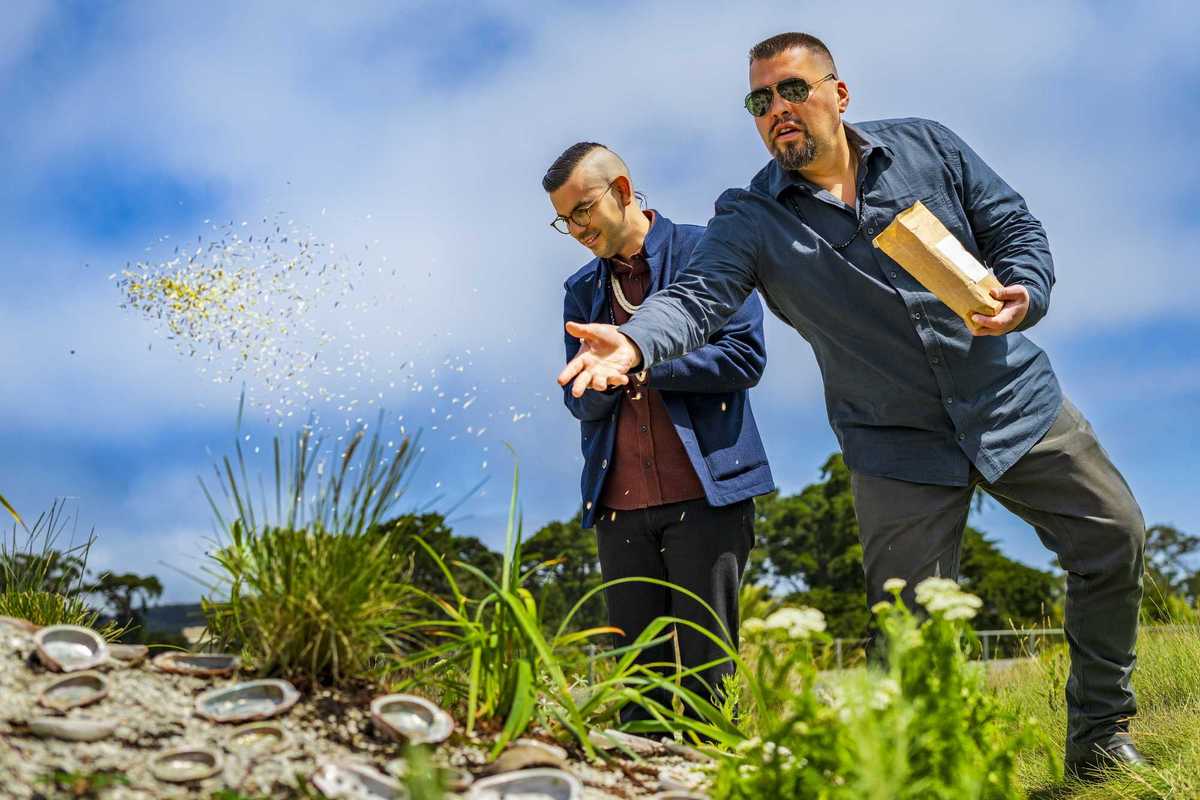
In 2025, Medina and Trevino were named recipients of the 2025 Osher Fellowship, which culminated in the creation of an Ohlone shellmound covered in native flowers and plants used for food, basketry, and medicine for the Academy’s living roof. Signs in Chochenyo teach about native plants, traditional architecture, and land stewardship.
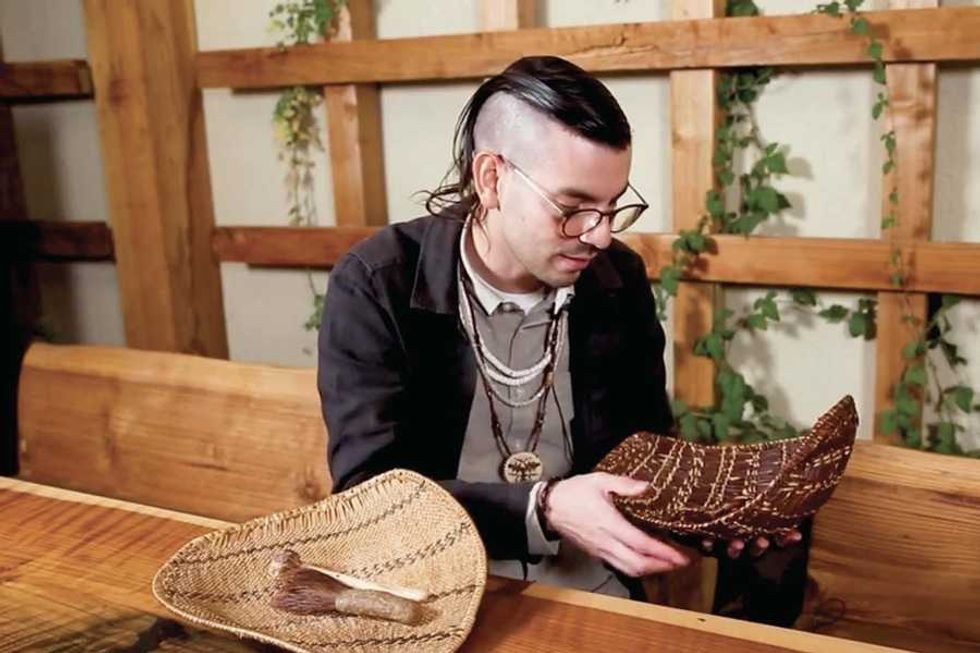 Louis Trevino shows a basket in the ¡Plántasticas! exhibit at the Exploratorium(Courtesy of Exploratorium)
The new cafe at the Lawrence Hall of Science is part of a larger program called the ‘ottoy initiative, which “aims to foster understanding and respect for Ohlone people and culture” through a slew of exhibits and programs, including The Future of Food, Food Heroes, the Outdoor Nature Lab, the Ohlone Land Restoration Project, and shows at the planetarium—with more in the works.
These initiatives aren’t just meant to educate the general public about the original inhabitants of this area but to reflect the culture and history of generations of Ohlone people who have long been shut out of such science-based institutions. It was so moving for Ohlone elders to see themselves and their ancestors represented in a recent LHS exhibit “they had tears streaming down their faces,” says Medina.
“For so long, there has been invisibility of Ohlone culture in public spaces, even though we are the first people of this place,” he continues. “For the public, it instills awe and wonder to know that that place where they live has this original identity."