
Eight days before President Obama left the White House, he made Cotoni-Coast Dairies an official national monument.
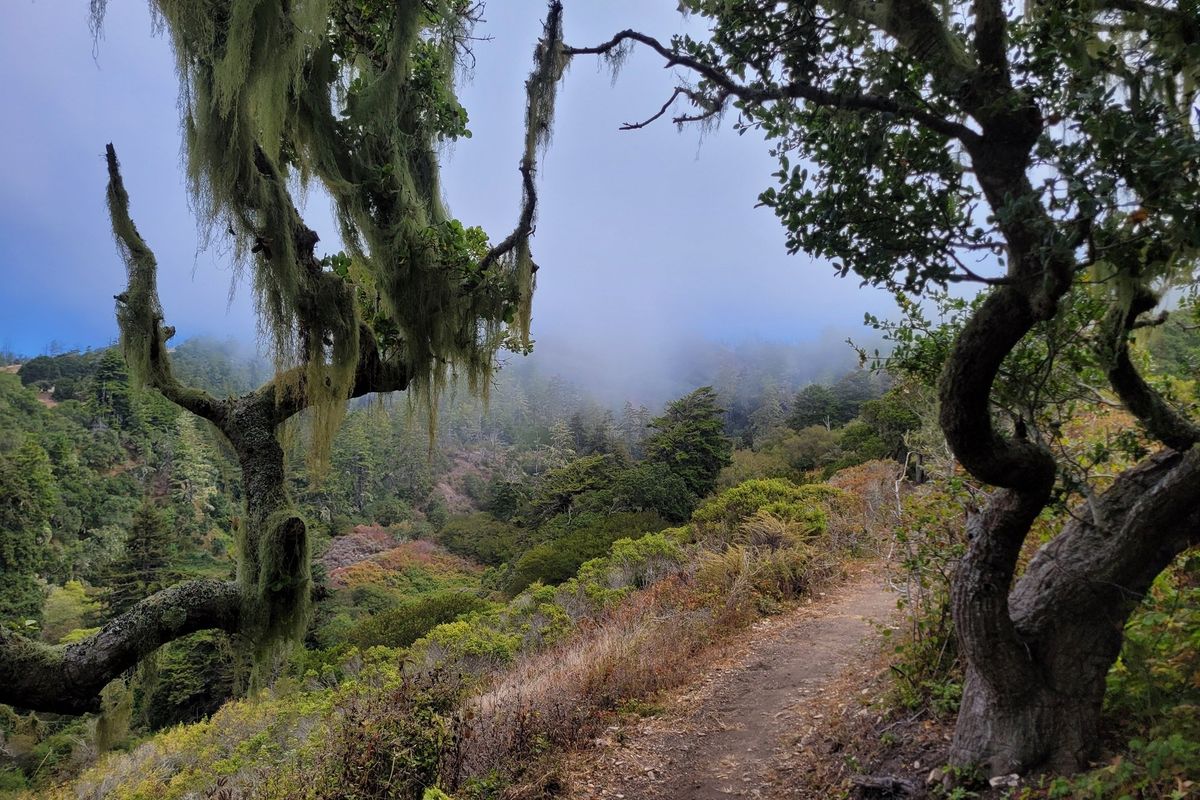
North of Santa Cruz, near Davenport, it’s 5,800 beautiful acres of coastal prairie, oak woodlands, canyons, wetlands, and redwood forest—and it’s now home to a brand-new trail system. Nearly nine miles designated for hiking and mountain biking open to the public on August 16th.
On a clear day, you can see out to the ocean from the trails, and while it’s just 90 minutes from the city (depending on traffic, of course), it feels worlds away.
Often, trails are built using fire roads or unofficial paths that then get turned into a system, but here at Cotoni-Coast, the trails were custom-built by the Santa Cruz Mountains Trail Stewardship (SCMTS).
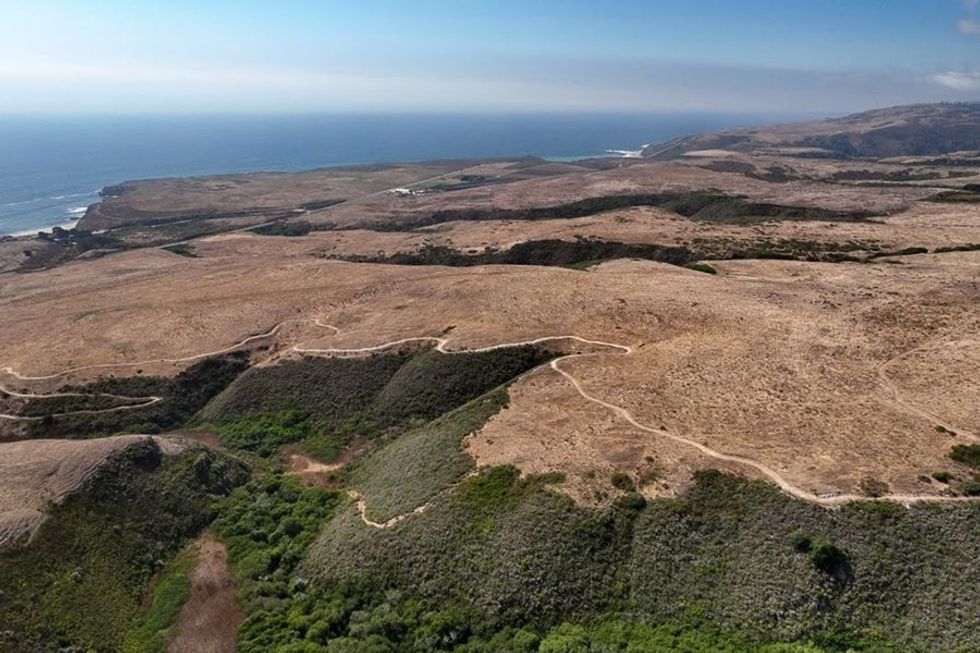 A birds eye view of Cotoni-Coast Dairies(Courtesy of Santa Cruz Mountains Trail Stewardship)
“The trails are unique because we were able to start from scratch,” says Matt De Young, SCMTS executive director. “We built the trails with the user in mind. It’s called a stackable trail network—the further you get from the parking lot, the more challenging it’s going to be.”
Building the trails, and even protecting the land, has been a long process involving a lot of different players—a “community-driven effort largely funded by donations and sponsorships,” explains De Young. The SCMTS hosted 106 volunteer events at Cotoni-Coast Dairies, and 897 volunteers put in over 10,000 hours of time to help make its trails possible.
What to Expect from the Trails at Cotoni-Coast Dairies National Monument
There are three loop trails that connect to each other, with both English and Awaswas (the language spoken by indigenous people in the area) names. The 2.6-mile Hawk (Káknu) Trail, the first and easiest loop, runs through the coastal grassland and above a wooded canyon.
The 1.6-mile Tree (Huyya) Trail, as you might guess from the name, takes you into the forest, getting narrower and steeper as it makes its way through banana slug-loved redwoods and oaks hung with lace lichen. The 4.6-mile Wildcat (Toróma) Trail loop takes you higher still, up along the ridge; it’s the hardest of the three, and a 0.4-mile connector trail links it with the west side of the Tree Trail.
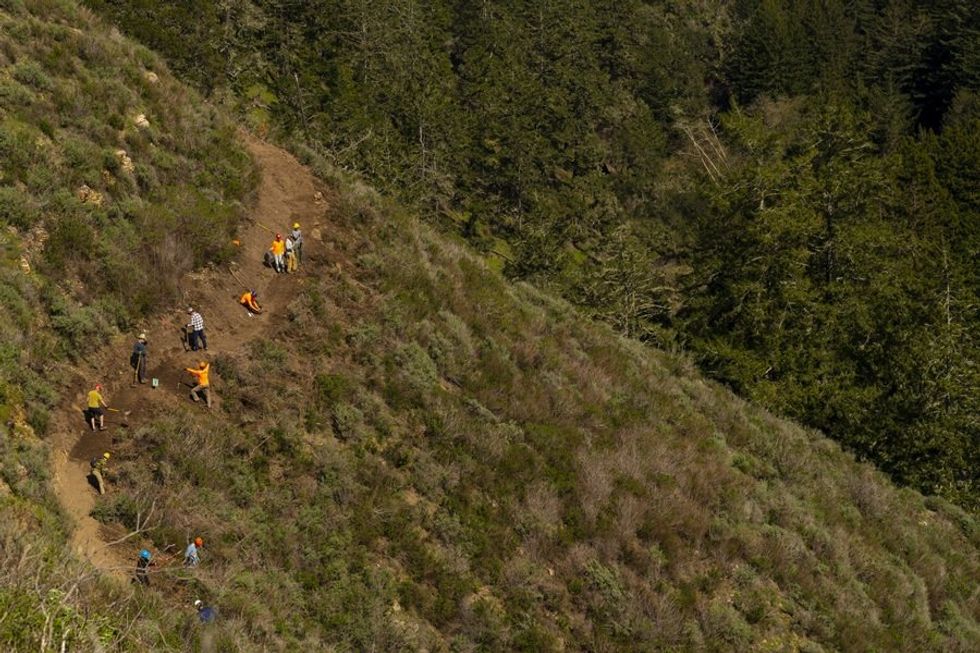 Building trails in Cotoni-Coast Dairies(Courtesy of Santa Cruz Mountains Trail Stewardship)
It's a fun system that lets you work hard or take it easy. Features like rocks, roots, and trees are well integrated, and a lot of work was put in to make sure that the trails stay dry during wet winters.
Those who’ve hiked or biked at nearby Wilder Ranch know that sometimes the trails can get muddy and saturated, forcing them to close. The benefits of being able to create a new trail system, and the silver lining to the years-long appeals process over the parking lot placement, were that it allowed extra time to see how the trails fared during winter so they could proactively address any major issues.
The trails are open from 30 minutes before sunrise to 30 minutes after sunset. There is no off-trail exploration allowed, no camping, and dogs are allowed on leash on the Hawk and Tree Trails only. Entry is free.
The History of Cotoni-Coast Dairies National Monument
Before becoming a national monument, there had been a variety of different plans for this land. After European colonization, it was used for decades (and continues to be used) as grazing land for dairy cattle; that’s where the “Dairies” part of the name comes in. In the 1960s, there was brief talk of it being a location for a nuclear power plant, then later, of turning it into a developed neighborhood. In 1998, the land was purchased by conservation groups to prevent that from happening.
The inland section that is now the national monument was transferred to the Bureau of Land Management (BLM) in 2014; the approximately 400 acres of land between the ocean and Highway 1 are under the control of California State Parks.
In 2017, Obama added the property to the California Coastal National Monument, which encompasses all the rocks and reefs within 12 miles of the California coast. That makes it an onshore unit of the larger national monument, protected for both conservation and to allow for public recreation.
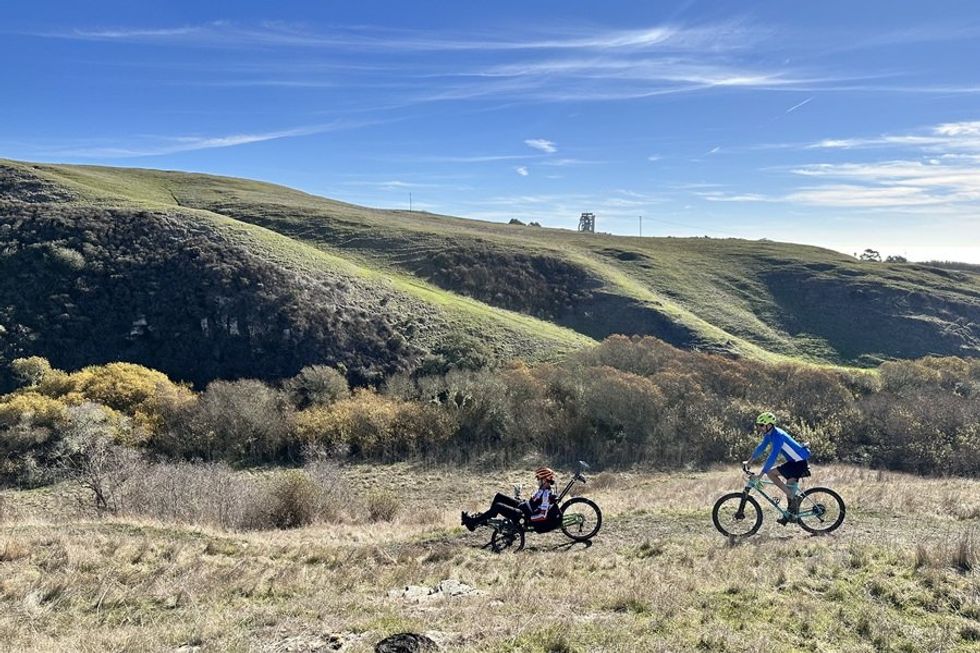 Adaptive cycling at Cotoni-Coast Dairies(Courtesy of Santa Cruz Mountains Trail Stewardship)
Local Indigenous History at Cotoni-Coast Dairies National Monument
As noted on the kiosk at the trail entrance, the monument is on “the traditional and unceded homeland of the Cotoni (Cho-toe-knee), an Awaswas-speaking people of the Ohlone culture.”
The Amah Mutsun Tribal Band (often called the Ohlone) are the living descendants of the 50 to 60 distinct Indigenous groups who lived in the Monterey Bay and south San Francisco Bay area for hundreds of years before European contact, and who were forcibly taken to Missions San Juan Bautista and Santa Cruz.
Once BLM took control of the land, they worked with the Amah Mutsun to determine what cultural sites were on the property and to ensure that they were protected. Rob Cuthrell, director of archaeological resource management for the Amah Mutsun Tribal Band, says some are as many as 7,500 years old.
“In this greater Santa Cruz Mountains region, especially the coastal parts, there are certain places on the landscape that seem to be cultural centers where there was enduring Indigenous occupation—long-term home places of tribes. Those aren’t everywhere. Cotoni-Coast Dairies has some of these special culturally significant areas,” Cuthrell explains.
Indigenous people actively tended the land, says Valentin Lopez, chairman of the Amah Mutsun Tribal Band. “They were very effective at managing and stewarding the landscape so that it was one of the most biologically diverse landscapes in North America. Early explorers thought that landscape was purely accidental—it was intentionally managed.”
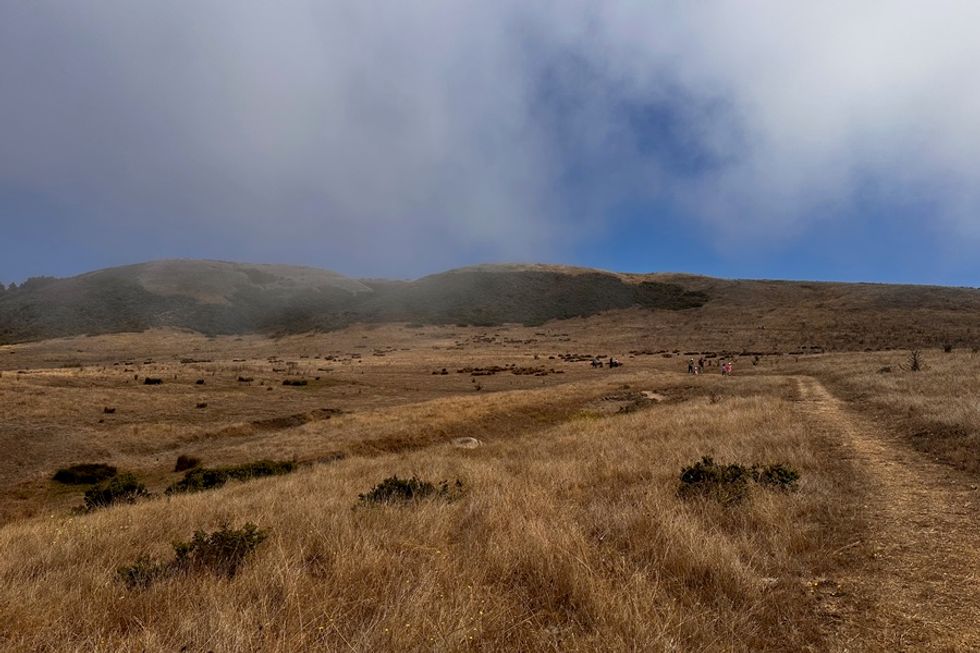 View from the Hawk (Káknu) Trail(Kristin Conard)
Sections of open coastal prairie were kept free from woody shrubs and trees with regular prescribed burning, a practice that attracted wildlife like deer, tule elk, and rabbits. The area was also a vital seasonal food source for hazelnuts, huckleberries, tubers, soaproot, and more.
But Cotoni-Coast isn’t just a place where things once happened. The area still holds a lot of significance for the Ohlone. As Alexii Sigona, UC Berkeley PhD candidate in environmental science, policy, and management and Amah Mutsun Tribal Band member, put it: “It’s a living landscape with a deep history for Indigenous people and others.”
Future Plans for the Cotoni-Coast Dairies National Monument
Lopez’s hopes for the land’s future include bringing back native vegetation. “Those plants represent our food plants, our medicine plants, our crafting and basketry types of plants… We’d hope to be able to gather those plants and use them for the purpose for which the creator gave them to us.”
Meanwhile, the SCMTS are planning to build an additional nine miles of trails to the south of Davenport that would provide access to equestrians as well as hikers, and to connect the trails at Cotoni-Coast with those at San Vicente Redwoods. They’ll link up to Panther Beach on the other side of the highway via a pedestrian overpass bridge that is expected to be finished in 2027.
// Cement Plant Rd. and Warnell Truck Trail (Davenport), blm.gov/cotoni-coast-dairies
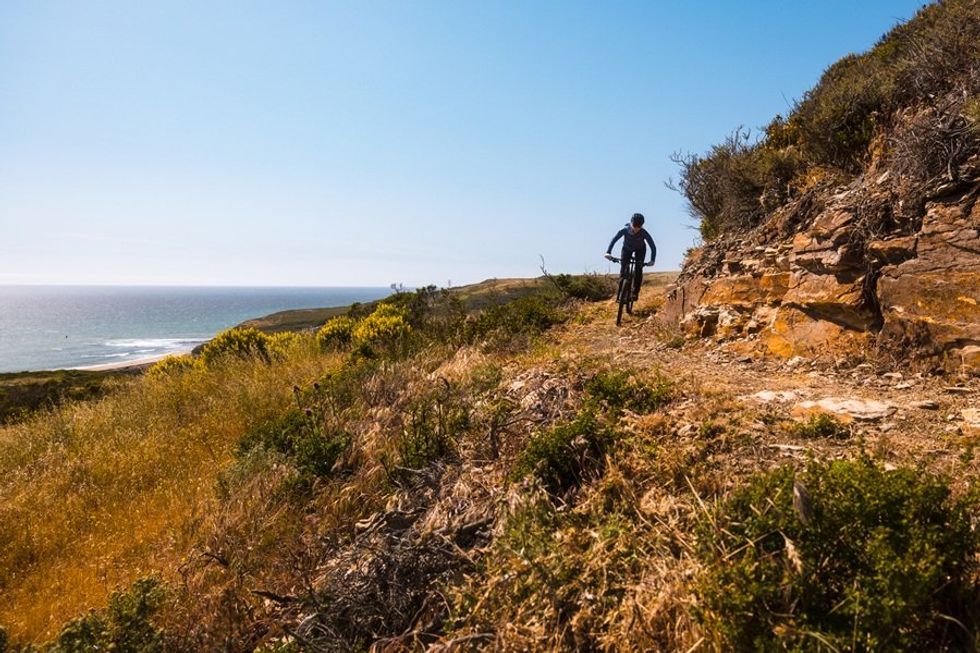 Cycling in Cotoni-Coast Dairies(Courtesy of Santa Cruz Mountains Trail Stewardship)