
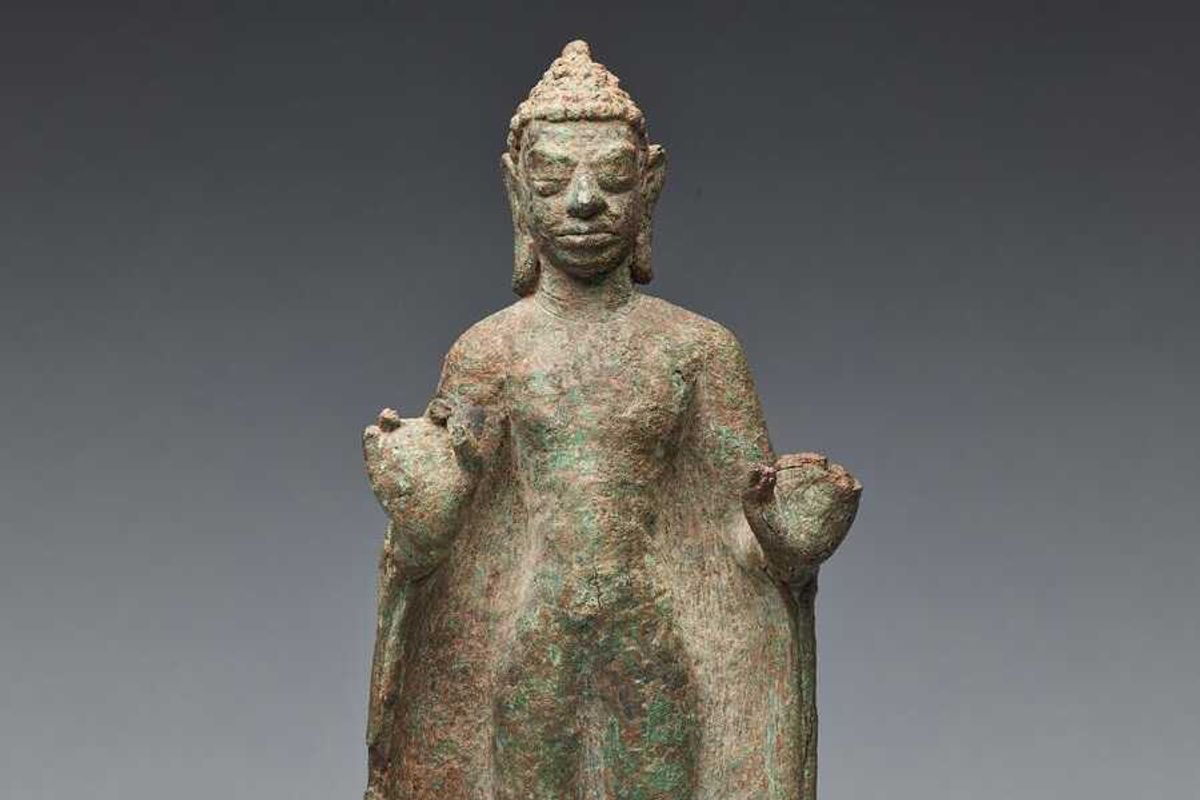
Returning four bronze sculptures—three Bodhisattva figures and one of Buddha—to Thailand, about 60 years after they were smuggled out of the country, is the ethical and lawful thing to do, according to Natasha Reichle, San Francisco’s Asian Art Museum’s associate curator of Southeast Asian art.
She thinks it goes beyond duty.
“It’s a step we can take to build new equitable relationships with Thailand and other countries in Southeast Asia,” she said at the museum’s repatriation ceremony on Monday. “And it's a really joyful thing to do, as you'll see from the community here and the reception that I'm sure these will get when they reach Thailand.”
The mood in the museum was joyful. After an introduction by chief curator Dr. Robert Mintz, the director and CEO of the Asian Art Museum Dr. Soyoung Lee, and the ambassador of Thailand to the United States, H.E. Dr. Suriya Chindawongse, explained that the 1,400-year-old Buddhist deities were for all of humanity to enjoy.
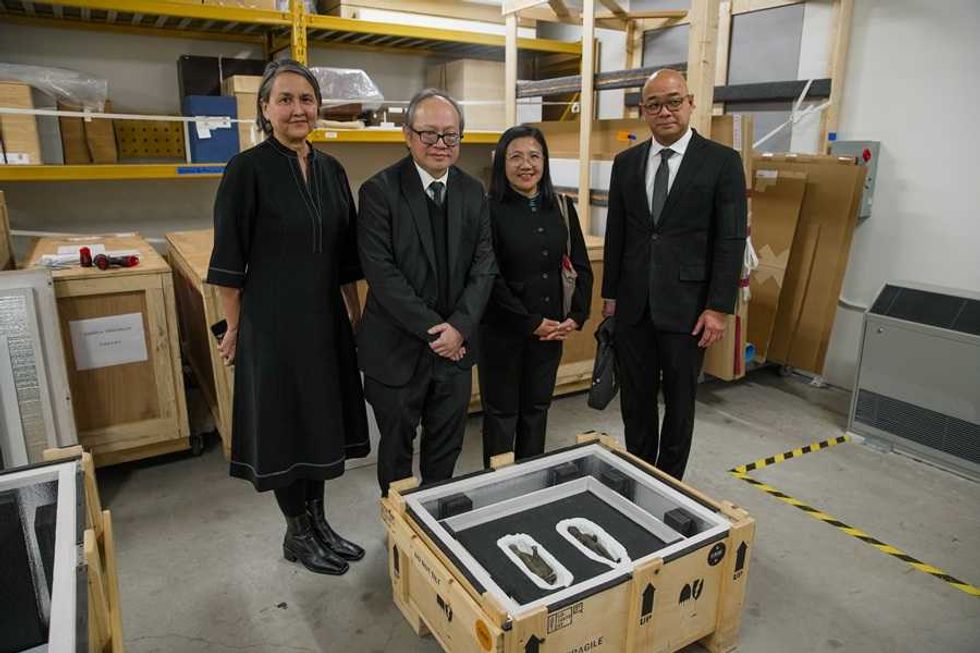 Two of the four bronzes crated and ready to go at the repatriation handover with Thai Consulate(© Asian Art Museum DSC01923)
San Francisco mayor Daniel Lurie showed up to participate in, as Mintz put it, “a bit of theater,” shaking hands with Thai officials and handing over an official document transferring custody of the sculptures. The ambassador then presented the San Francisco contingent with orchids, the national flower of Thailand.
The bronzes were part of a large art heist from a temple in northeastern Thailand. Someone donated them to the museum in the late ‘60s, and they have been part of the museum’s collection ever since.
The items have been linked to Douglas Latchford, a British art dealer who was indicted for trafficking antiquities in 2019. The museum explained how objects ended up in its collection and the challenge of establishing provenance in last year’s Moving Objects: Learning from Local and Global Communities.
The exhibition gave visitors a sense of the work going on behind the scenes, drawing attention to the bronzes before they left San Francisco, says Mintz.
“We got to a point where we could confidently state that they were smuggled, and at that point it becomes a moot point, right? They should return to the place from which they were taken with other works.”
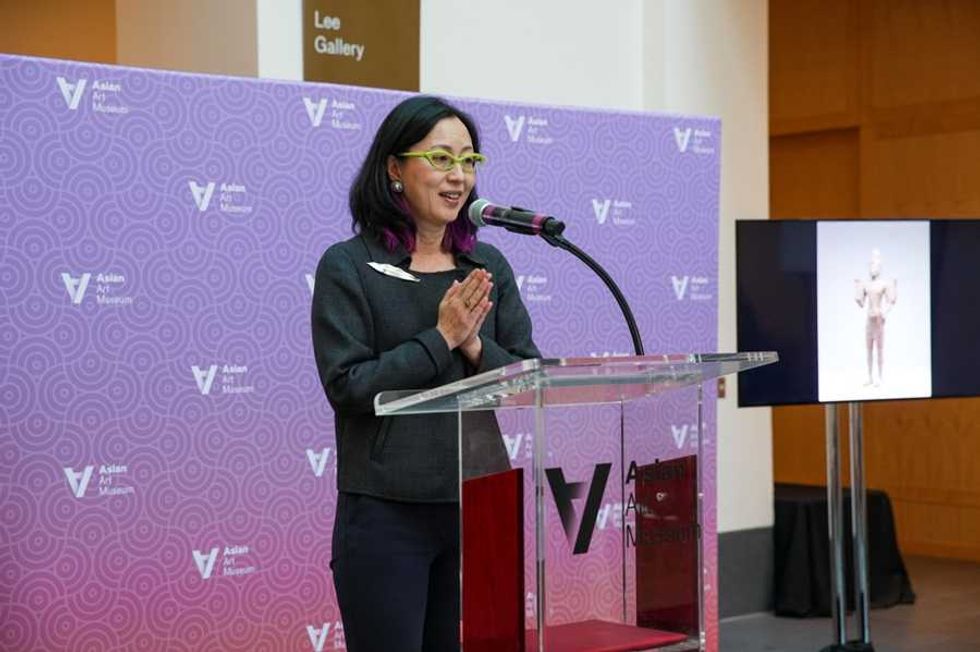 Dr. Lee speaks at the repatriation handover With Thai Consulate(© Asian Art Museum DSC01652)
Reichle calls the process of finding out the truth about the sculptures complicated, involving experts in Thailand, the U.S. Department of Homeland Security, and the curatorial team at the Asian Art Museum, who concluded that the sculptures had been looted from a Khmer temple complex.
“There was a tremendous amount of work and research on the part of Thai scholars in Thailand, especially those in the area around the province where these objects came from,” she says. “They spent years interviewing villagers and doing art historical research.”
The Asian Art Museum is better off exchanging the bronze sculptures for a bond of trust with the Thai museum, Mintz says.
“It was lovely that the artworks were here, but that's not important,” he continues. “The conversations and the connections that we have developed with members of the Thai community here, with members of the arts community in Bangkok, and members of the scholarly community in Bangkok—those are things that will, I think, show returns for years to come.”
For Reichle, it goes back to joy.
“It completely blows my mind that of this hoard of statues that was found near this one temple in Thailand—which are some of the most spectacular objects of art of that period—that none of them are in museums in Thailand today,” she says. “It thrills me that these are going to be among the first that will be available for the Thai public to come and see.”
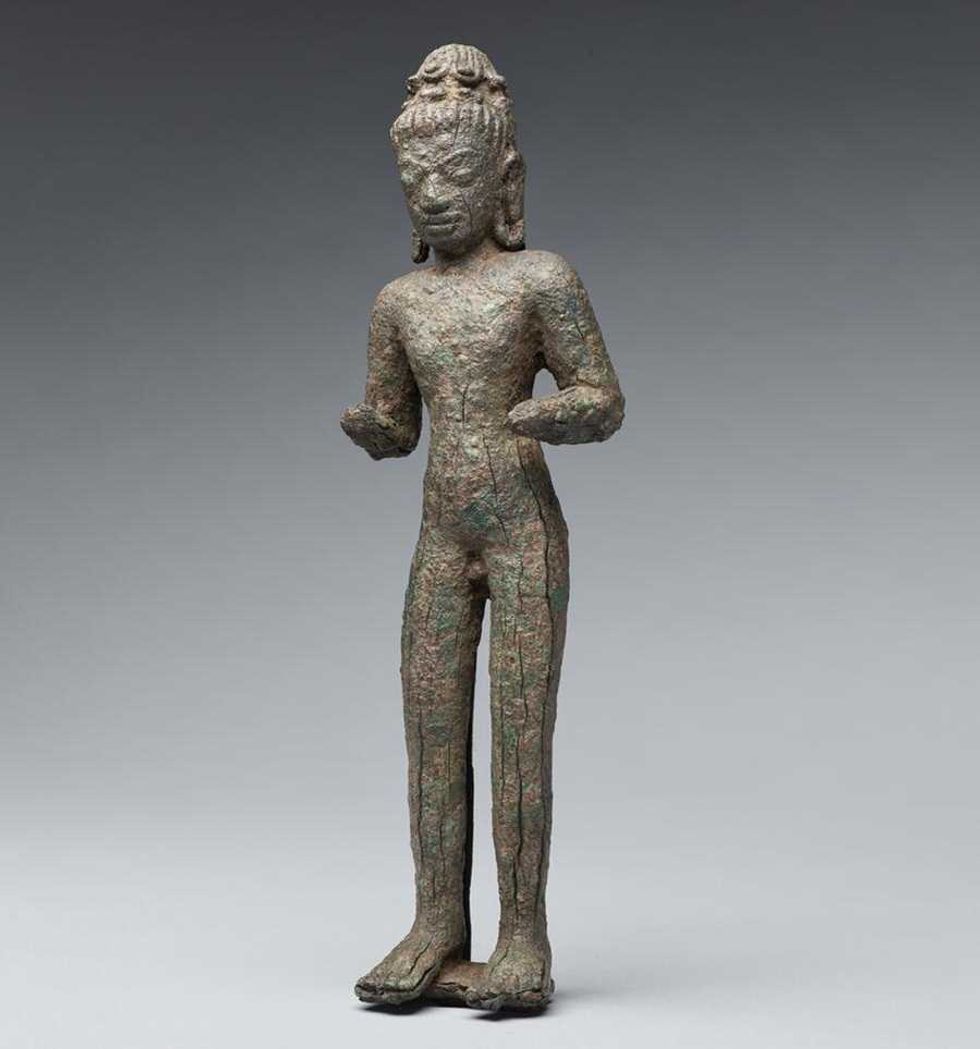 Bodhisattva, approx. 600-700 CE, Thailand, likely from Prasat Hin Khao Plai Bat II, Buriram Province, Bronze(Asian Art Museum of San Francisco, The Avery Brundage Collection, B68S9, photograph © Asian Art Museum)