
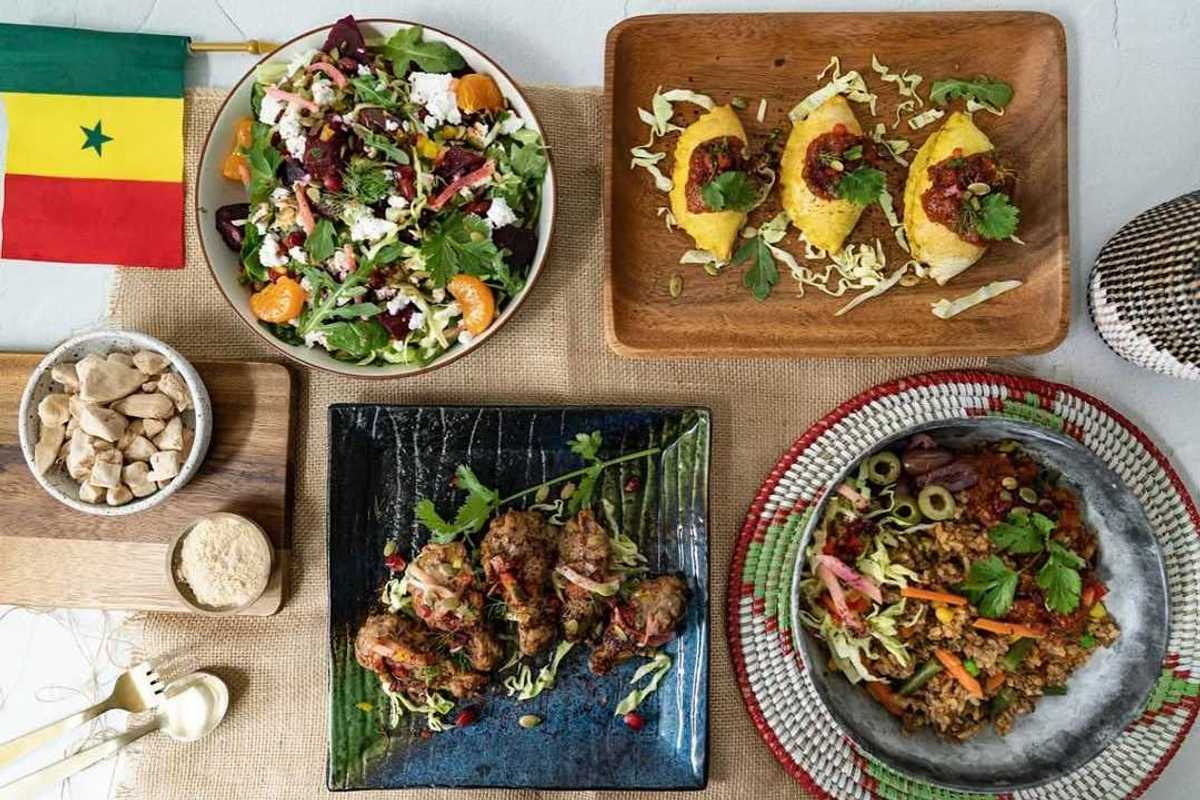
While Black culture and soul food has long held a place in the Bay Area, the diverse repertoire of African fare is harder to find.
Even so, cuisine from around the continent, as well as the dishes into which it has diffused throughout the diaspora, is slowly finding more representation here at home. Case in point? Meski.
The Lower Nob Hill restaurant, which specializes in a blend of Ethiopian and Dominican fare served in a green and gold dining room upstairs and its rowdier subterranean bar, got a lot of press ahead of its April 2025 opening. Co-owned by power forward for the Golden State Warriors Draymond Green, Meski (1000 Larkin St.), teamed chef Nelson German with restaurateur Guma Fassil to bring the modern Afro-Latin and Ethiopian eatery to life in a space crafted by Black artists and interior designers that celebrates those cultures.
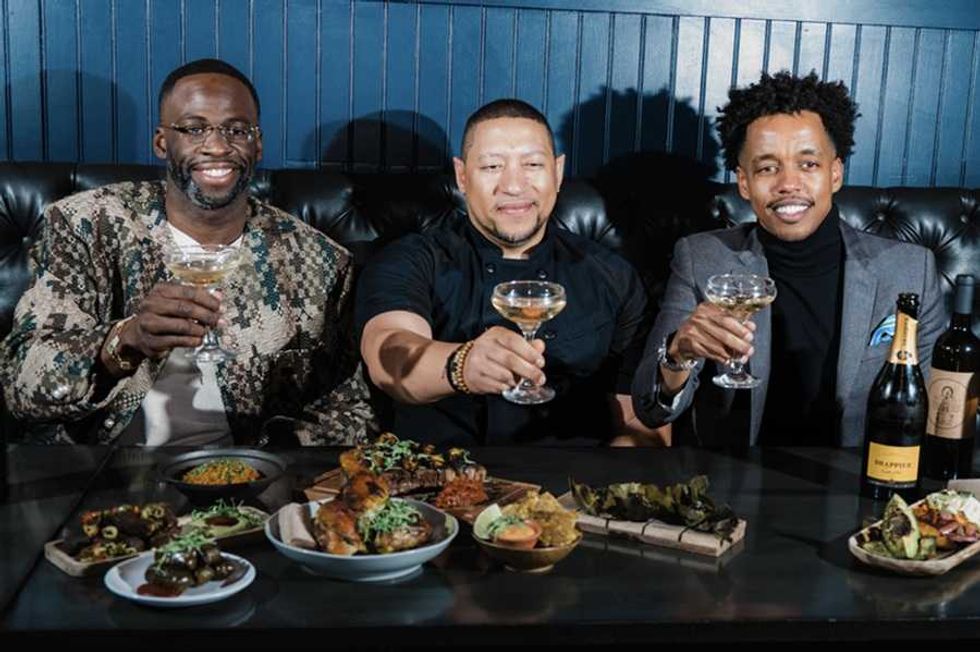 Draymond Green, Nelson German, and Guma Fassil at Meski(Courtesy of Meski)
The menu itself is heavy in the Afro-Latinx cuisine that former Top Chef contestant German is known for at Oakland’s alaMar Dominican Kitchen & Bar (100 Grand Ave. #111) and cocktail lounge Sobre Mesa (1618 Franklin St.). He credits a visit to a Senegalese restaurant in Portland for helping him delve deeper into his personal history. “It was time for me to really give back to my lineage and my roots,” Nelson explains.
At Meski, however, everything is reimagined through an Ethiopian lens, inspired by Fassil’s roots and his restaurant in Berkeley, Meski’s Kitchen and Garden (2955 Telegraph Ave.), which combines authentic African dishes with a touch of the lightness and celebration associated with the Caribbean. Favorites include an oxtail pasta loved by Green, made with shredded braised angus oxtail, gemelli pasta, charred pepper, ova de Nevisian, lemon thyme, and cane de maguey vegetaliano; a coffee-rub-crusted, 12-ounce Ethiopian-spiced steak served with chickpea puree and mustard frill; and arroz con pollo with brined chicken leg, Dominican vegetable locrio, roasted black cardamom, and sweet plantain salsa verde.
Nafy Flatley, chef and owner of Teranga (the Wolof word for hospitality, generosity, camaraderie, and making room at the table) in the Financial District (4 Embarcadero Center, Street Level), started her restaurant as a way to honor her Senegalese heritage and promote the health benefits of traditional African superfoods.
While Flatley trained under chefs at State Bird Provisions and alongside Traci Des Jardins, most of her education came from her mother and grandmother at home in Dakar.
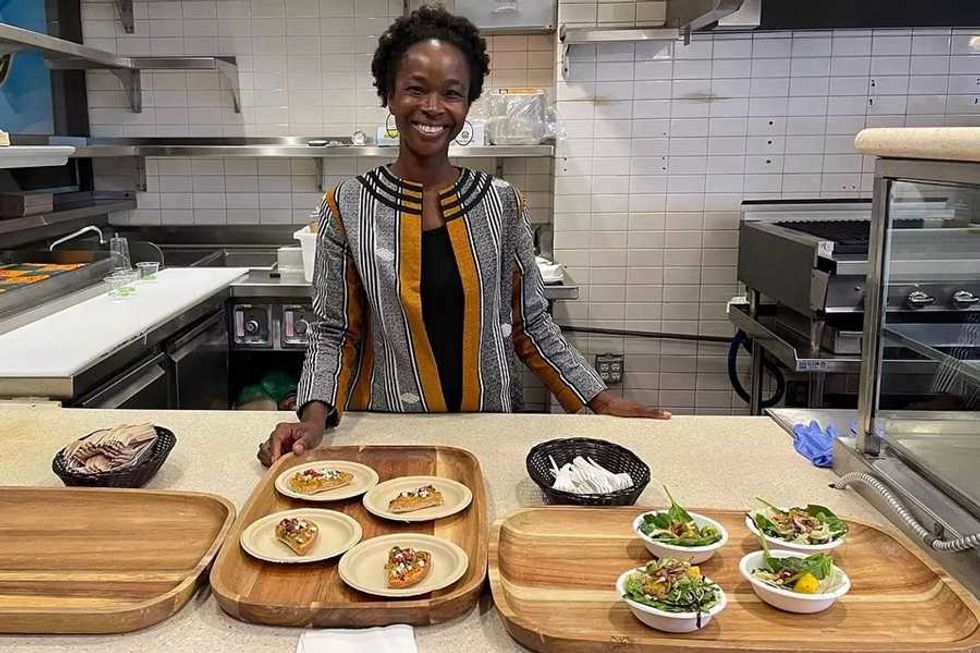 Chef/owner of Teranga, Nafy Flatley(Courtesy of @terangafoods)
“My training is deeply rooted in the informal, ancestral traditions of the African diaspora, having learned the art of Senegalese cooking and the medicinal properties of indigenous ingredients from my mother and grandmother,” Flatley explains. Her food, she says, spurs memories of home-cooked meals, bustling markets, and communal dining.
From these informal lessons, Flatley learned to make many of the dishes on the menu at Teranga, including maafe, a slow-simmered peanut stew with gentle spices. She says it’s a great first introduction to Senegal’s cuisine: “The sauce is creamy, savory, and deeply satisfying, served with tender vegetables and grains like rice or millet that make it both nourishing and grounding. It’s the kind of dish that tells a story with every bite, approachable for first-timers yet deeply rooted in West African tradition.”
Chef Shubbie Aishada, who both owns and cooks at Golden Safari, a cozy West African restaurant in Hayward (22431 Foothill Blvd.) celebrating nine years in business, grew up in Nigeria and began cooking at the age of eight. The youngest of four, she thrived in the kitchen and found excuses to hang out there with her parents and her paternal grandmother.
“The truth about African cuisine is it’s different,” Aishada says, describing its dishes as vibrant, diverse, and bold. “It’s not just about a business; it’s a passion for me.”
Creating menus with African influence means leaning heavily into the ingredients and dishes that are commonly used, like plantains and stews. Even the way they salt fish at Meski is authentic to the continent, ensuring every layer of its menu is touched by tradition.
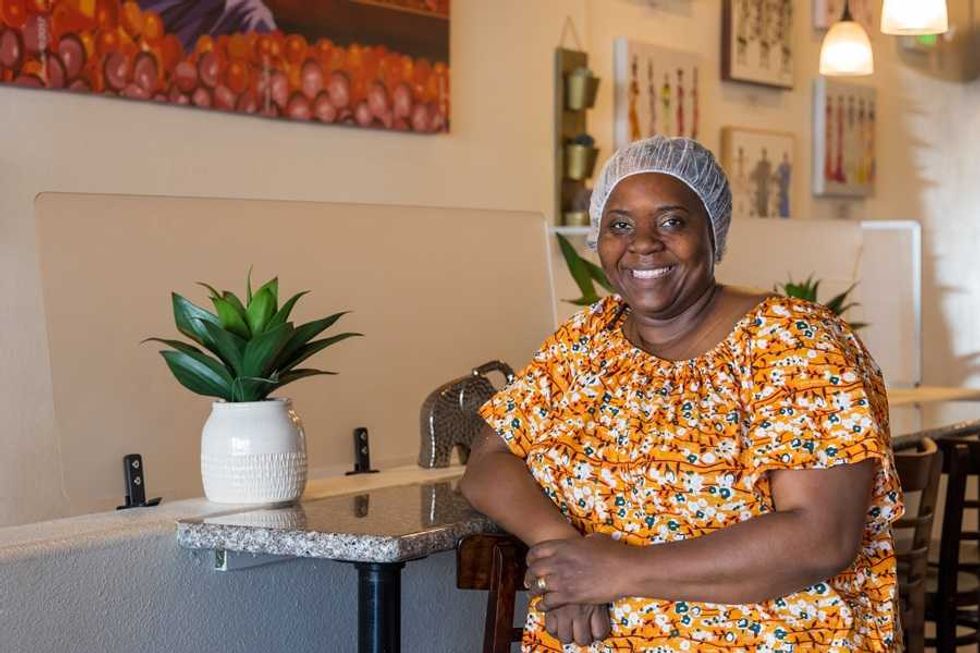 Chef/owner of Golden Safari, Shubbie Aishada(Courtesy of Golden Safari)
Sobre Mesa, which is celebrating six years in business, was another opportunity for Nelson to explore his roots, sharing favorites from Cameroonian relatives. “It’s not just embracing the Latin heritage, but also the African,” he says.
Drinks at the cocktail bar include a pineapple martini made with grains of paradise and preserved chilies from West Africa; jackalberry and persimmon sours that celebrate flavors common in both African and Dominican cuisine; and syrups, cordials, and infusions made with plantains. Many of the spirits are imported directly from Africa.
African cuisine is “definitely soulful,” Nelson says. “It’s earthy, there’s spices, it’s just bold… That’s kind of what represents our people.” The spice and bright flavors help to balance the heaviness of starches and legumes and keep people alert in the hot African climate—though Nelson admits that at his restaurants, he definitely tones down the spice level for diners not used to it.
For Flatley, “African cuisine is incredibly diverse, healthy, and rooted in ancient traditions that celebrate community. The permeating flavors often involve a balance of savory, spicy, and earthy notes. We use a variety of classic ingredients such as baobab, moringa, ginger, tamarind, hibiscus, rice, and millet.”
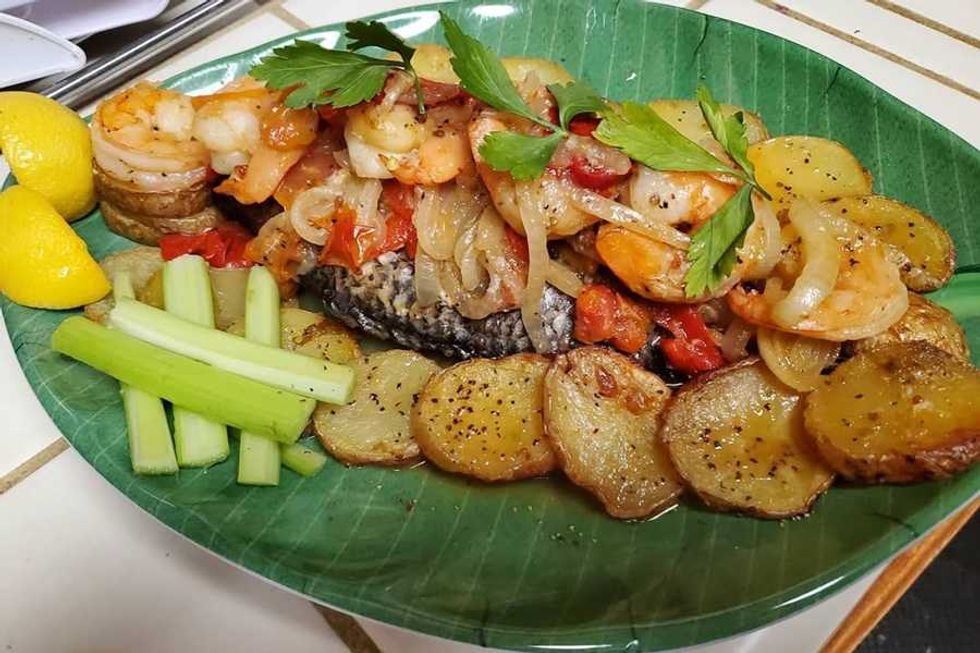 Grande fish platter at Golden Safari(Courtesy of @goldensafari_restaurant)
Where Aishada grew up, it wasn’t uncommon for people to only cook what was grown in their gardens. That’s part of what lends to the healthful qualities of African fare; people don’t rely on refrigeration and freezers the way they do here. She credits the way Africans eat with long lifespans back home. “It’s just the tradition. It’s what we believe in,” Aishada says.
Golden Safari serves foods reminiscent of Aishada’s childhood. Puf-puf is a common appetizer made with meat, potatoes, and carrots inside of a deep-fried dough not unlike an empanada. She also serves a pepper soup that can be made with goat or chicken, one of many dishes made by cooking down ingredients such as bell peppers, tomatoes, and onions and adding spices and seasoning to create aromatic sauces. Foufou, a spongy starch commonly made from yams—the yucca type, not sweet potatoes—is also popular.
“We want the Africans here to feel like they are back home,” Aishada says. And they want everyone else to know what they are eating is authentic.
“What I appreciate most is the versatility of African food,” Nelson says. While there are certainly main ingredients, each region is distinct. For Flatley, the ingredients tell stories of trade routes, survival, and celebration, proving how entangled food is with the larger African diaspora.
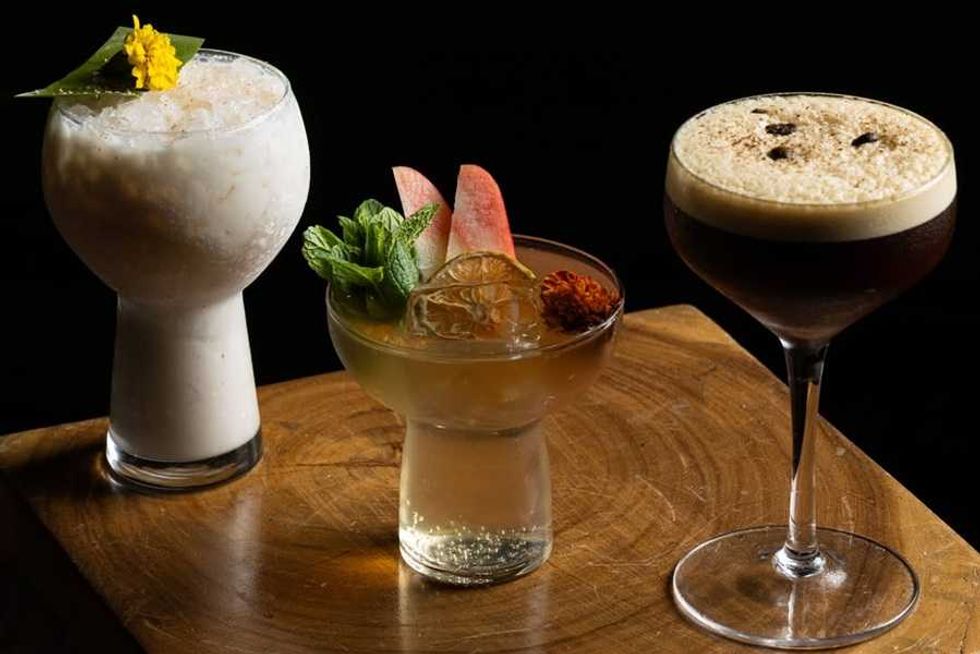 Many cocktails at Sobre Mesa include African ingredients and preparations.(Courtesy of @sobremesaoak)
Although African fare is gaining more traction in the Bay Area, authentic representations and African chefs are still few and far between.
“While there is a growing community of diners who are deeply familiar with the diverse flavors of the continent, we frequently welcome guests who are experiencing African cuisine for the very first time,” Flatley says. She sees it as an opportunity to introduce others to the techniques and flavors—but it is also indicative of how much room there still is for this space to grow.
Nelson, too, sees the African culinary scene slowly expanding as chefs and restaurateurs not only bring their own culture to the neighborhood, but also spark a familiar joy in those who taste home in their dishes. “It’s really inspiring to be here,” he says.