

A fiery sun beat down on our small flotilla of kayaks as we pushed off from the shore near the Feather River Fish Hatchery in Oroville late last September.
Not long ago, adult Chinook salmon would return by the thousands to spawn in this tributary, dropping eggs and milt (sperm) into nests dug into the gravel, then dying before the next generation hatched. So dense with fish was the Feather River in late September and October that they were like a carpet of glinting scales under the surface of the water.
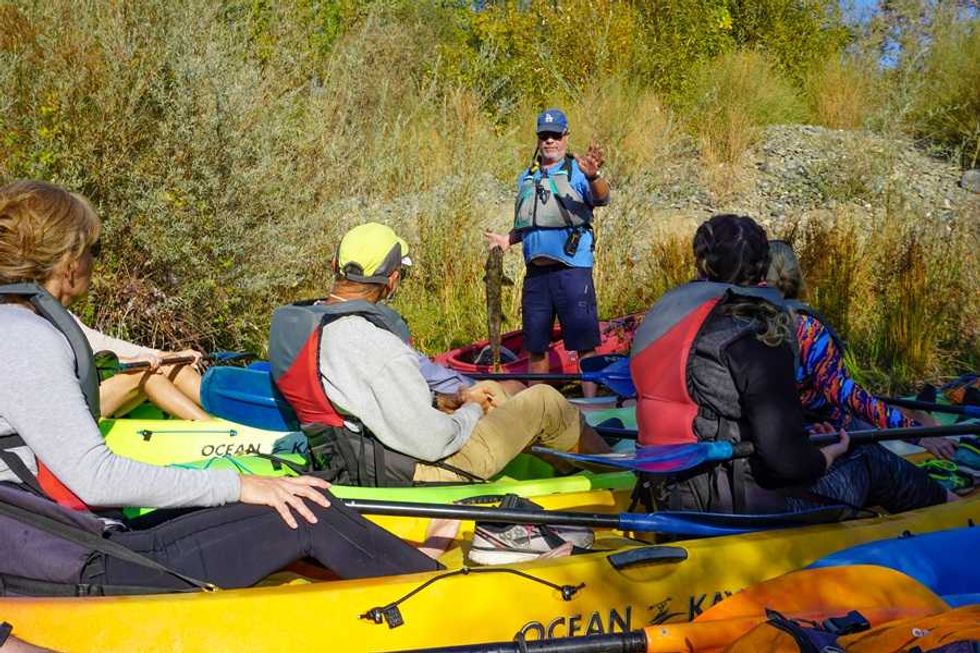 A guide holds up a dead salmon on the Feather River(Courtesy of Explore Butte County)
But in 2020, the aquatic tapestry began to grow threadbare. By 2023, so few fish were returning to spawn that the entire riparian ecosystem was in trouble. A three-year moratorium imposed on commercial and sport fishing was a Hail Mary to save Northern California’s native Chinook populations—and, against all odds, it worked.
In 2025, the salmon swam all around us, pushing their way upstream against the current. There were dozens of them, hundreds maybe—more than our guide from the Forebay Aquatic Center had seen in this spot for years—and late September was just the start of their run.
For the first time in a while, the Oroville Salmon Festival—a day of free, family-friendly events and activities that includes a soap box derby, salmon wrestling, hatchery tours, a car show, a kids zone, live music, and plenty of local food and vendors—had good news to celebrate.
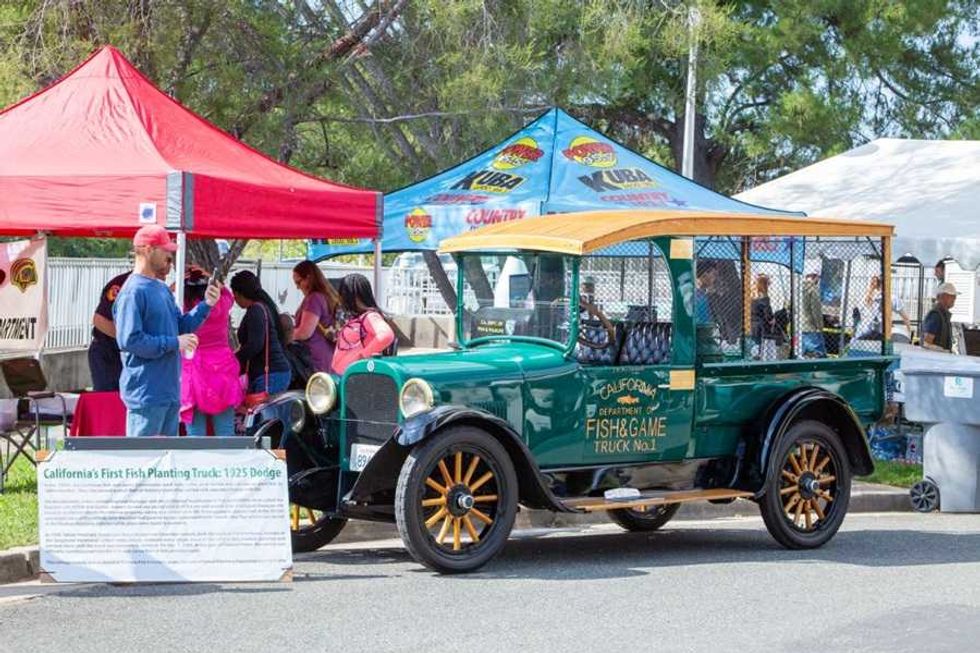 The Oroville Salmon Festival is Saturday, September 26th.(Courtesy of Explore Butte County)
It wasn’t one factor that led to the Chinook salmon crisis, but several working in tandem. Though they live the majority of their adult lives in the salty Pacific, the fish begin and end their lives in cold, oxygen-rich freshwater rivers, returning to the place of their birth to spawn right before they die.
Between 2020 and 2022, however, there was no cold, oxygen-rich water to return to. Extreme drought had left the region's major reservoirs so depleted that only a little water could be released through manmade dams at Oroville, Shasta, and Folsom to fill the waterways used by the Chinook. Since shallow rivers heat up more quickly than those with plenty of water, the eggs laid by the returning salmon were literally cooked alive. In 2021, researchers determined that the mortality rate in the nearby Sacramento River may have been as high as 90 percent.
Those that survived didn’t have an easy go of things, either. Many of the salmon “fry” suffered from severe neurological deformities caused by thiamine deficiency or became infected with a deadly parasitic worm. When the state relaxed certain environmental standards to ensure there would be enough water for farms and municipalities, a number of them got caught in agricultural pumps or swam down channels to nowhere.
In 2025, though, the population was beginning to rebound; this fall, Chinook salmon are expected to run the Feather River in even greater numbers.
 (Courtesy of Explore Butte County)
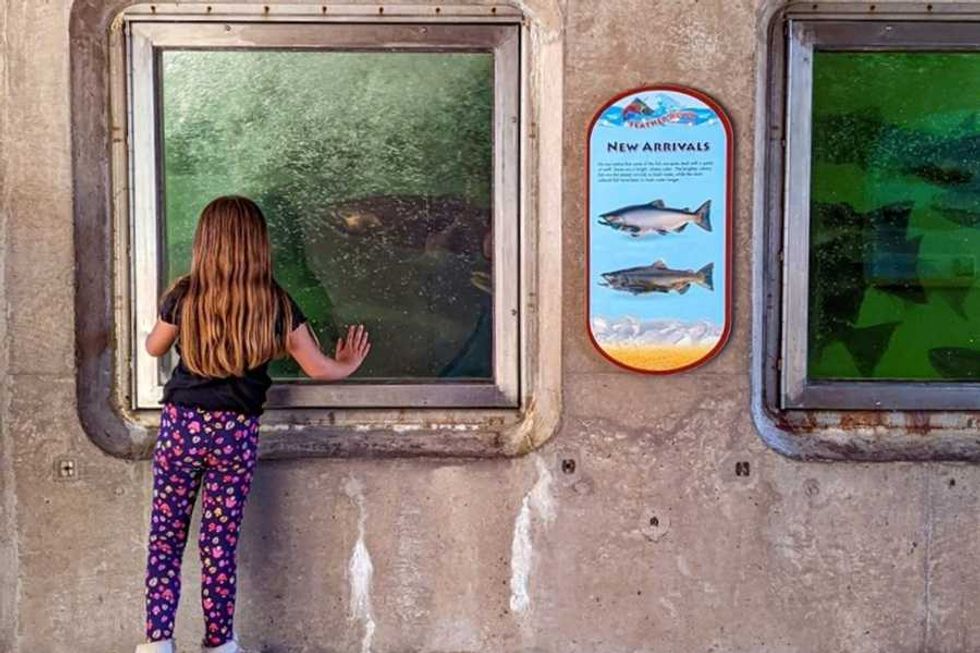
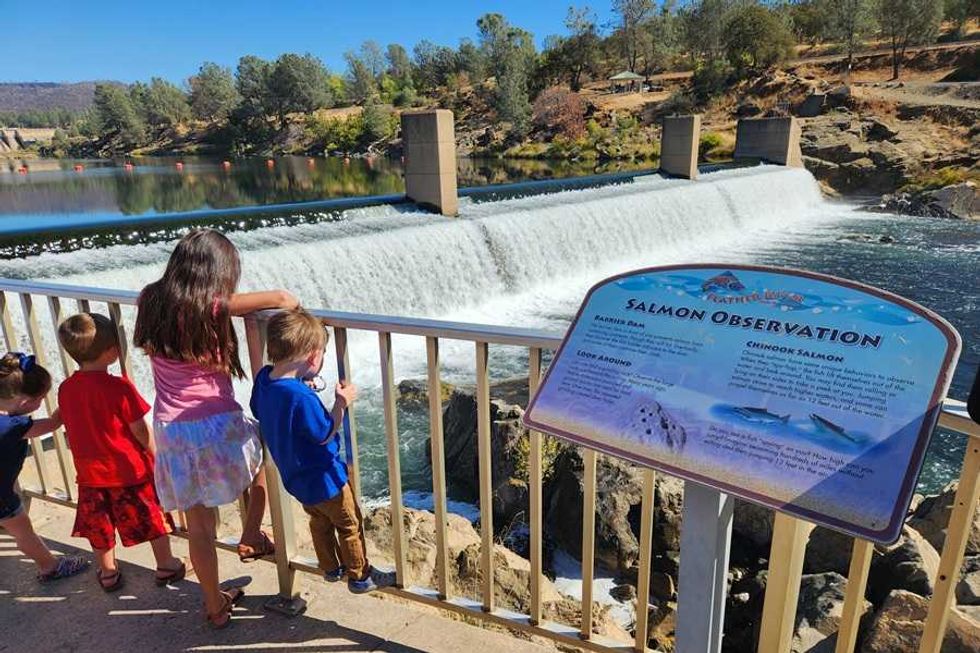
In Oroville, the results of the extreme measures taken to save this keystone species over the last few years are playing out in real time—and not just in the river itself. During the Oroville Salmon Festival, the Feather River Fish Hatchery welcomes the public to see the work they are doing to keep local populations growing. In front of the facility’s picture windows, they sort the adults who have made their final journey home, removing the eggs and milt of those that haven’t yet spawned. The eggs hatch in a special protected nursery, and the young fish will be released among their wild-born cousins when they’re large enough. Just outside, the salmon, exhausted at the end of a 60-plus-mile journey, use the last of their strength to “climb” the fish ladder to their final destination—a mesmerizing feat of determination that’s hard to stop watching.
The Feather River isn't the only place in Northern California where Chinook populations have begun to rise. In the upper Sacramento River, there were 15 times more adult salmon returning to spawn in 2025 than in 2024. Farther north, the removal of the lower Klamath River dams between 2023 and 2024 opened up more than 400 miles of salmon spawning habitat that hadn’t been accessible to the fish for over 100 years. Meanwhile, a restoration project on the Tuolumne River is expected to open more than 75 acres of spawning habitat by 2030.
 (Courtesy of Explore Butte County)
But it is only on the Feather River that you can kayak among the spawning fish on guided, two-and-a-half-hour tours twice a week as blue herons and red-tailed hawks perch in the branches above the banks and young river otters tussle in the water. Whether hunting, scavenging, or just watching quietly with paddle in hand, every species is there to bear witness to the Chinook’s return.
// The Oroville Salmon Festival is September 26th; details at visitoroville.com. Feather River Salmon Tours are held twice a day on Saturdays starting September 26th and continuing through November; 5 Table Mountain Blvd. (Oroville), forebayaquaticcenter.com