

San Francisco is considered the nucleus of the counterculture movements of the 1950s and 1960s. It’s the place where the Beat Generation, psychedelic rock, and the Summer of Love ignited; the place where Allen Ginsburg and Jerry Garcia blew up the conformity and complicity of post-WWII America.
What happened in the city, though, was only the brief and intense flame of a larger revolution in literature, poetry, art, music, and philosophy, argues writer Dave Perlis in his new book Morning in Marin: Zen, Drugs, and Ewoks on the California Coast.
“The way I look at it, San Francisco was the stage where you could go to perform your ideas, exhibit your ideas, and help them gain national attention,” he says. “But the place where the inspiration happened, where the love and the magic happened, was Marin. It was a liminal zone where fantasy and reality were able to blur.”
 'Morning in Marin: Zen, Drugs, and Ewoks on the California Coast' comes out on September 1st at Heyday Books.(Courtesy of Heyday Books)
Indeed, it was in Fairfax that Eastern mysticism found its foothold in the United States; in Mill Valley that Alan Watts introduced a generation to Buddhism; in Point Reyes where Philip K. Dick transformed his disturbing visions into sci-fi masterpieces; in Muir Beach where Ken Kesey launched his acid tests and the Grateful Dead performed its first show on LSD; in Larkspur where Grace Slick began to write the Jefferson Airplane hit “White Rabbit”; on a Sausalito houseboat that Shel Silverstein penned his anti-establishment children’s poetry; in San Rafael that Frank Lloyd Wright shaped an architectural masterpiece and George Lucas was inspired to design the royal palace of Naboo in Star Wars.
All are part of what Perlis calls the Marinaissance, what he describes as “a seismic cultural awakening encompassing literature, music, dance, painting, philosophy, religion, architecture, and film, which in the decades that follow will have an outsized role in shaping the twentieth century’s most enduring culture.”
In Morning in Marin, Perlis expertly tells the story of a history that spans more than 50 years, a brilliantly written book with a fast-paced and fascinating narrative full of rich, immersive, and often conspiratorial details. Through painstaking research and more than 60 interviews, he reveals the machinations behind individuals and events whose profound impact on art, music, and writing still resonates today.
Perlis also explains why Marin’s place at the nexus of America’s mid-20th century countercultural revolution is no mere coincidence. The region’s geography, he says, was instrumental in the development of its identity.
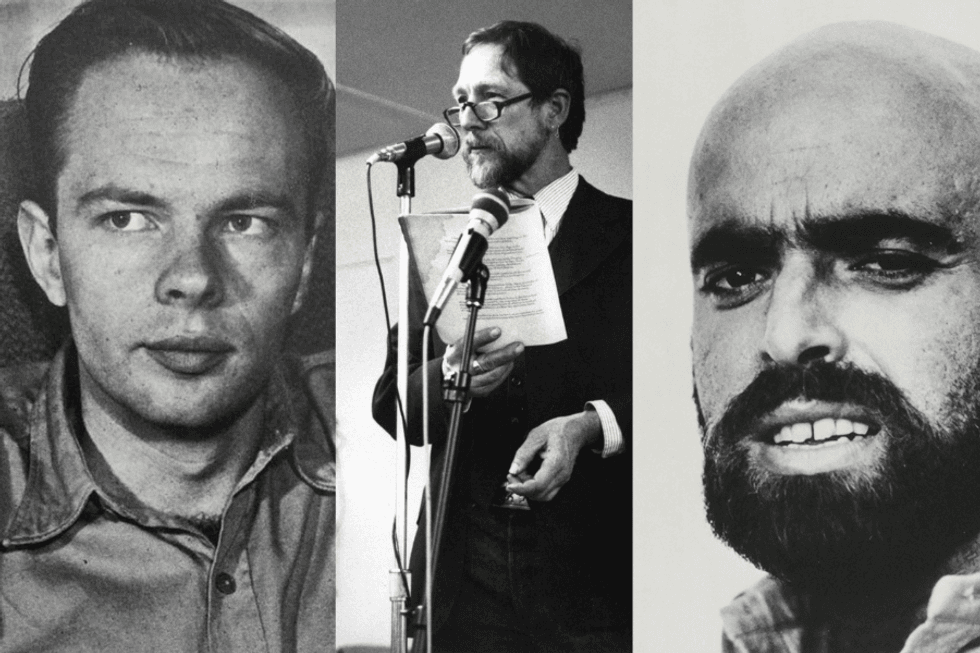 Philip K. Dick, Gary Snyder, and Shel Silverstein, three major figures in literature that came out of Marin's mid-20th century counterculture movement(Courtesy of Creative Commons)
“The fact that [Marin County] is almost an island surrounded on three sides by water is a huge influence on the people that it drew. Because the Golden Gate Bridge didn’t exist until 1937, it was sort of preserved as a time capsule—and that really did create a magical atmosphere.”
Around Mount Tam, Point Reyes, and Tomales Bay, “people found a pristine environment that didn’t exist near any other major city,” Perlis continues. Marin felt far away but was, in reality, just a short distance from the major cities of San Francisco and Oakland, and the intellectual centers of Berkeley and Stanford. “Physically and spiritually facing Asia,” the region also drew those eager to rebel against European ideals and Christian morals.
Creativity and experimentation are a current that still runs through Marin today—”culturally it is still a vibrant community that’s producing all kinds of things,” says Perlis—but there’s one major difference. As one of the wealthiest counties in the country, these days “you have to already be from there or have already succeeded in order to make Marin your inspiration. It used to not be like that.”
Morning in Marin, though, isn’t meant to be a commentary on the region in the present day. Instead, it is a “time capsule and a time machine,” says Perlis.
“I did my best to preserve our cultural history so that it wouldn’t be lost; I wanted it to be something we could all share in. It’s not my story, it’s our story.”
// ‘Morning in Marin: Zen, Drugs, and Ewoks on the California Coast’ by David Perlis comes out on September 1st. Find it at your favorite indie bookshop, online, and at heydaybooks.com
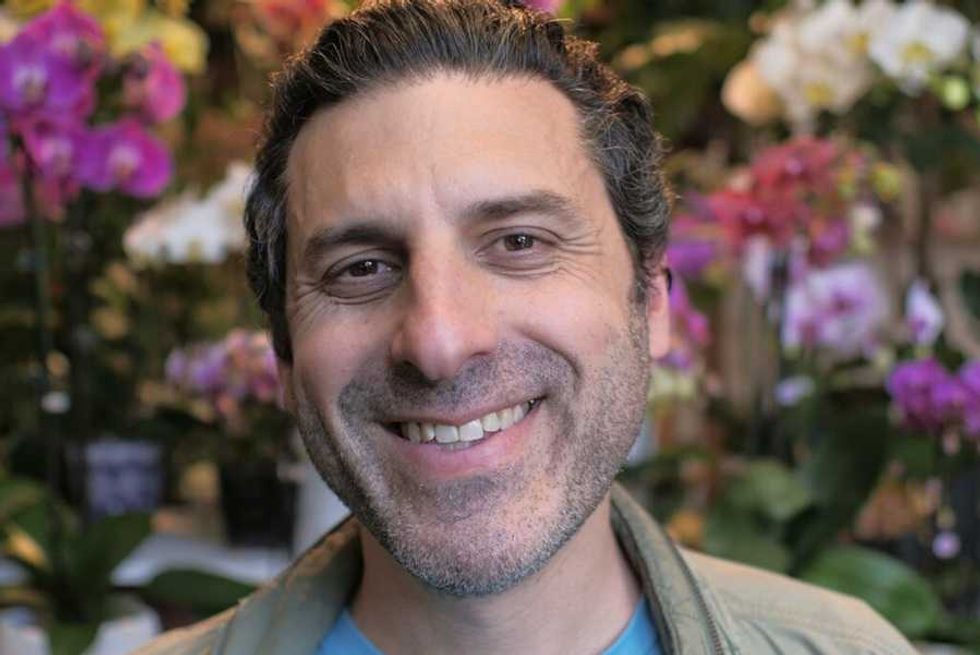 David Perlis, author of the new book 'Morning in Marin: Zen, Drugs, and Ewoks on the California Coast'(Jordan Blackman)