

Things in San Francisco were not looking especially rosy in 1854.
Five years after the discovery of gold in the Sierra foothills, the patina of Gold Rush fever had worn thin. Prices were bottoming out, banks were failing, and prospectors and the businesses that preyed on them were declaring bankruptcy left and right.
Disillusioned by the quickly fading California dream, a group of men gathered with the goal of making a positive contribution to the struggling city. Though they were carpenters, machinists, and small-scale manufacturers rather than social reformers or educators, they settled on the idea of a sort of college for craftsmen—a place where working-class men could learn the skills and knowledge to transform their future and that of the city of San Francisco.
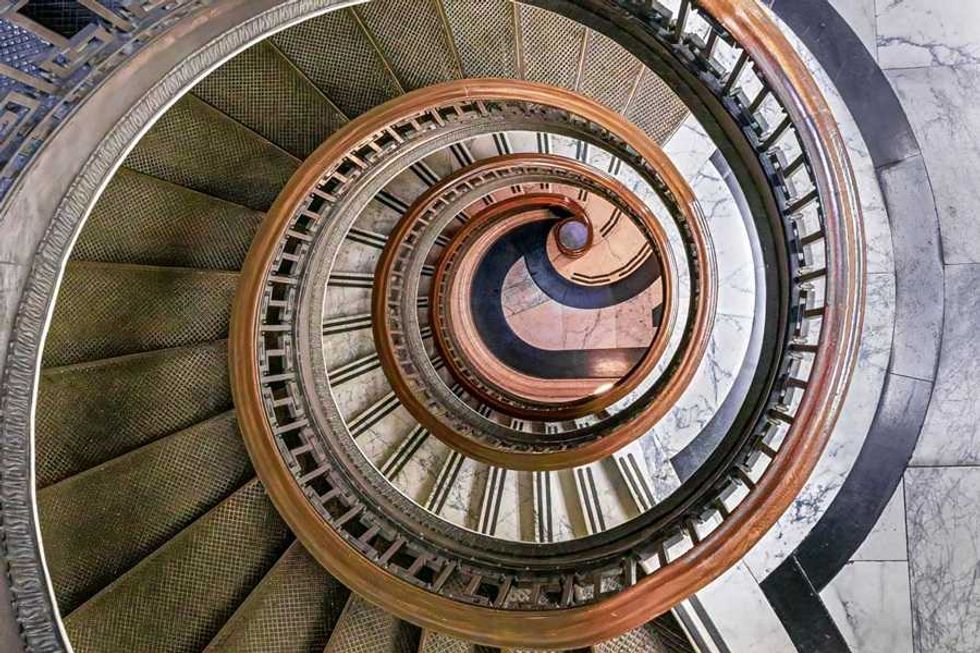 The Beaux-Arts building on Post Street was built for the Mechanics Institute in 1910.(Greg Habiby)
The membership-based men’s club they founded, the Mechanics’ Institute, was one of “a number of institutions across the country that pre-dated public library systems and always included a library and chess room,” says CEO Katherine Bella.
Almost 175 years later, the San Francisco Mechanics’ Institute is one of the oldest cultural institutions on the West Coast. Yet, somehow, despite having a 150,000-volume library and a legendary chess program that includes a Grandmaster-in-Residence, most San Franciscans don’t even know it exists.
It’s “the best little-kept secret in town,” says Bella—but it won’t be for long.
A strategic rebranding plan begun last year is helping to bring more visibility to the Mechanics’ Institute with a slate of partnerships with organizations like Yerba Buena Gardens, Downtown SF, the Chinese Historical Society, and Litquake leading to fresh programming in arts and culture, including the Lit Lounge series—a quarterly collaboration for book lovers with St. Joseph’s Arts Society—and a master class in writing that has been led by local luminaries such as Tommy Orange, David Guterson, and Laurie Ostlund.
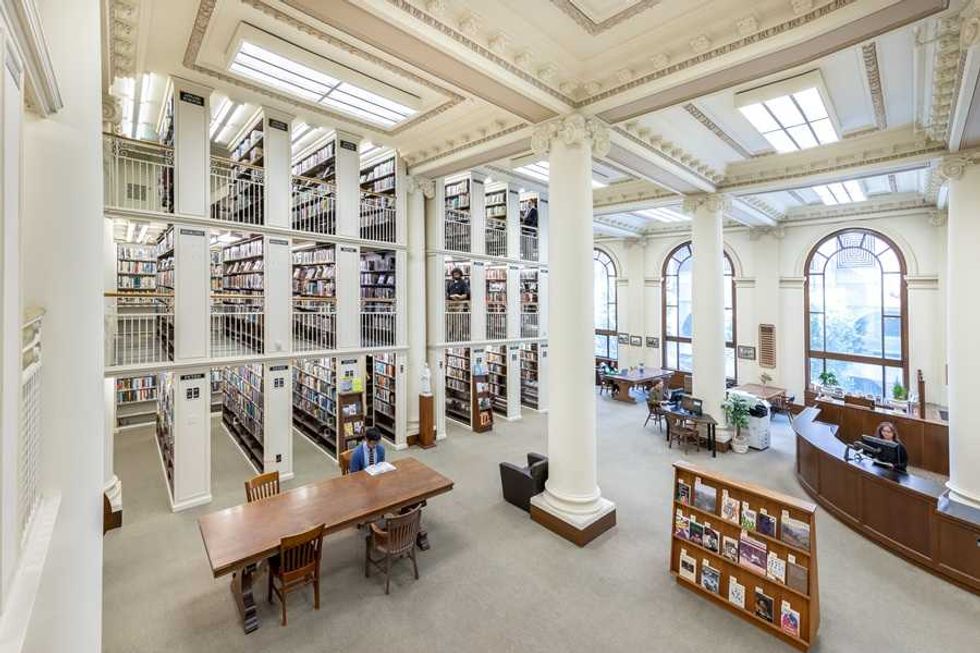 The Mechanics' Institute's two-floor library(Greg Habiby)
Many of the events are held on site in the nine-story Beaux-Arts building built on Post Street in 1910 by architect Albert Pissis to replace the original institute, which burned down in the fires following the 1906 earthquake. The historic library that stretches across two of those floors will soon be renovated to add more seating, glassed-in pods for working, and more flexibility for events. “We’re taking a great space with great bones and giving it some TLC,” Bella explains.
The chess club—the oldest continuously operating chess club in the country—meets in an upstairs room filled with tabletop boards Bella describes as “a little bit frozen in time.” It’s there that tournaments take place multiple days a week, along with classes and camps for club players. When there are no events scheduled, the space is open for casual play. The Mechanics’ Institute also has a robust scholastic chess program, which brings the game into more than a dozen schools and to several community sites in San Francisco.
Despite its age, the Mechanics’ Institute isn’t an artifact of the past. Like most libraries in the 21st century, the organization is working to make sure that its resources are meeting the needs of today’s members, not those of its founding fathers. Women, for one, are now welcome to join the ranks of the Mechanics’, a membership list to which Jack London, Ambrose Bierce, Maxine Hong Kingston, and Daniel Handler have all belonged at one time or another.
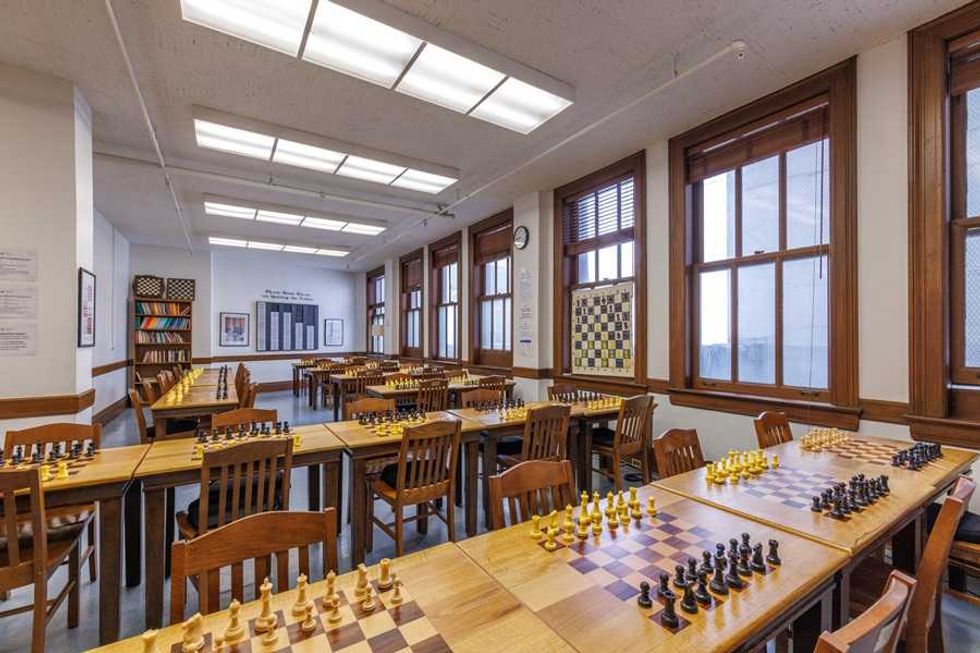 The chess room at Mechanics' Institute(Greg Habiby)
“It’s about constantly trying to stay relevant while embracing the history of this place,” says Bella.
The public can participate in most Mechanics’ Institute events, including curated Friday night Movies at Mechanics’, and author talks and panels like the upcoming September 15th event with local Native American filmmaker and activist Julian Brave NoiseCat and his debut book, We Survived the Night. But membership ($150/year for individuals; $80/year for students; $225/year for families) has its perks, including free (or discounted) tickets to arts and culture happenings—a small price to pay to become a part of San Francisco history.
// The Mechanics’ Institute Library is open Monday through Saturday; 57 Post St. (Union Square), for details on upcoming events visit milibrary.org
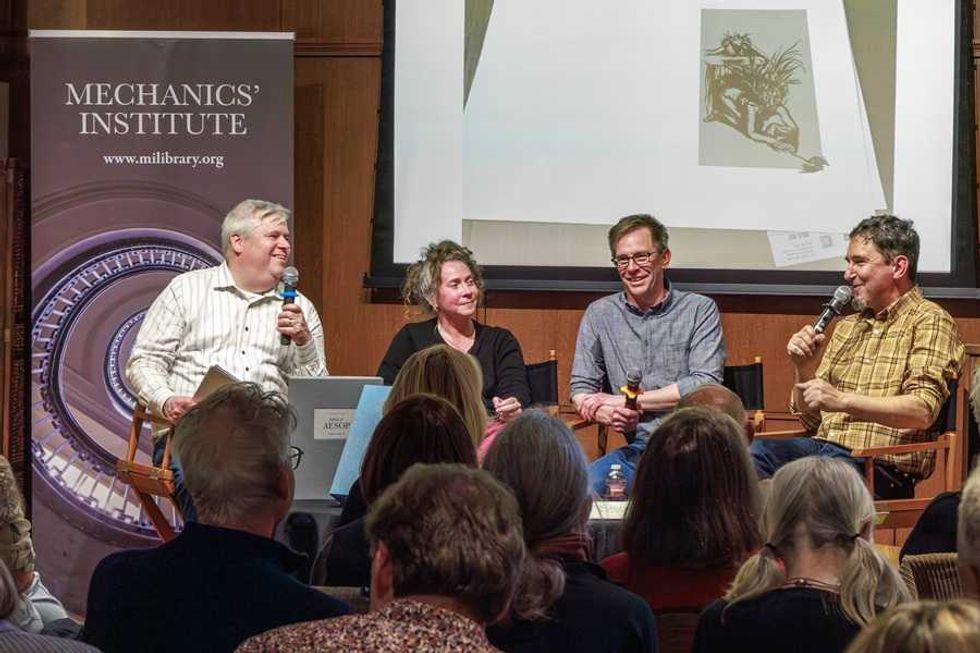 A recent author panel with Daniel Handler at Mechanics' Institute(Greg Habiby)