

He’s an interior designer, hotelier, author, collector, and storyteller—and would love his next career to include singing and dancing on Broadway. (“Off-Broadway would be OK, too,” he jokes.) Indeed, Jay Jeffers wears lots of hats.
The Texas-born, San Francisco-based Jay of all trades founded his firm in 1999 and, today, splits his time between Northern California and New York City, with offices and a lean, talented team in both places. Jeffers keeps busy designing homes around the country and serving as co-owner and designer of The Madrona, the stylish Healdsburg hotel he helped bring back to life.
 Designer Jay Jeffers(Jason Madara)
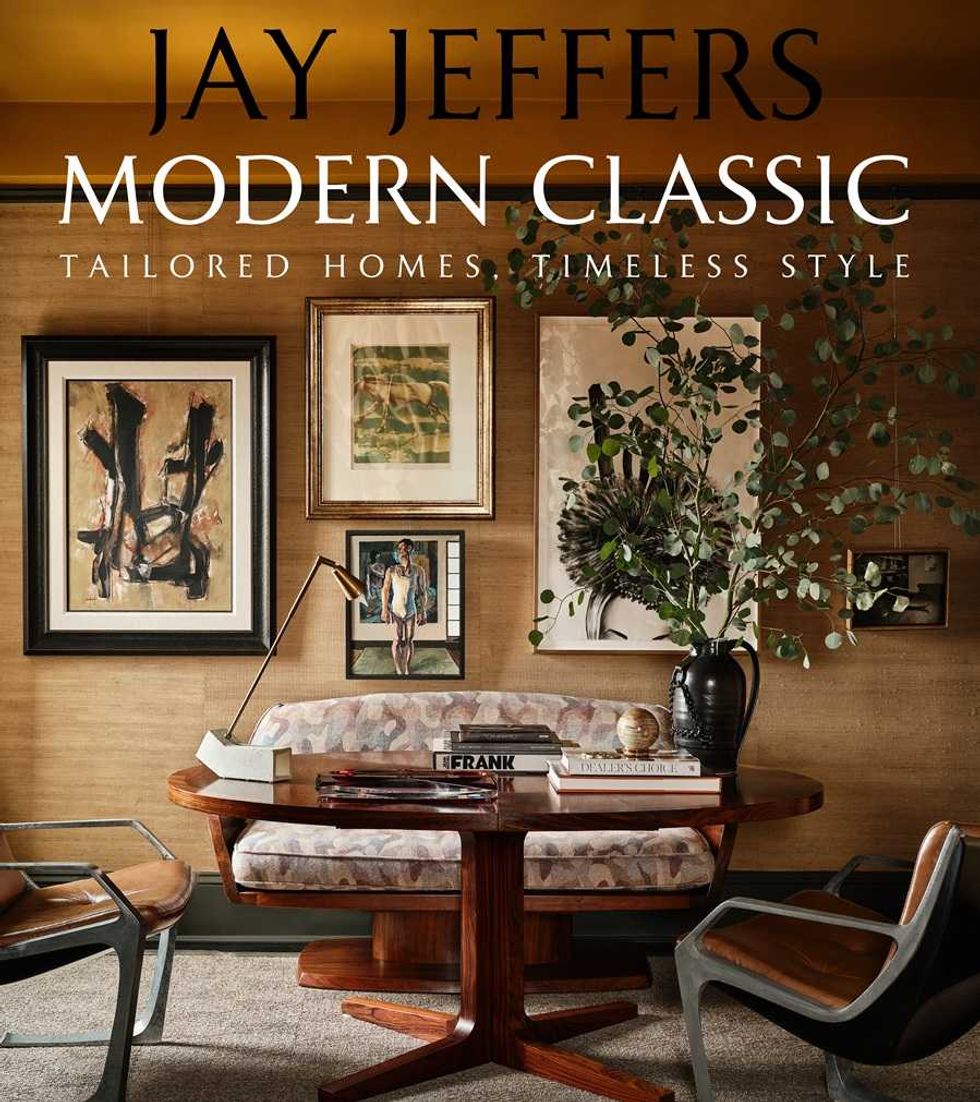
Jeffers’ latest project is Modern Classic: Tailored Homes, Timeless Style, his third book, which brings together 13 projects spanning historic houses, modern homes, apartments, retreats—and, naturally, The Madrona. Published in August by Gibbs Smith, the book explores the common thread in Jeffers’ work: spaces that feel tailored and edited but never overly precious, layered with antiques, contemporary art, custom pieces, beautiful materials, and, always, a little surprise.
When he’s not designing, Jeffers is a self-described homebody who loves fashion. (“Getting dressed up is genuinely one of life’s great joys for me,” he says.) Travel, food, cocktails, and watching just about any cooking competition he can find are other passions. Here, the iconic SF-er talks about finding his calling, why every room needs a “wink,” and what truly makes a house feel like home.
You took a somewhat winding path to interior design. How did you get here?
It definitely wasn’t a straight line. I grew up in Plano, Texas, and studied international business and marketing at the University of Texas at Austin. After college, I worked at a small advertising agency in Austin, then moved to San Francisco and worked at Zuni Café, a men’s clothing store, and eventually landed at Gap, working in advertising for Gap, Gap Kids, and Old Navy.
I started taking an introductory interior design class at Berkeley Extension at night just for fun, and something clicked. I took more classes, reduced my hours at Gap, and eventually began working for a drapery and bedding showroom. That was really when the creative fire started. I realized I had found what I wanted to do.
 (Sam Frost Studio)
Your work doesn’t fit neatly into one design style. How would you describe it?
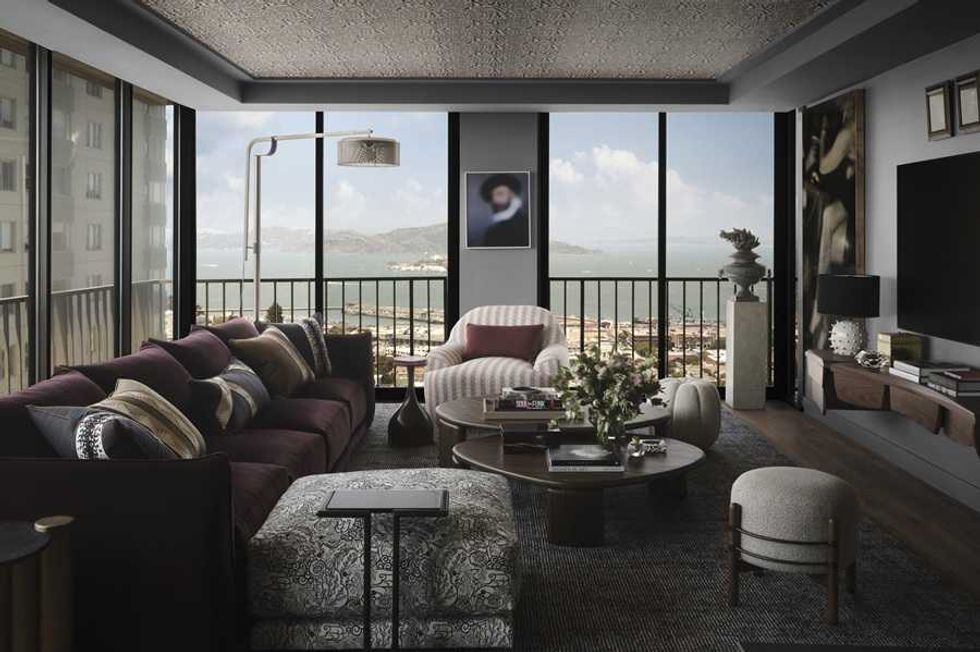
I’ve always resisted the idea that there’s a specific “Jay Jeffers look.” Every house should tell a different story. I want the rooms to feel tailored and edited, but never minimal. There should be warmth, soul, and a sense that things have been collected over time.
I love mixing vintage and contemporary furniture, great art, antiques, and custom pieces. And then I usually like to add a wink—something unexpected, whether that’s humor, drama, or a little surprise. I start by honoring the architecture, the geographic setting and, most importantly, the people who live there.
What does “modern classic” mean to you?
People are always asking, “What’s your style?” and I’ve resisted giving one answer because I think a good designer should be curious enough to move between different periods, places, and aesthetics.
When I looked back at the projects for this book, I realized there is a thread. The spaces are tailored and edited, but they have warmth, history, and soul. There might be vintage pieces with contemporary art, or bespoke furniture mixed with antiques. Nothing should look like it was bought overnight.
For me, “modern classic” is about honoring the past, celebrating the present and creating something that feels enduring. Overall, though, Modern Classic, the book, feels like the culmination of more than 25 years of designing homes.
 Jay Jeffers' new book, 'Modern Classic: Tailored Homes, Timeless Style'(Frank Frances Studio)
Were there any projects in the book that were especially meaningful to you?
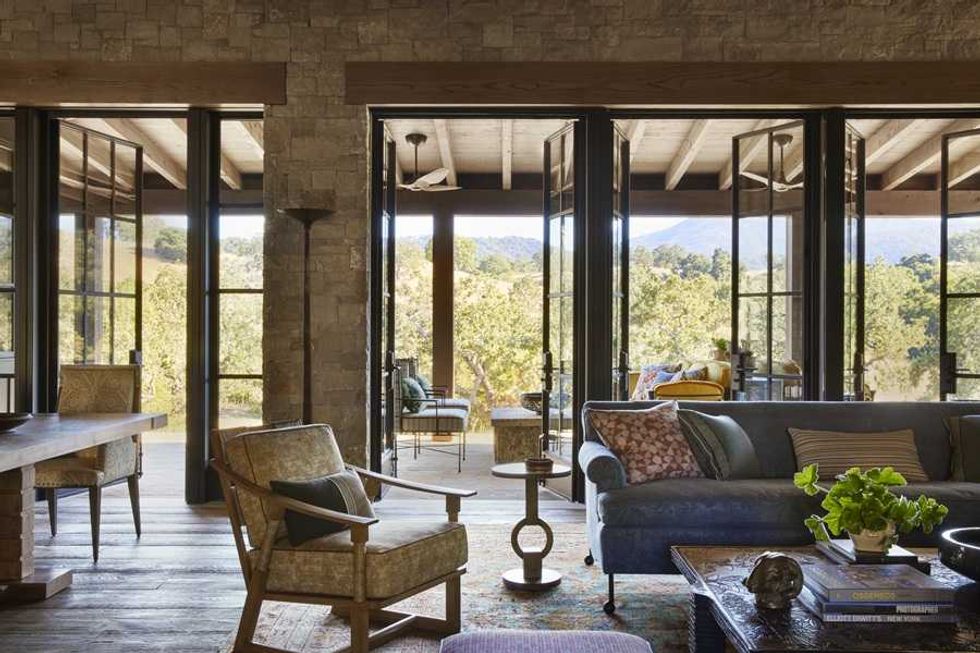
That’s like asking me to pick my favorite child! Imagined History, in the Santa Lucia Preserve, was almost a 10-year project for longtime clients who became friends. We worked with architect Richard Beard and were inspired by Argentine estancias. The goal was to create a multigenerational retreat that felt as though it had evolved over generations, rather than being designed all at once.
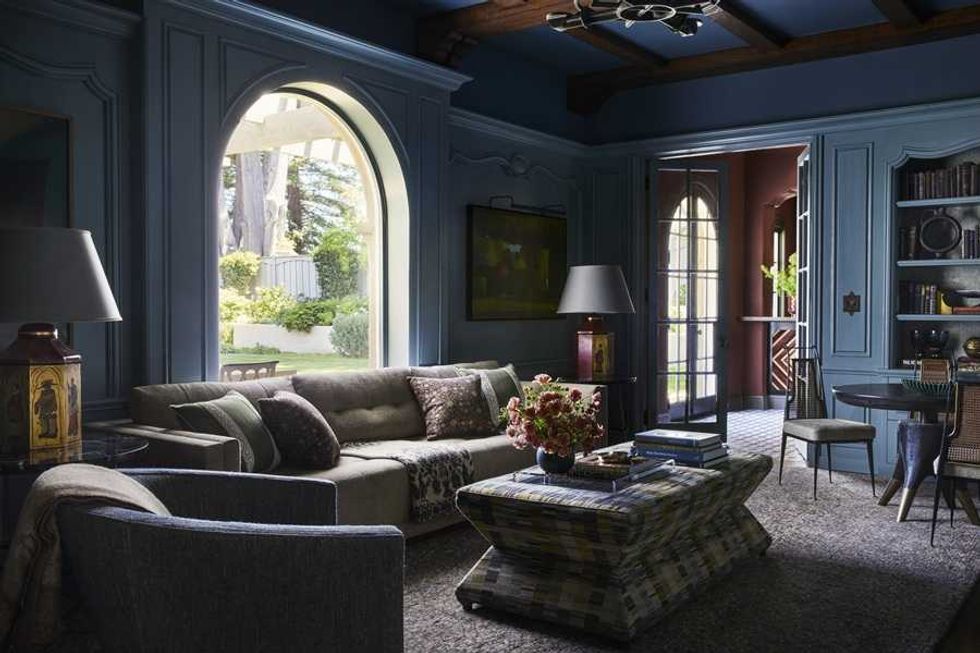
Beaux Arts 2.0, a 1925 San Francisco home, was another. We worked with Dave Sturm of Butler Armsden, keeping the classical character in the front of the house while creating something more contemporary in the back. The original arched windows inspired new details throughout. It was about respecting the history without being beholden to it.
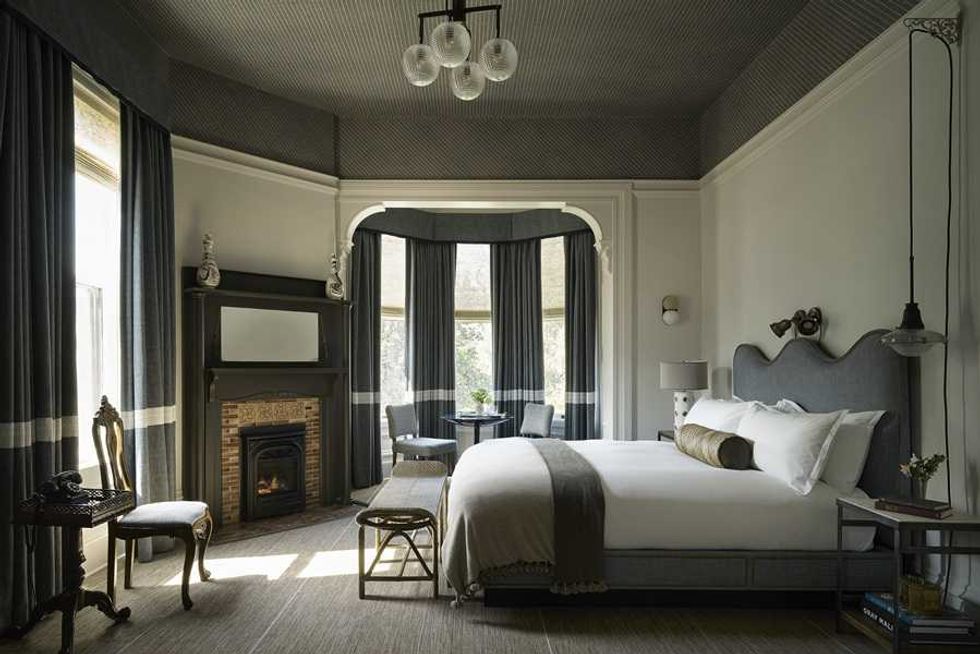
And then there’s The Madrona, which is obviously very personal because I’m the designer and co-owner. There was no traditional client telling me where to stop, which was both thrilling and slightly dangerous!
 A guest room in The Madrona in Healdsburg(Courtesy of Jay Jeffers)
Speaking of The Madrona, becoming a hotelier wasn’t exactly part of the plan, was it?
Not at all! Becoming a hotelier was never on my vision board.
I’ve always loved intimate boutique hotels—the kind that feel like a stylish friend’s house. In 2020, a realtor friend and client asked me to look at a historic hotel in Healdsburg that was for sale. It was a lightning-bolt moment. I couldn’t stop thinking about it or designing it in my head.
We inherited hundreds of pieces of furniture, lighting, and art, and ultimately catalogued, refurbished, and reused about 200 of the original pieces. We wanted to celebrate the history without turning it into a Victorian theme park.
How do you balance your own point of view with what a client wants?
I think of myself as a guide. Clients usually know what they like when they see it, so my job is to listen, understand them, and then expose them to possibilities they may not have considered.
I’ll push a little. If someone says they don’t like antiques because they associate them with heavy brown “grandma furniture,” I might show them a 1970s Italian chair or a mid-century Brazilian piece. Suddenly the conversation changes.
The client gives you the story. The finished home should feel like them, not like they moved into my house.
 (Courtesy of Jay Jeffers)
How much does location influence your work?
Place matters enormously. A log cabin shouldn’t feel like Manhattan, and a Carmel Valley retreat inspired by an Argentine estancia shouldn’t feel like a San Francisco Beaux-Arts house.
I don’t believe in designing clichés. I don’t want to walk into a mountain house and automatically start buying antlers. At the end of the day, though, the homeowner is what matters most. You’re using the architecture and location as context, but you’re telling the client’s story.
What are some of your favorite Bay Area sources for art and design?
The Bay Area has an extraordinary creative community. For art, I love Dolby Chadwick, Berggruen, Fraenkel, Jessica Silverman, and Lost Art Salon. And I always tell people: buy what you love. Don’t buy art to match your sofa.
For furniture and design, there’s Coup D’Etat, De Sousa Hughes, and The Future Perfect, plus Sue Fisher King for that fabulous mix of antiques and decorative things. Fog Design + Art and the San Francisco Fall Show are also great places to explore.
The best advice is to get out there, look around, train your eye, and fall in love with something unexpected.
 (Douglas Friedman Photography)
Three books in—are you already thinking about number four?
Let me enjoy number three for a minute! I’ve loved design books since I was a kid. They’ve always been a source of reference and inspiration for me, so the fact that I’ve now made three is pretty amazing. I’ve had a little bit of impostor syndrome, probably, my entire life. Making these books forces me to look back and say, “Hey, I kind of do know what I’m doing—and, hey, I’m kind of good at it.”
So, making a book is a little bit like therapy. As long as I have interesting clients, beautiful houses, great art, fabulous antiques, and stories worth telling, I guess I’m ready for my fourth therapy session.
// Learn more about Jeffers and check out his newest book ‘Modern Classic’ at jayjeffers.com