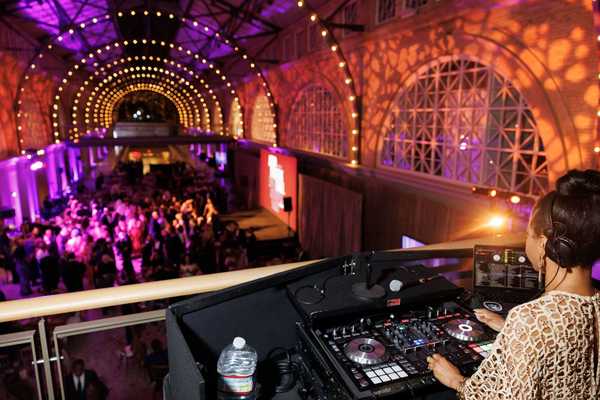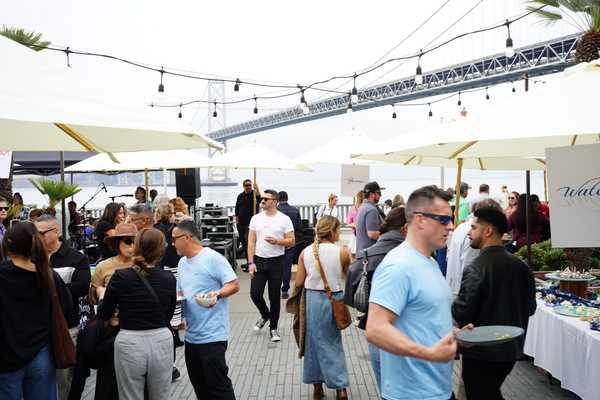

After San Francisco Museum of Modern Art director Christopher Bedford, board chair Diana Nelson, and San Francisco Mayor Daniel Lurie gave short speeches at the opening of the Reimagined: The Fisher Collection at 10, Robert Fisher, the oldest son of Doris and Don Fisher, spoke.
His father had an answer for people who asked why the couple collected a particular work, he said.
“He’d pause and say, ‘I don't know. It stopped me. That was their system. It wasn't about investment portfolios. It was about an immediate, visceral reaction to beauty and challenge.”
In 2009, the Fishers loaned a large selection of their contemporary art collection to SFMOMA for 25 years (later extended to 100 years). The expanded museum opened in 2016 with an assortment of the artworks on display.
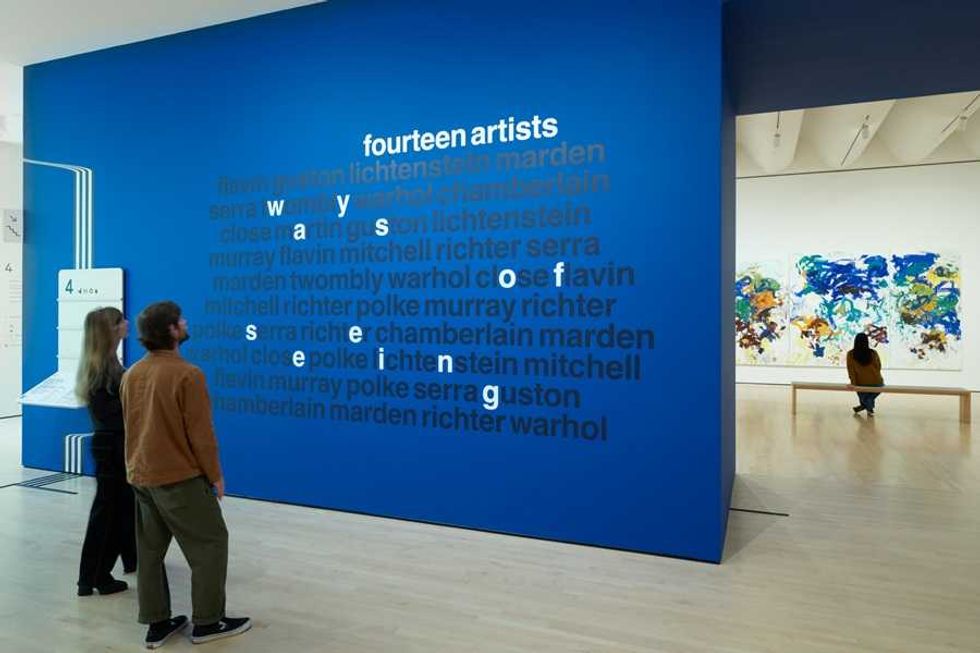 'Reimagined The Fisher Collection at 10' (installation view)(Don Ross, courtesy SFMOMA)
Robert Fisher and Bedford talked about what the collection could become if people could connect with it and understand the artists and their influences. Now, Ted Mann, project assistant curator, and Gamynne Guillotte, chief education and public engagement officer, have done just that.
“Gamynne took that idea and made it real. What she and her team built here—the videos, the audio, the way the galleries tell the story rather than just display objects, that's the vision executed from scratch,” Fisher explained. “Ted Mann curated the show with a precision and a quiet poetry that I find genuinely moving.”
Guillotte and Mann dramatically changed the look of about 250 works from 35 artists over the four floors housing the Fisher collection. One example of what they were trying to do is inside the Agnes Martin gallery.
“It had been oriented off of a long hallway, and it was beautiful, but you miss it,” says Guillotte, who studied architectural design. “We rotated it at 90 degrees to give you a sight line to it. Those kinds of moves signal both the importance of the gallery while keeping its chapel-like quality.”
The education and curatorial departments haven't collaborated before, Mann says, and they worked to create a new look and feel in the galleries.
“Overall, we are centering the artist more, and part of that just follows from the strengths of the collection. One of the things that distinguishes the Fisher collection is you have these strong, deep holdings of certain artists that they gravitated toward. We wanted to take advantage of that, and to get away from the kind of -isms and style movement and nationality.”
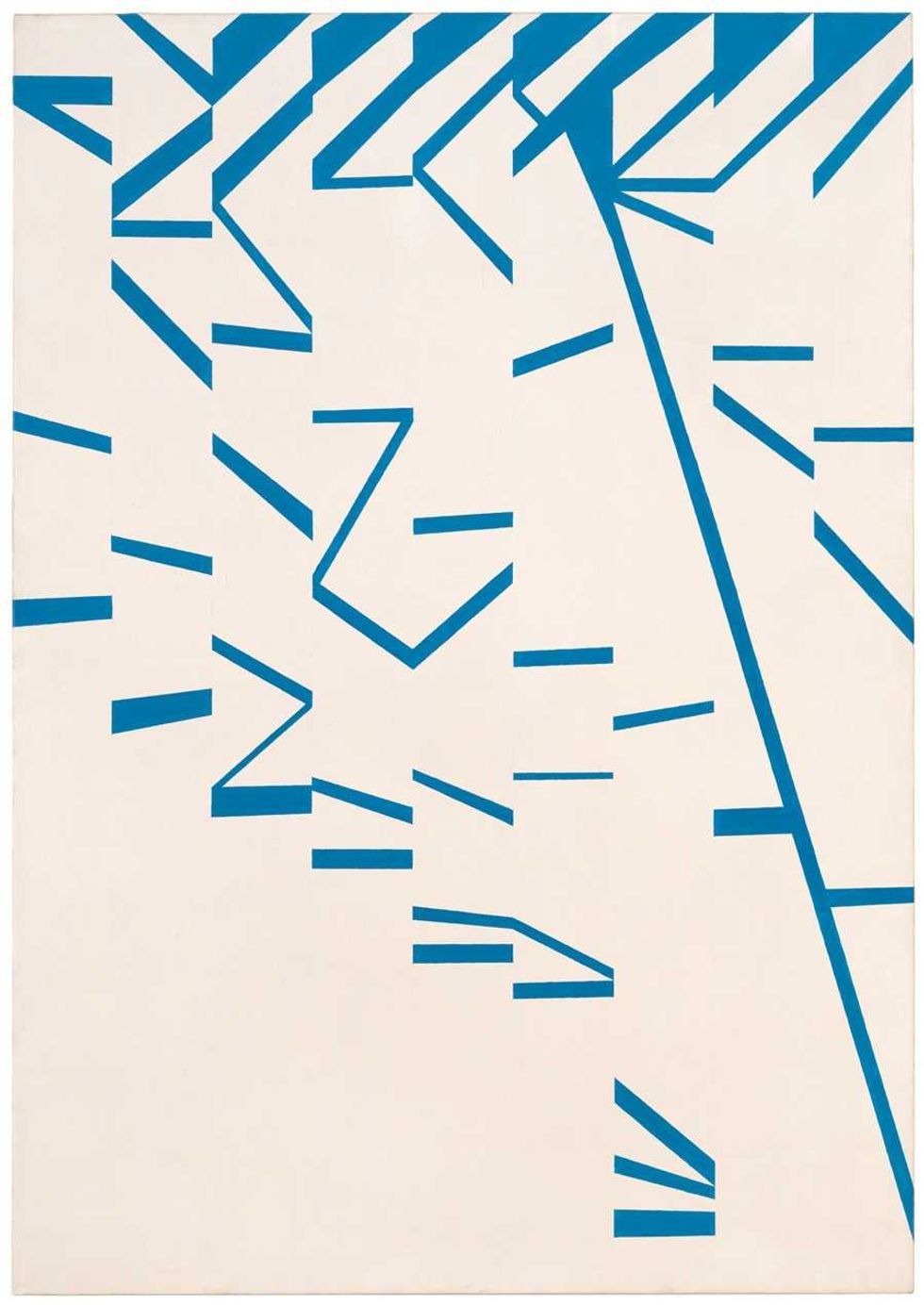 Ellsworth Kelly, 'La Combe III'(Courtesy of SFMOMA)
That meant that they created some rooms with just one or two artists and used tools such as the artists’ own voice and archival video to humanize them, something Guillotte says is particularly important with abstract work.
“Visitors really struggle with the black square in the white gallery with no interpretation around it,” she explains. “We connect them back to the idea that the person who made this existed in a specific time, in a specific place, and they were responding to a specific set of circumstances in the world around them, and from their own background and upbringing that led them to make this thing. Once you're able to do that, an object that felt very far and very distant for people becomes something that they have a way into understanding why an artist made what they made.”
Ellsworth Kelly’s La Combe III is one example. Kelly’s work is often hung on white walls with no labels or interpretation, but that doesn’t capture visitors’ imagination.
“I would regularly observe people come into the galleries, kind of poke their heads into it, look around, and then kind of wander away,” Guillotte says. “There was nothing sticky to help them engage with the work.”
So, they tried something different. Kelly looked at how shadows fell from a railing onto stairs and decided to paint the shadow.
“Before we would have shown that painting with nothing else around it, maybe an extended object label,” Guillotte says. “This time, we're showing the painting with an extended object label that has an image of the actual photograph that Kelly took this painting from, a wonderful text written by Ted that really explains how Kelly came to this revelation, a pull quote on the wall from Kelly in his own words, talking about what this revelation was for him, and a touch object for folks with low or no vision that is a relief map of the painting itself.”
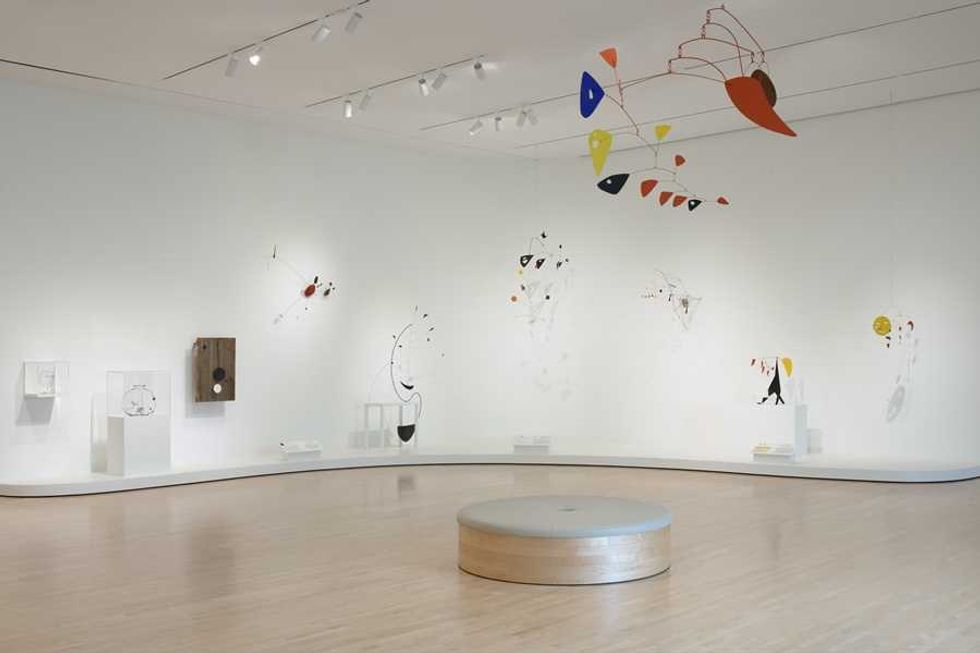 'Reimagined The Fisher Collection at 10' (installation view)(Don Ross, courtesy SFMOMA)
Kelly, along with Alexander Calder and Sol LeWitt, were the artists the Fishers collected most in depth. The three of them are on the fifth floor now in “Fundamentals of Form.” The third floor has “Thinking Big,” showing models and oversized sculptures of the married couple Claes Oldenburg and Coosje van Bruggen. “Ways of Seeing: Fourteen Artists” occupies the fourth floor and includes Joan Mitchell, Philip Guston, Cy Twombly, and Gerhard Richter.
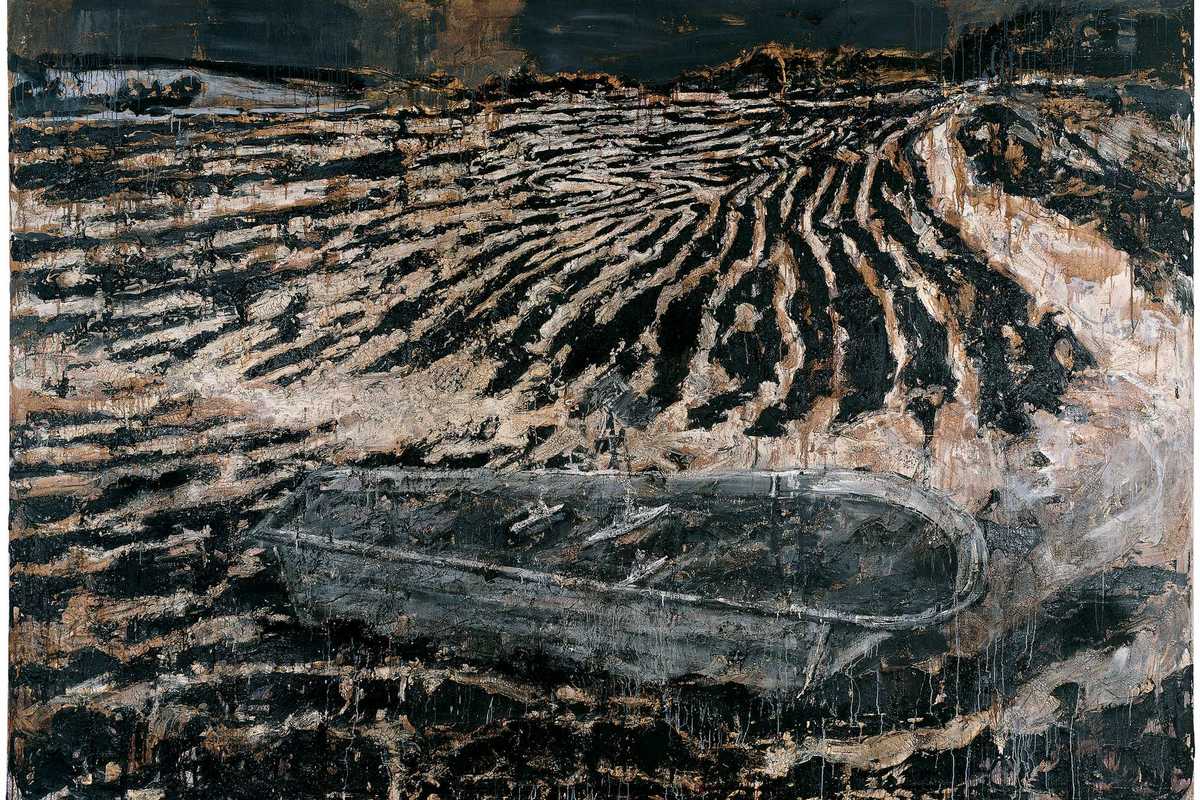
“Memory and Matter” has some work by artists including Jasper Johns and Louise Bourgeois, but is primarily a conversation between South African artist William Kentridge and Anselm Kiefer, a West German born in 1945. It stands in contrast to the formalism of the fifth floor, and they thought Kentridge and Kiefer made an interesting pair, says Mann.
“Both of them are looking at and excavating the history of their respective countries, this very broad history whether it's World War II and the Holocaust, or apartheid and post-apartheid South Africa and colonialism, more generally in Africa: It developed into this larger group exhibition with those two artists [at] the core, and we worked with our designers to really think about how to give the visitor a very different experience. So here we're taking a thematic approach and encouraging the visitor to grapple with some difficult history.”
It may sound corny, Guillotte says, but what she’s proudest of in this ambitious reimagining is the way the departments worked together to find new ways to engage audiences. Mann agrees.
“I think we piloted a new approach,” he says. “Part of the hope is that some of what we developed in terms of… expanded labels and whatnot, can be used in other parts of the museum. So, it's not just a one-off, but something that becomes a model in the museum.”
// 'Reimagining the Fisher Collection: The Tenth Anniversary Reinstallation' is now display at SFMOMA; 151 Third St. (SoMa), sfmoma.org
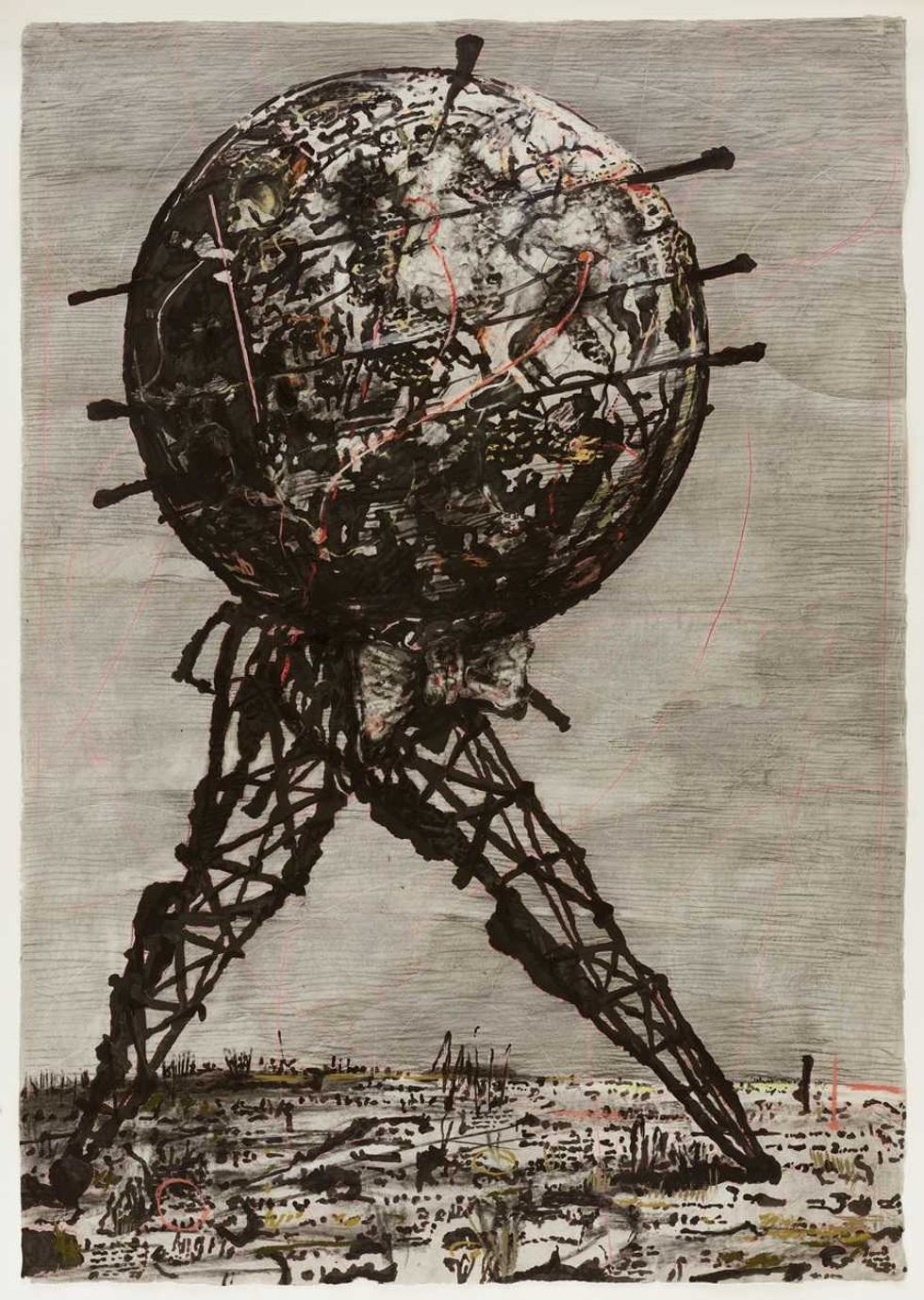 William Kentridge, 'Drawing for II Sole 24 Ore [World Walking]'(Courtesy of SFMOMA)