
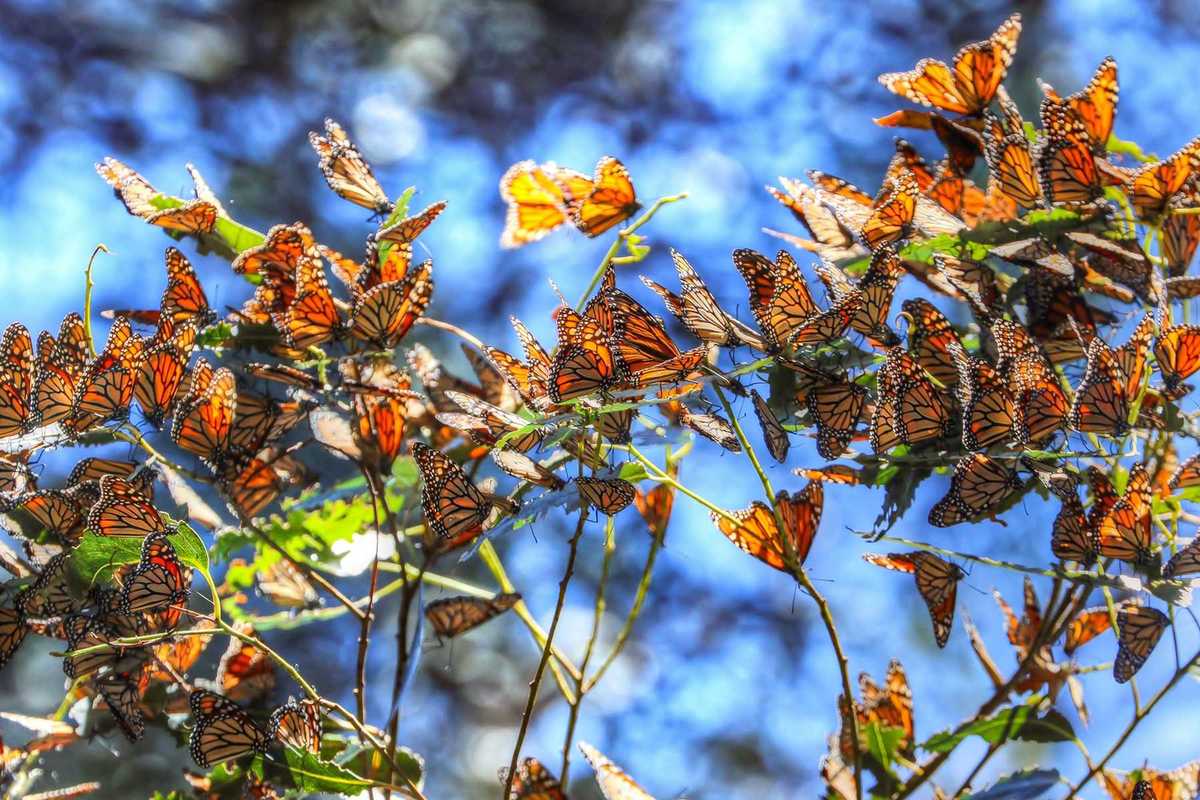
Each winter, monarch butterflies migrate to the coast of California. This year, revolutionary technology is helping scientists and citizens to track their journey in key overwintering sites in Santa Cruz, Pacific Grove, Pismo Beach, and Goleta.
North American monarchs are separated into two groups. The eastern population includes all of those living east of the Rocky Mountains who migrate down to central Mexico for the winter. The western population comes from west of the Rocky Mountains, and beginning in mid- to late-October, they start to gather in California’s eucalyptus, pine, and Monterey cypress groves. Most monarchs live just a few weeks, but the super generation that overwinters in California lives six to nine months.
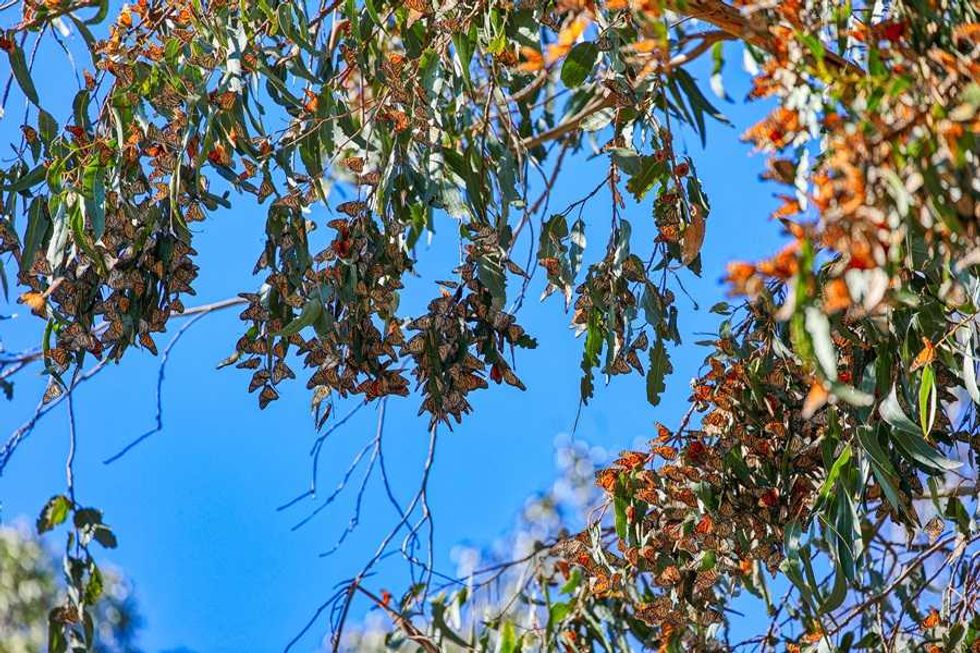
For much of the year, the butterflies are solitary, but they cluster together at overwintering sites, sometimes by the thousands. Monarchs use the groves to rest, but when it’s warm enough during the day—above around 55 degrees Fahrenheit—they break out of those clusters to search for nectar.
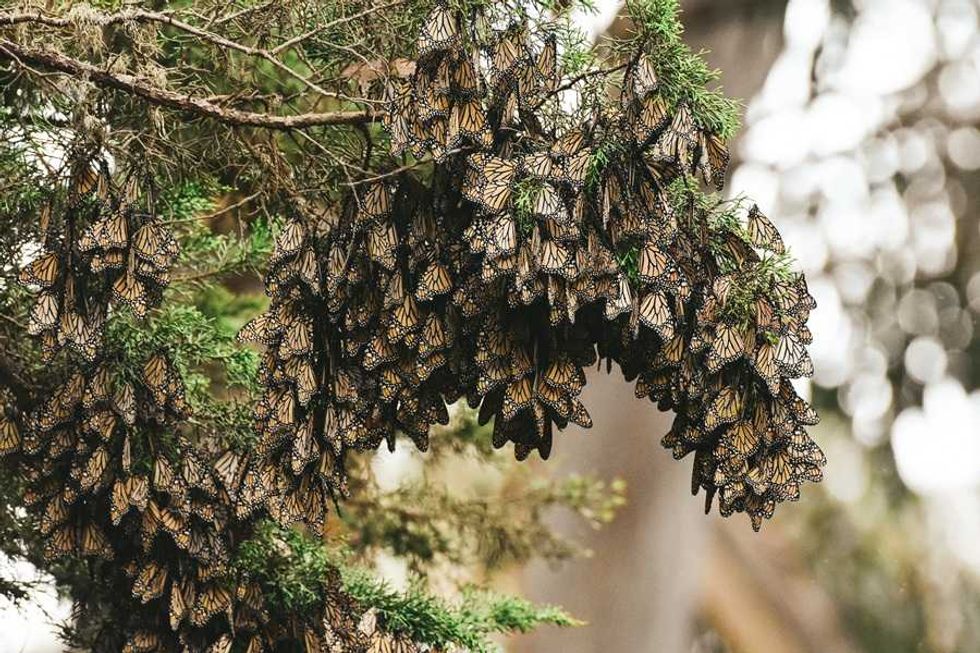 Lighthouse Field State Beach(Jenn Day)
They’ll stay in these overwintering sites until around February—and it’s a true delight to see them. “The way that they soar is so beautiful with the light filtering through their wings like stained glass,” says Natalie Johnston, interpretive projects manager at the Pacific Grove Museum of Natural History. “They’re lovely and harmless, and they bring everybody together; they’re symbols of transformation, strength, and inclusion.”
Due to drought and heatwaves, the number of western monarchs was particularly low in the 2024-2025 season, and the population is still recovering. Monarchs are a bellwether species, providing information about the health of an ecosystem, and their presence in California provides a unique opportunity for scientists.
“When they are in coastal California, they are clustering, which means we can count them and track them in a way that you just cannot do with other insects,” Johnston explains. “Things that are happening to monarchs are happening to other pollinators like bees [and] a world without pollinators is not survivable.”
Although so far this year’s overwintering populations aren’t in the tens of thousands like they were a few years ago, it's the first time that the western population is being tracked in real time by tiny, solar-powered Bluetooth transmitters.
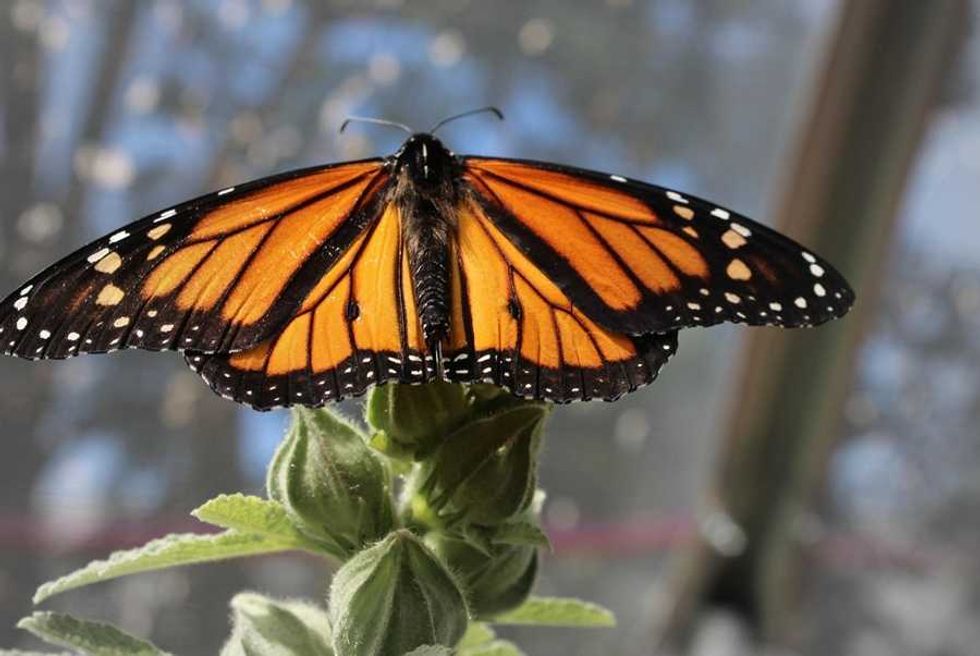 A monarch butterfly(Courtesy of Marcy Patridge from Pixabay)
“They used eyelash glue to keep the tags on,” says Martha Nitzberg, lead interpreter at Natural Bridges State Beach. “The little antennae are glued on the thorax where all the muscles for the wings are. I felt the tip of it, and it was hardly stronger than the tip of a hair.”
Monarch numbers are still down, and while the population has proven to be resilient in the past, small actions can help make a big impact.
To be part of citizen science keeping track of where the butterflies are and where they’ve been, download the Project Monarch Science app. The more people with the app, the more data can be collected about their journey.
The Xerces Society for Invertebrate Conservation also has calls to action to help the western monarchs that differ depending on where you live. In San Francisco, the focus is on protecting over-wintering habitat and planting pesticide-free native nectar plants.
“Once you get your first ping of a monarch, you’re hooked,” says Kim Zsembik, director of the Butterflies Alive! exhibit at the Santa Barbara Museum of Natural History.
Here are the best spots to go to get in on the action this winter:
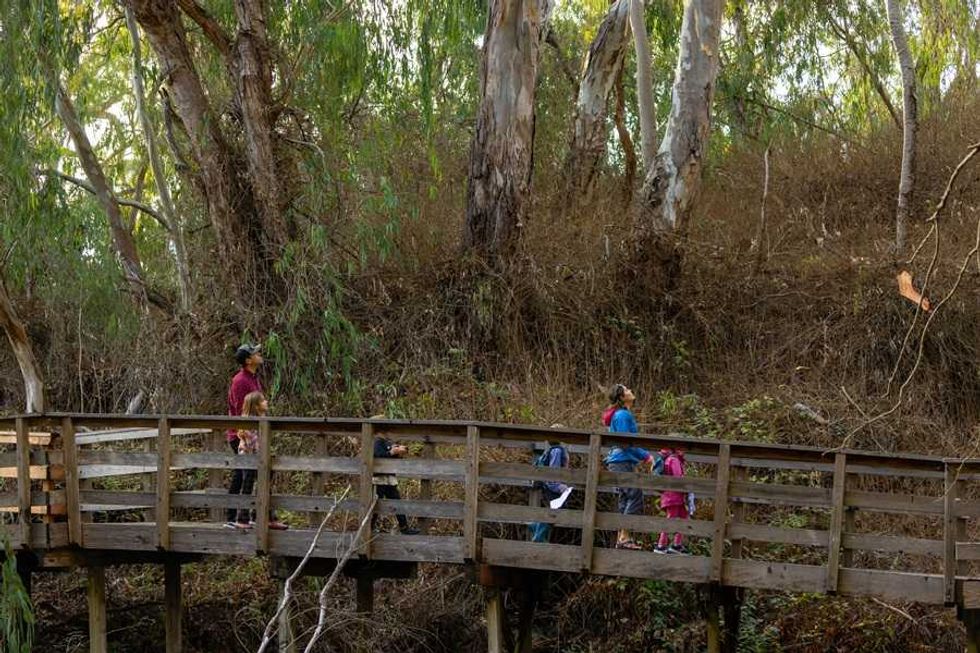 Natural Bridges State Beach Monarch Grove Trail(Daniel Gorostieta)
Santa Cruz
Santa Cruz has a few different sites where the monarchs are known to gather, including Lighthouse Field State Beach ( 644-670 West Cliff Dr.) and Moran Lake in Live Oak (22775 East Cliff Dr.). This year, like many others, the most butterflies can be seen at Natural Bridges State Beach, with some 2,500 recorded there so far this year.
Take the short Monarch Grove Trail through the eucalyptus at Natural Bridges. If you don’t know what to look for, you might not notice the brownish bunches high in the trees that are actually hundreds of butterflies clustered together (binoculars help). There are frequently volunteer docents on hand, sometimes with spotting scopes, who can help point them out.
To learn more about the butterflies and other migratory animals in the area, check out the free Migration Festival held the second Saturday of February at Natural Bridges State Beach. It’s possible that the butterflies will still be there for the event, though there’s no guarantee.
// Natural Bridges Monarch Trail, 2531 West Cliff Dr., parks.ca.gov
Pacific Grove
Pacific Grove is known as “Butterfly Town U.S.A.,” and there’s a $1,000 fine for anyone caught bothering them.
Butterflies “have been coming to Pacific Grove longer than there’s been historical accounts of them,” says Johnston. And even though the eucalyptus trees where the monarchs love to roost in the winter were introduced in the mid-1800s and aren’t native plants, they’ve adapted to their presence and love the trees for the shelter and food they provide.
You’ll find most of the town’s monarchs at the Pacific Grove Monarch Sanctuary. Docents are there throughout much of the season, typically between 11am and 3pm, to help find the clusters.
// 250 Ridge Rd. (Pacific Grove), pgmuseum.org/monarchs
 Pismo Beach Monarch Grove(Courtesy of Pismo Beach Conference and Visitors Bureau)
Pismo Beach
The Pismo State Beach Monarch Butterfly Grove right off of Highway 1 has historically been one of the busiest butterfly sites in the state. In recent years, work like tree planting has helped to keep it an ideal destination for the insects with just the right microclimate—not too much wind, dappled sunlight, and stable temperatures.
“Each winter, Pismo Beach becomes a magical place as the monarch butterflies return to the grove,” says Gordon Jackson, Pismo Beach CVB's tourism director. “We’re proud to be a stop on their migration journey, and the journey of the visitors that come to see them. We welcome all to experience this phenomenon with respect and curiosity, as it's a perfect reflection of Pismo Beach's spirit to slow down and enjoy nature.”
// 445 South Dolliver (Pismo Beach), parks.ca.gov
Goleta
Follow the butterfly trail markers about half a mile from the parking lot to get to Goleta’s Ellwood Mesa Monarch Butterfly Grove. Docents are there on weekends in butterfly season from 11am to 2pm.
Like many other sites in California, the butterflies are showing up, but in lower numbers than in the past. Still, this open space is definitely worth a visit, especially as Zsembik explains, “in the mornings [when] the oak woodlands come alive. Even if you’re not seeing the heavy [butterfly] roosting that you may have seen pictures of, download the [Project Monarch] app to see if you can track any of these monarchs. It is so fun to do!”
// 7729 Hollister Avenue (Goleta), GoletaButterflyGrove.com