
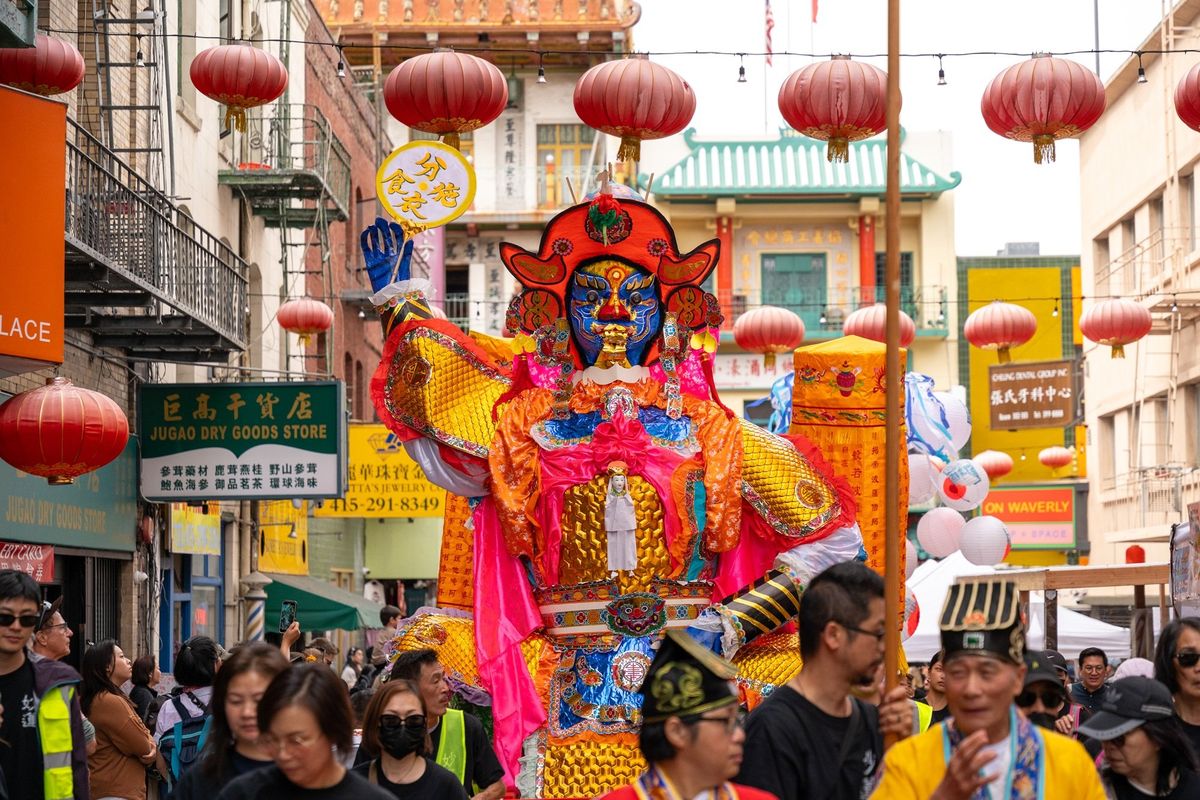
In its third year, Chinatown’s Hungry Ghost Festival seeks to feed the Bay Area’s hungriest of ghosts.
The only citywide festival of its kind in the nation (also known as Zhongyuan Festival or Yulan Festival) is a celebration for the Chinese diaspora, signifying a time in the Lunar calendar when the boundary between human and spiritual realms is thinner, allowing anguished spirits, or “hungry ghosts,” to enter the earthly dimension seeking comfort—and, in the case of this festival, entertainment.
The Ghost King procession—complete with a 14-foot-tall figure made specially for San Francisco by a traditional paper-craft master in Hong Kong—will kick off the free, family-friendly evening filled with art installations and music.
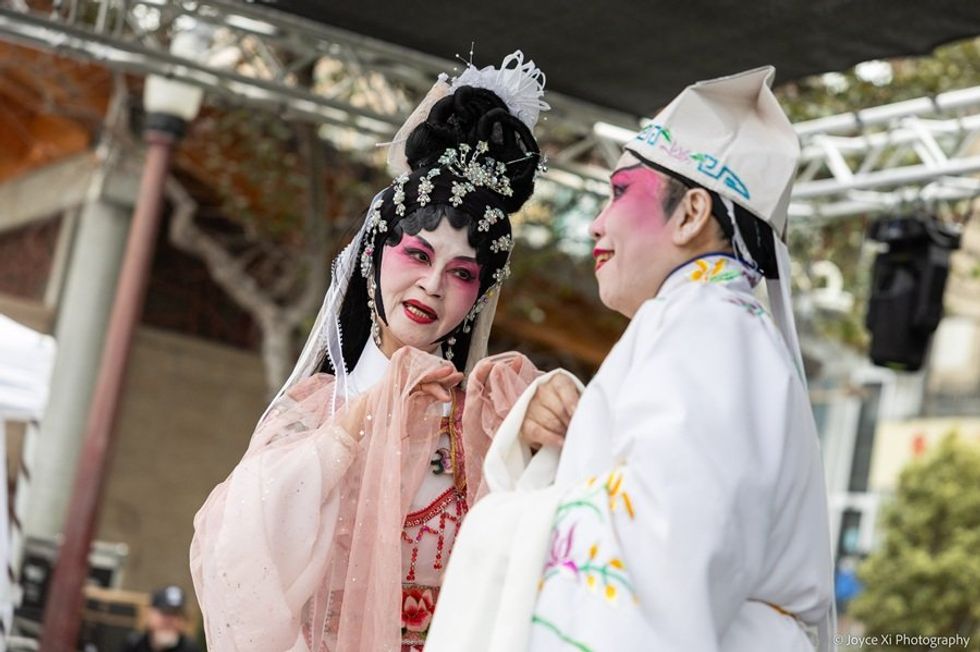 Hungry Ghost Festival in San Francisco's Chinatown(Joyce Xi)
Historically (prior to the 1920s), the Hungry Ghost Festival was a healing ritual for Chinese communities in California who had lost loved ones through wrongful deaths, immigration, or long and difficult separations. The theme of this year’s festival, Demons of Our Times, looks to combat the modern demons that marginalized communities currently face. It’s for all those carrying rage, grief, or sorrow.
“The Hungry Ghost Festival has always carried a profound meaning for immigrant communities so often treated as perpetual outsiders,” says Hoi Leung, curator of the Chinese Culture Center and Hungry Ghost Festival organizer. “This year’s festival reclaims this cultural legacy as we bear witness to the rise of, sadly, time-tested ‘rituals’ of hate—demonizing immigrants, rationalizing terror, and erasing history. The ghosts we once feared now wear new faces. Through traditional and contemporary arts, we are summoning the festival’s original charge: remembrance, resistance, and cathartic release.”
Virtually every community has hungry ghosts and souls seeking solace and rest—that is a commonality we all share as humans—and, as such, the Hungry Ghost Festival welcomes artists and performers from various cultures and backgrounds.
“The version we’ve put together is special,” says Leung. “We’ve invited partners and artists of different cultural backgrounds to share their interpretations, which expands the metaphor and theme, and what it means to diverse communities.”
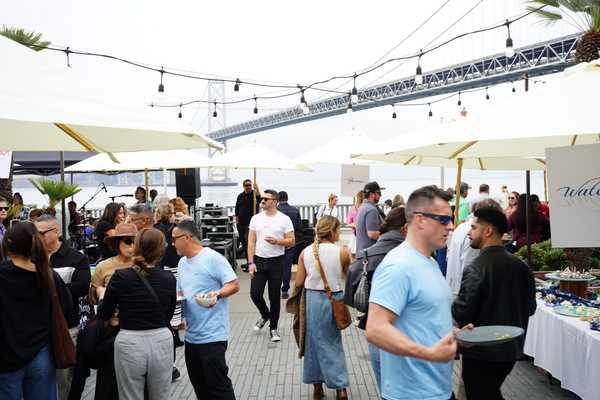
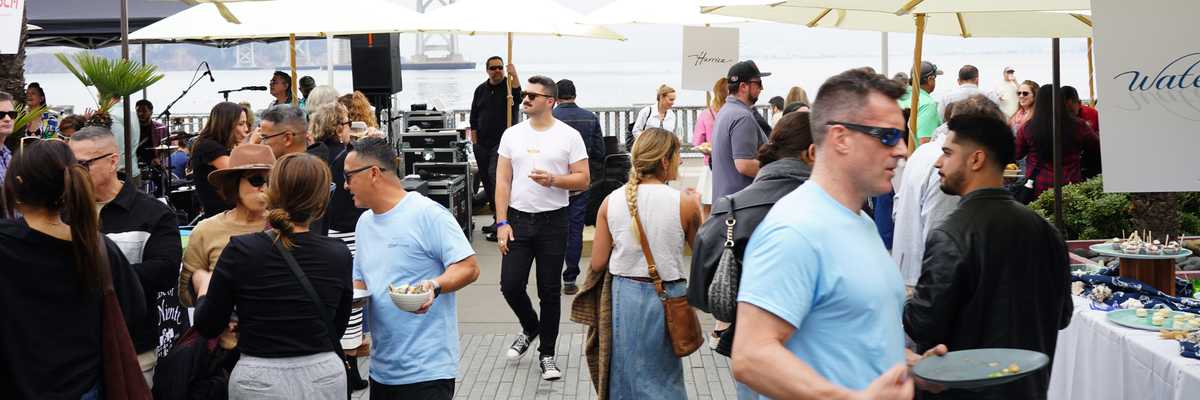
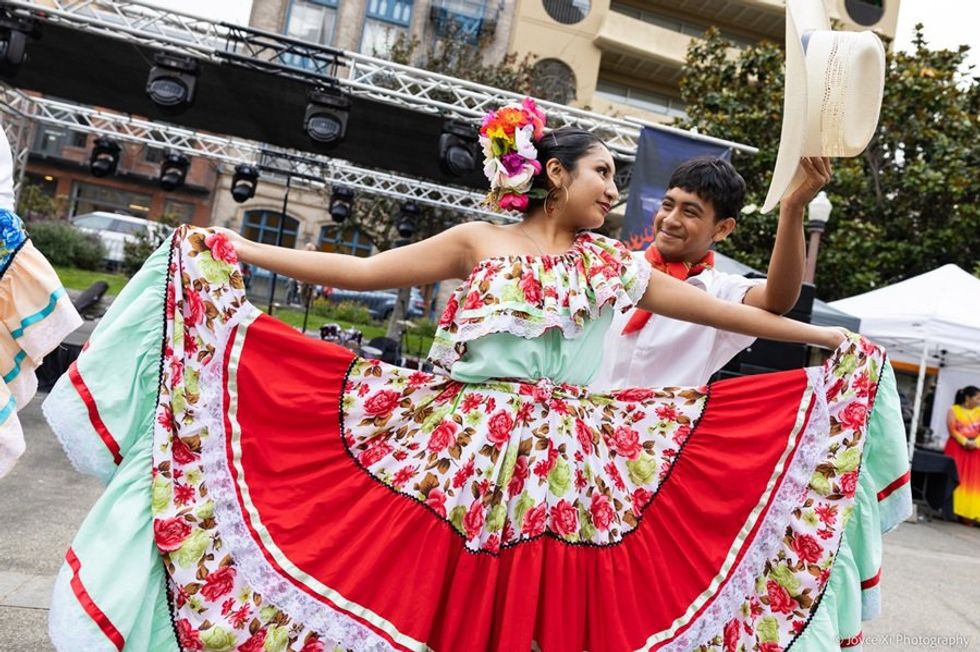 The festival includes art and performances from a number of marginalized communities.(Joyce Xi)
“Sometimes you don’t have to speak the same language to understand someone’s experience,” says Enrique Aguilar, a public relations officer with the MTA who was part of the team that worked on the Central Subway project and who attended the first Hungry Ghost Festival after forming strong ties to the community. “As a Latino, I can relate to many of the struggles one has as a person of color. Right now, it feels that immigrants are being targeted. We need more of these spaces to bring people of color together and find commonality and understanding.”
The festival will include ritual art installations offering contemporary interpretations of its theme. One of these artists is Tracy Williams, a Tongan American muralist, cultural educator, and community art healer based in Oakland.
She describes her piece as “both a portal and a protest that invites people to sit with their grief, honor their ancestors, and release what they carry. “To have a public art installation is huge, and I am really grateful for the opportunity,” Williams says.
The Hungry Ghost Festival has a history of surprising attendees, and Leung hopes that this year they will get a chance to see a more complex version of Chinatown and draw from the experience of the Chinese diaspora to help navigate difficult times.
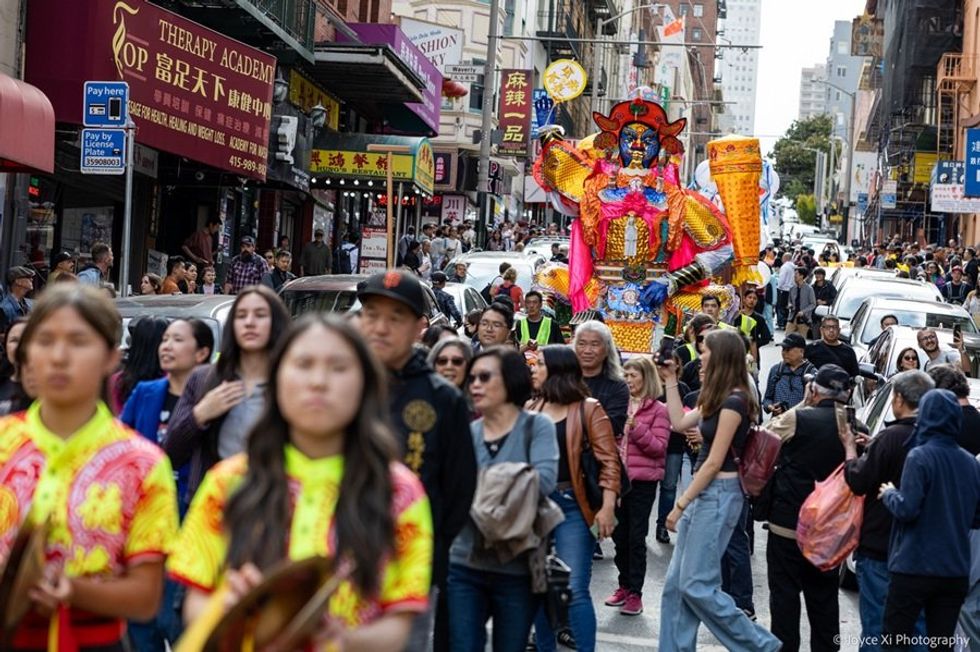 The Ghost King Procession(Joyce Xi)
“They will come for the Chinese opera, and then stay through punk and metal performances,” she says. “I think people are coming to terms with the fact that Chinatown can be really radical. It's a history of resistance and resilience. Everything we do is to layer on top of what we know Chinatown's personality is.”
“My experience was all about spirituality,” says Aguilar. “I did not expect to see mariachi bands or an altar. They are basically trying to bring communities together and celebrate death, not fear it. It is all about closure—making sure that we are giving closure to one's journey in this world.”
Indeed, says Leung, “this festival sets the premise for different ways to confront and release these emotions and come together and heal. We are asking attendees to think of demons they are facing in their personal lives. How do you confront them, and how do you fight back?”
//