

The San Francisco Bay Area is a hub for technology, innovation, and... groundbreaking coral research and reproduction?
It’s true.
Set in San Francisco’s Golden Gate Park, the California Academy of Sciences (55 Music Concourse Dr.) is well-known for its planetarium, natural history museum, and aquarium. But it’s also home to the Coral Regeneration Lab (CoRL), one of just a few aquarium facilities in the world where coral successfully reproduce.
CoRL began in 2018; and while it might seem odd to have coral reef scientists in San Francisco—a place without any nearby coral reefs—the region actually has something incredibly valuable to contribute to the fight to save imperiled reefs around the world.
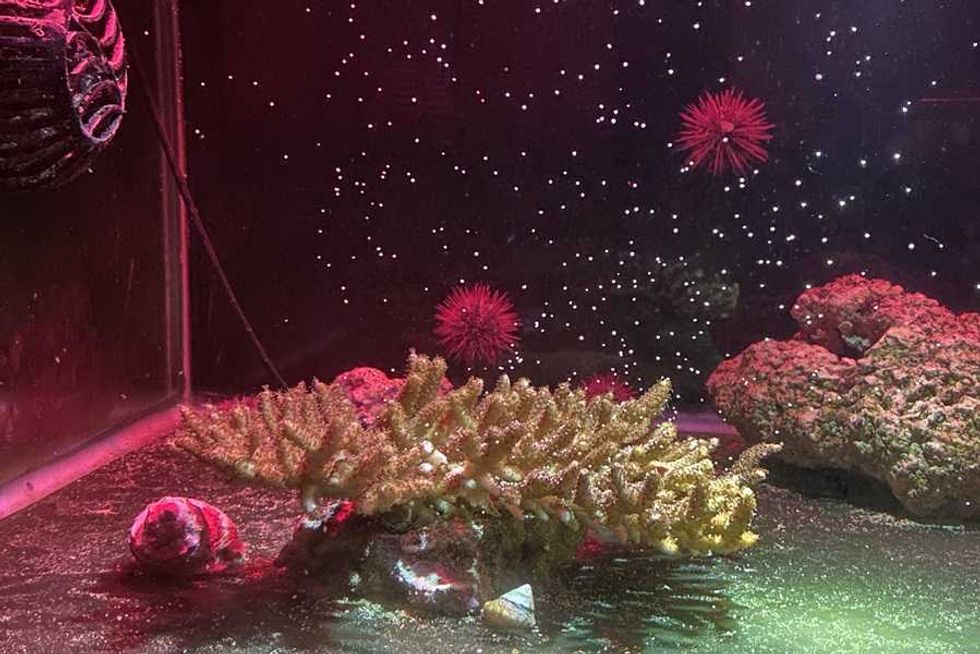 The coral regeneration lab at the Cal Academy(Courtesy of California Academy of Sciences)
“The real benefit is the incredible amount of academic and technical innovation and expertise that's housed in the Bay Area,” says Dr. Elora López-Nandam, senior research scientist at the Academy. “We have collaborators at Berkeley, we have collaborators at Stanford, we have collaborators at NASA Ames. It's really elevated the level of the coral science that we can do.”
Although coral reefs only account for one percent of the ocean surface, more than 25 percent of marine species live in them at some point in their life. Coral reefs play a dynamic role in ocean health, protect coastlines, and generate billions of dollars through global tourism and fisheries.
Since they can’t move to find a mate, most coral species are broadcast spawners, meaning colonies release thousands of sperm and eggs (about the size of a sesame seed) into the water column at the same time. Spawning events typically only happen once a year.
According to the National Oceanic and Atmospheric Administration (NOAA), in partnership with the International Coral Reef Initiative, bleaching-level heat stress has impacted 84 percent of the world’s coral reefs, making the odds of reproductive success even lower. When the population density of a coral reef drops, so do the chances of a sperm and an egg finding each other; the ocean is a large place.
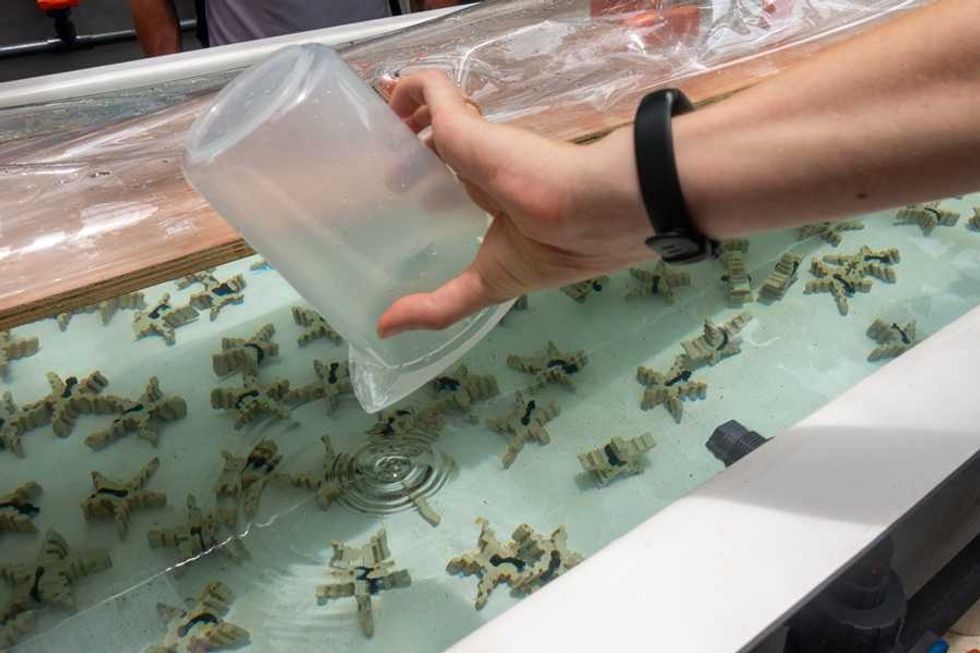 The coral rearing lab in Roatán(Courtesy of California Academy of Sciences)
While scientists don’t fully understand how the animals spawn (it’s linked with lunar and circadian cycles), they have gotten good at predicting when they’ll do it.
In the lab, Academy scientists replicate conditions to make their resident corals think they're living on the reef they came from, adjusting things like water temperature and lighting accordingly. Getting them to spawn in this setting requires constant monitoring that takes place behind the scenes, but the Academy’s public exhibits host corals of all types from around the world, including some that were born in San Francisco.
Model for Coral Reef Regeneration Around the World
After years of fine-tuning what works in the laboratory, a funding initiative enabled the female-led CoRL team to test what they’ve learned in the wild. In partnership with the Roatán Marine Park (RMP) in Honduras, the Academy opened the first land-based coral rearing facility in Central America.
Housed in a shipping container on the coast along the Mesoamerican Reef (the world’s second-largest barrier reef), the Coral Restoration Center Roatán (CRCR) is an incubator of sorts. Scientific divers can spend days in the water, patiently waiting for the corals to spawn. When the moment arrives, they collect the sperm and eggs )also called gametes) and transport them to the lab for fertilization.
“The likelihood that they’re actually going to be able to mate with each other is really low,” says López-Nandam. “So that's really the point of this human intervention, to collect those gametes. And really, we're doing IVF (in vitro fertilization) for corals.”
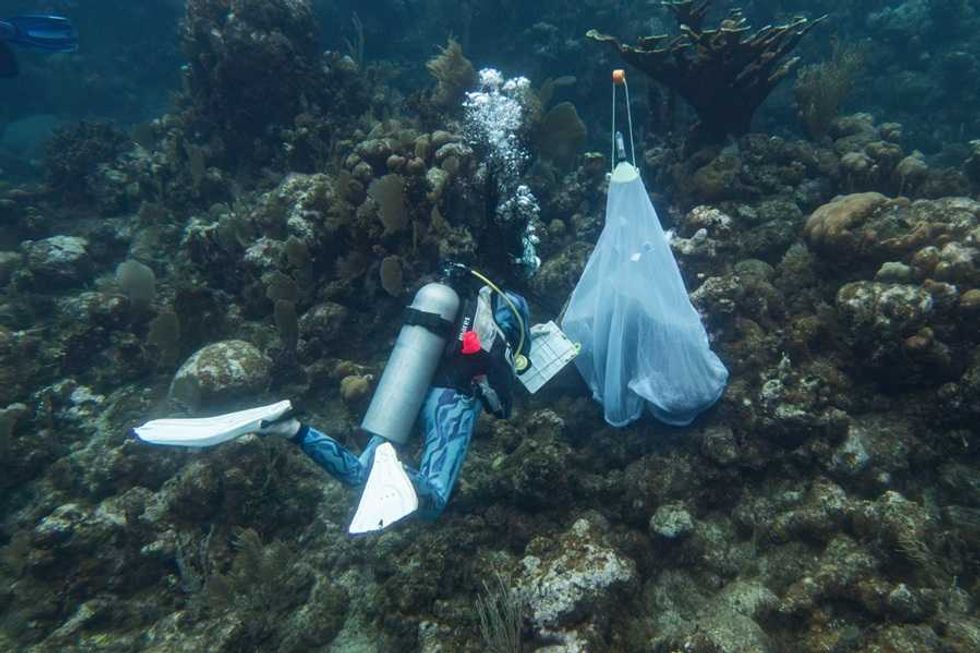 (Courtesy of California Academy of Sciences)
The first generation of corals fertilized in the CRCR spawned at sunset on June 22nd, 2025. In all, 3,000 baby corals were produced from the single wild spawning event in Roatán Marine Park. They’ve already been transferred back onto the reef.
It’s a huge accomplishment, offering a scalable model and inspiring hope for coral reef regeneration efforts around the world, but a great deal of work remains. Scientists will monitor the growth of the coral babies in the wild, but survival rates are historically low, hovering between one and five percent.
“Even with the knowledge that we might end up with just a few corals that are on the reef, I do feel pretty confident in saying those corals would not have been on the reef without our efforts—and that we're only going to get better at this with time,” says López-Nandam.
To Dive into Coral Conservation, Head to Roatán
Roatán Marine Park offers a day-long Coral Restoration Certification that combines classroom education with a dive to a coral nursery, where coral fragments grow on underwater structures that look something like trees, as well as a dive to an outplant site.
If you’re newer to diving, just getting in the water in Roatán is an incredible experience. West Bay Divers, a five-star PADI dive shop, offers guided snorkeling and scuba diving experiences, including gear and equipment. Ask for PADI Scuba Instructor Mekela Busbee: she’s a wealth of knowledge and an SF East Bay native.
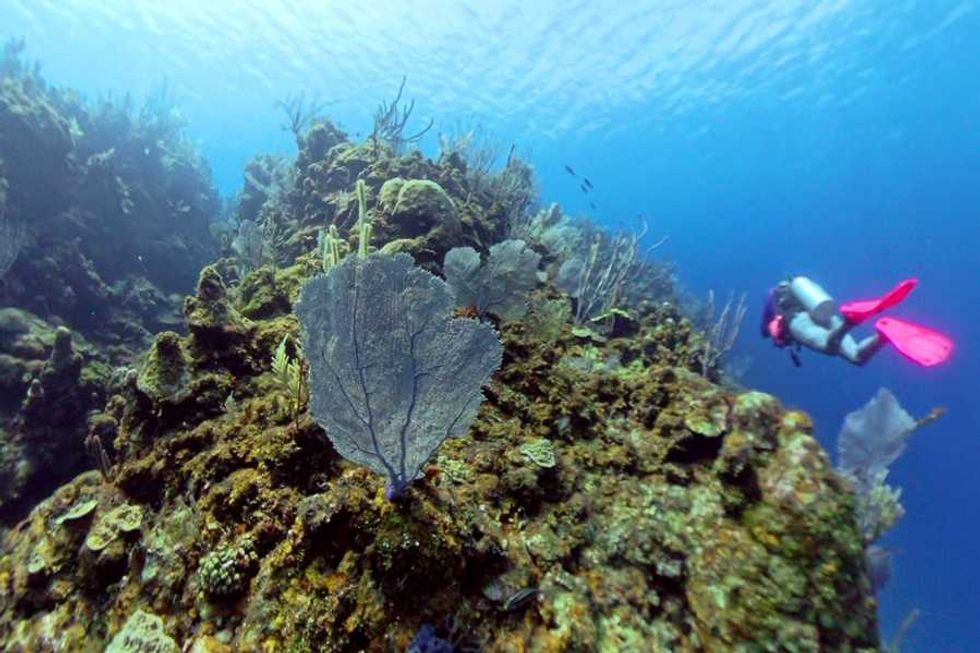 See the coral Cal Academy's team is working to reboot with West Bay Divers on Roatán.(Courtesy of West Bay Divers)
In addition to scuba certification programs, West Bay Divers offers a one-day Discover Scuba Diving introduction to the underwater world. Guests at the Kimpton Grand Roatán Resort and Spa—Roatán’s first and only branded hotel accommodations—can take advantage of scuba classes offered in the property’s beachside infinity pool.
There’s a lineup of eateries along West Bay Beach, including The Thirsty Turtle Beach Bar & Restaurant, a good spot for tacos, burgers, and pizza. For about $5 you can hop into a water taxi to Roatán’s West End, where you’ll find even more shops, bars, and eateries, including Rusty Fish, which features art made from recycled materials, and the waterfront Ginger’s Caribbean Grill, where you can pair a cool rum punch with a plethora of seafood dishes, tacos, burgers, and more. (If the specials include blackened lionfish tacos, don’t hesitate.)