
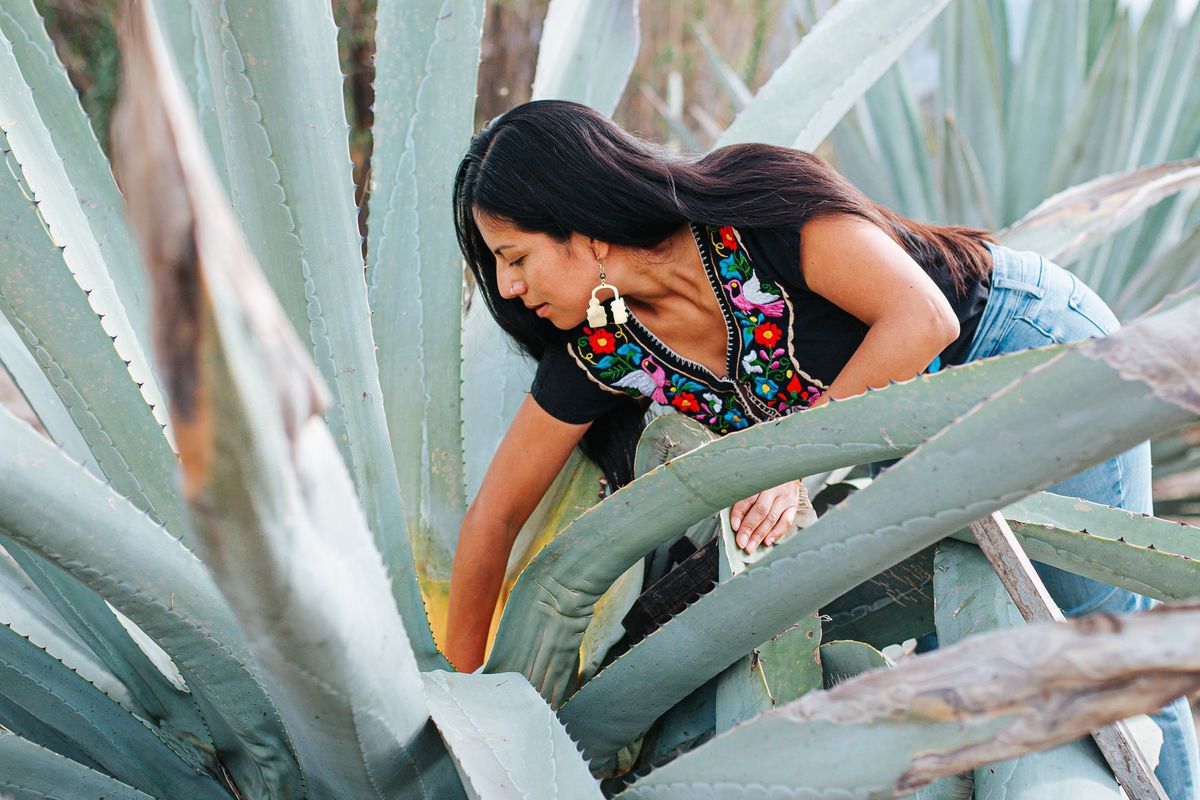
When Fabiola Santiago was born, Oaxaca’s mezcal industry was in trouble.
For decades—centuries even—her ancestors had worked with agave, planting, harvesting, and producing the traditional spirit in Santiago, Matatlán, the so-called “world capital of mezcal.” It wasn’t just a job; it was an essential part of their heritage and identity as members of the Indigenous Zapotec community.
But in the 1980s, an agave shortage, combined with increasing demand for tequila (and other local factors), tanked the industry on which their livelihoods depended. Santiago’s father, along with many of her relatives, had no choice but to migrate to the U.S. in search of work. Santiago, her mother, and her brother joined him a few years later in Los Angeles, where she lived the next 20-plus years of her life without the documentation necessary to emerge from the shadows.
In her L.A. community, the largest concentration of Oaxacan people outside of the Mexican state, traditions remained strong. So too did mezcal’s role in celebration, healing, and remembrance. The origins and craft of the spirit were things in which the Zapotec diaspora could take pride.
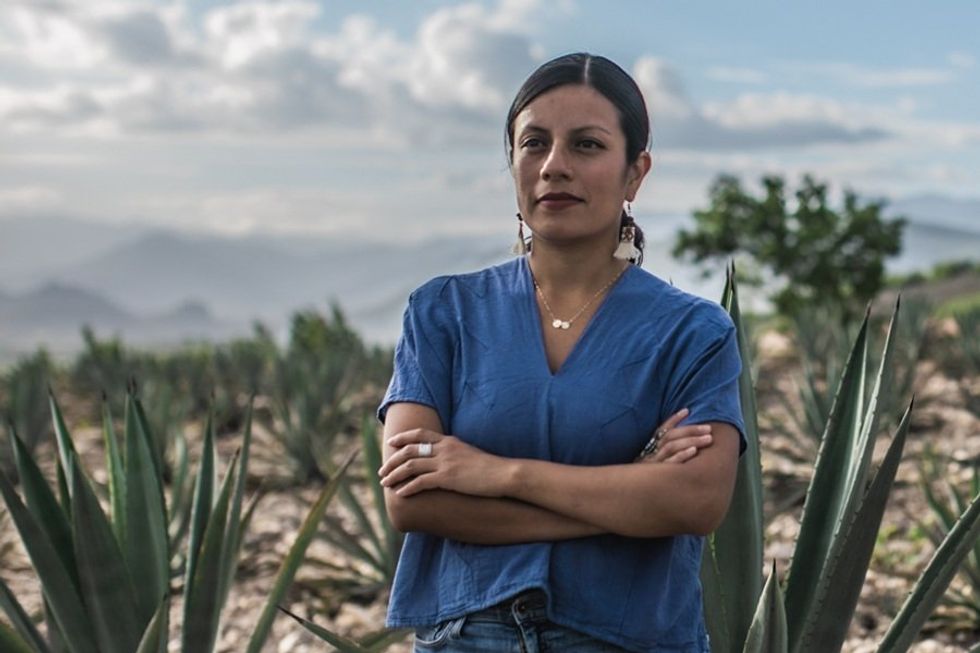 Fabiola Santiago, founder and executive director of Mi Oaxaca(Courtesy of Mi Oaxaca)
Back in those days, mezcal was somewhat rare in the U.S., infrequently found at bars or restaurants outside of the community. By the time Santiago applied to the La Cocina food incubator program in San Francisco in 2019, its popularity had exploded. But the mezcal industry that had grown up over the previous decades was nothing like what she knew. It had been co-opted by people and businesses who publicly celebrated mezcal’s Indigenous origins and identity while defrauding and mistreating those producing it behind the scenes.
“I realized that there was a lot of exploitation and theft,” says Santiago, who now operates the local nonprofit organization Mi Oaxaca. “People would buy in large quantities and never pay. At the same time, I was seeing all of this marketing for ancestral, traditional… It just upset me.”
Mexico has a long history of disenfranchising its native people. But in the state of Oaxaca, where there are 19 distinct cultural groups speaking 16 distinct languages, an insidious combination of neglect and abuse has consistently kept its people among the worst-educated and most impoverished in the country.
Santiago, who earned degrees in sociology and public health from UCLA, saw similar patterns playing out in the booming mezcal industry. With the help of La Cocina, she imagined building something sorely missing in the U.S.: a restaurant and mezcalería that would authentically represent Oaxacan culture. Instead, the plan was derailed by COVID. With her young child, Santiago returned to Oaxaca and immersed herself in learning about the cultural appropriation that had become normalized in the mezcal industry.
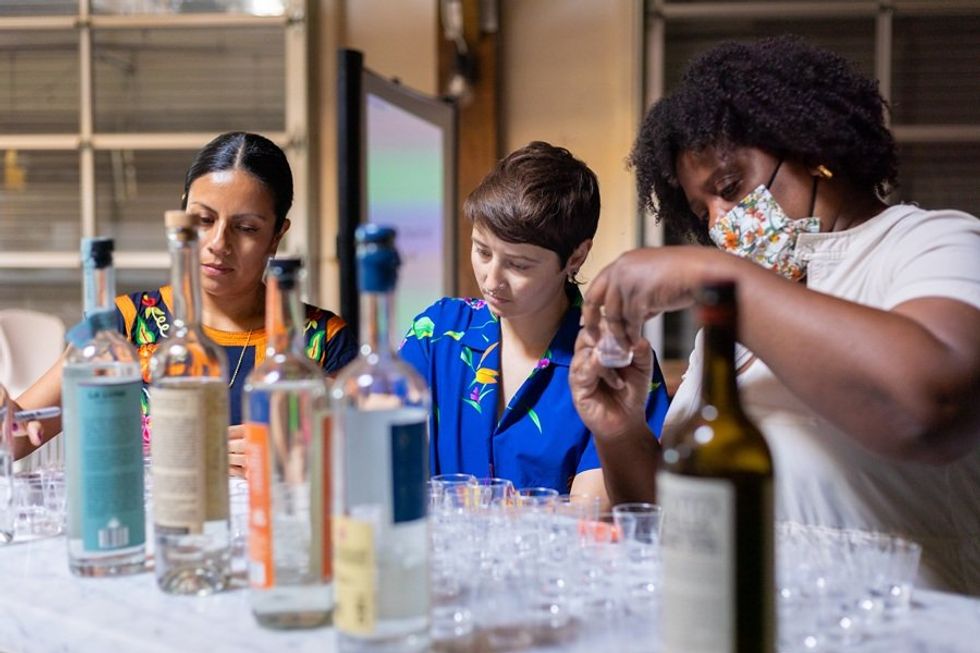 Working with mezcal at a Mi Oaxaca event(Courtesy of Mi Oaxaca)
“That’s when the idea of the nonprofit was born,” says Santiago. “There are 37 agave species endemic to Oaxaca; that’s the heart of where it comes from. That’s also true for corn, for chiles—there’s this [immense] culinary wealth but the ecosystem is fragile, and taking stuff out of there without permission has damaging effects.”
With a grant from the Mellon Foundation, Santiago officially founded Mi Oaxaca in 2022 with the goal of preserving her homeland’s Indigenous food and beverage cultures through narrative change, education, and cross-border collaboration. This year, the organization officially achieved 501(c)(3) nonprofit status.
“For us, it’s about cultural preservation, cultural reverence, giving credit where credit is due. Just saying this is a Zapotec food, this is a way we reclaim our heritage,” she explains. Acknowledging those who have traditionally grown and produced Oaxacan foodstuffs prevents them from being erased from the past, present, and future.
Among the programs spearheaded by Mi Oaxaca is a six-week online course entitled An Introduction to Mezcal Through Indigenous Worldviews, whose third session begins October 7th with a wide range of students.
“It’s generally people who want to have better knowledge of their consumerism,” says Santiago. “It could be people in the hospitality industry—we’ve had some journalists in the spirits world—or changemakers, people who are like, ‘I think I want to be more careful about how I drink mezcal.’”
“We also try to attract people in the Oaxacan diaspora, people like me who grew up here but their connection has been interrupted,” she continues. “Ninety percent of the mezcal in the U.S. comes from Oaxaca, and a lot of people don’t know what’s going on in their homeland. There are people living in the diaspora who want to reconnect.”
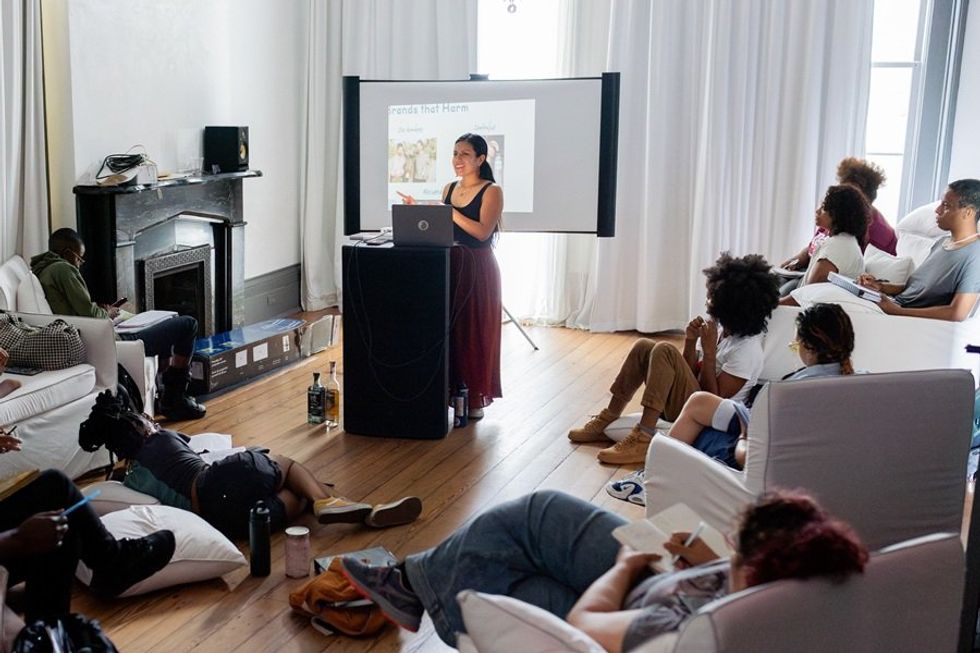 Fabiola Santiago teaches a workshop with Mi Oaxaca(Courtesy of Mi Oaxaca)
Later in October, Mi Oaxaca will host their first Gala-Guetza, an evening celebrating Indigenous Oaxacan culture whose name is a play on the Zapotec word guelaguetza, a “practice and a worldview of being of service and gift giving—it’s how we bond and create community,” she says.
The event, held at the Tradición Peruana Cultural Center in the Mission, will center Indigenous voices and experiences through an exhibit-style series featuring stories of identity, belonging, migration, foodways, and the impact of mezcal’s boom. There will also be a silent auction, mini mercado, Oaxacan bites, and, of course, mezcales to sip. Proceeds will go to support Mi Oaxaca’s next chapter and their continued efforts to build visibility for Indigenous Oaxacans and equity in the food and spirits industries.
“We have a long road ahead, but I’m hopeful,” says Santiago. “I think now is the time.”
// Gala-Guetza is Friday, October 17th from 6pm to 9pm at Tradición Peruana Cultural Center, 2815 23rd St. (Mission); get tickets, sign up for the Introduction to Mezcal course beginning October 7th, and learn more at mioaxaca.org