
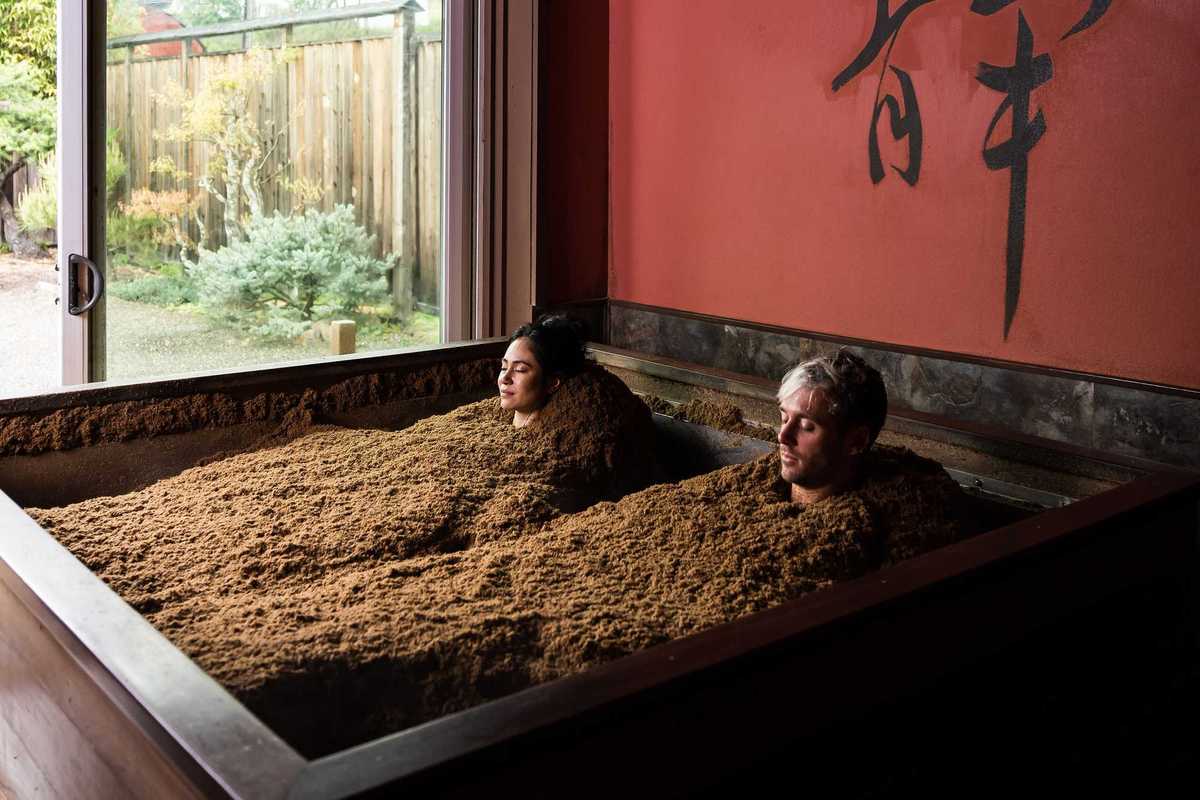
Under a mound of finely shredded cedar and cypress shavings, I’m buried to the neck.
It starts soft and pillowy—comforting—like climbing into a warm bath in which the water is velvety sawdust. Then comes the heat, ratcheting up with each passing minute.
Five minutes in, Josh, the bath attendant, pads quietly into the room and lays a cool, wet cloth on my forehead. “Would you like a sip of water,” he asks, proffering a cup with a straw. I say no.
Five minutes later, he’s back with a fresh cloth and another chance to hydrate. By now, I’m warm. Not warm, hot. Liquid drips down my cheeks and I can’t if it’s coming from the compress or my own pores. When Josh offers water again, I thirstily pull a draught from the straw. “You’re halfway through,” he says, and quietly slips away.
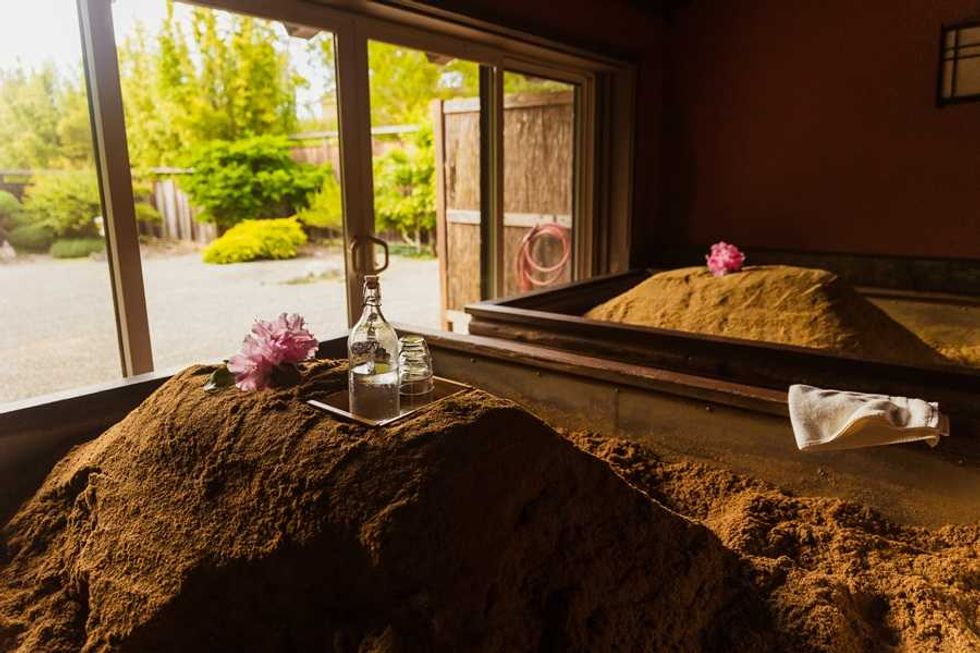 The cedar enzyme baths at Osmosis(Courtesy of Osmosis Day Spa Sanctuary)
For a long time, Osmosis Day Spa Sanctuary was the only place on the entire continent to offer a cedar enzyme bath. It’s more common in Japan. That’s where Osmosis founder Michael Stusser had his first experience with the therapy, one he calls life changing.
“I knew instantly that bringing this back to the States and building it within a Japanese garden nestled in the West Sonoma hills was my calling," he says.
Stusser built his first cedar enzyme bath on a friend’s ranch in Sebastopol in 1984. Four years later, he acquired five acres in nearby Freestone and began building his day spa with a beautiful Japanese garden complete with koi fish at its center.
The therapeutic treatment dates back to 1940s Hokkaido but its origins are much deeper, rooted in ancient traditions in which mushrooms, seaweed, herbs, fruits, and vegetables were harvested to produce salves and tonics. Hinoki (Japanese cypress) is a sacred tree in Japanese tradition. When combined with enzyme-rich rice bran and a fungal “biological catalyst,” it ferments, generating heat that can reach temperatures of up to 150 degrees Fahrenheit. Fortunately for me, says Josh in our pre-bath consultation over steaming cups in the serene tea garden, the microorganisms in the recently refreshed bath haven’t reached such feverish heights quite yet.
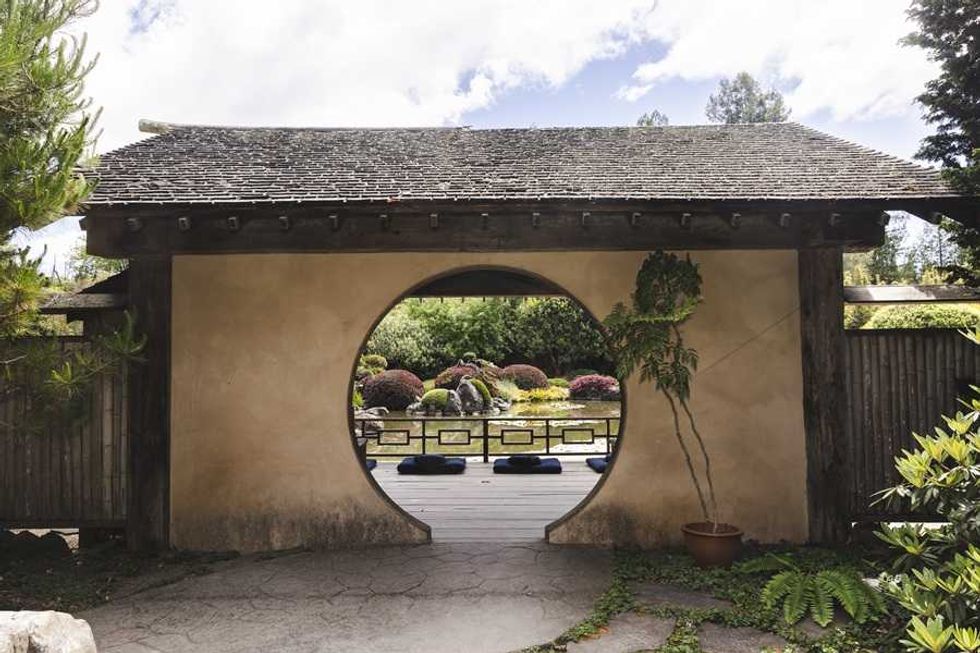 The meditation garden at Osmosis is ranked among the top Japanese gardens in the U.S.(Kelsey Joy)
There’s a broad range of benefits to be reaped from Osmosis’ cedar enzyme bath. It’s full of B-complex vitamins, which is good for the brain and nervous system, and beta-carotene, which promotes healthy skin. The heat and enzymes improve circulation and relieve joint and muscle pain. And when you finally step out of the bath, the exfoliating glove you use to brush the sawdust from your nooks and crannies gets your circulation pumping and leaves your skin glowing.
But I’m not there yet.
Five more minutes, and Josh is back. The heat is intense now, not 150 degrees but at least as warm as a sauna. One more fresh, icy cloth, one more sip of water. “Hang in there,” he tells me. The last five minutes are, indeed, a challenge. I spend them trying to focus on my breathing instead of on how easy it would be to extract a few limbs and cool down a few dozen degrees.
Some bathers don’t make it through the full 20 minutes. I’m wondering how much longer I can hold on when the door creaks open for the final time and Josh, the angel of cedar enzyme bathing, says it's time to get out.
That’s easier said than done, sweeping enough of the sawdust to the side in order to stand. Even then, it’s far from graceful, rising up fully naked and coated like fried chicken in a thin sheen of wood. The cedar enzyme bath house is, thankfully, private—though there’s enough space for four guests at a time if you come with a group (and you don’t have to strip down to your birthday suit if you don’t want to).
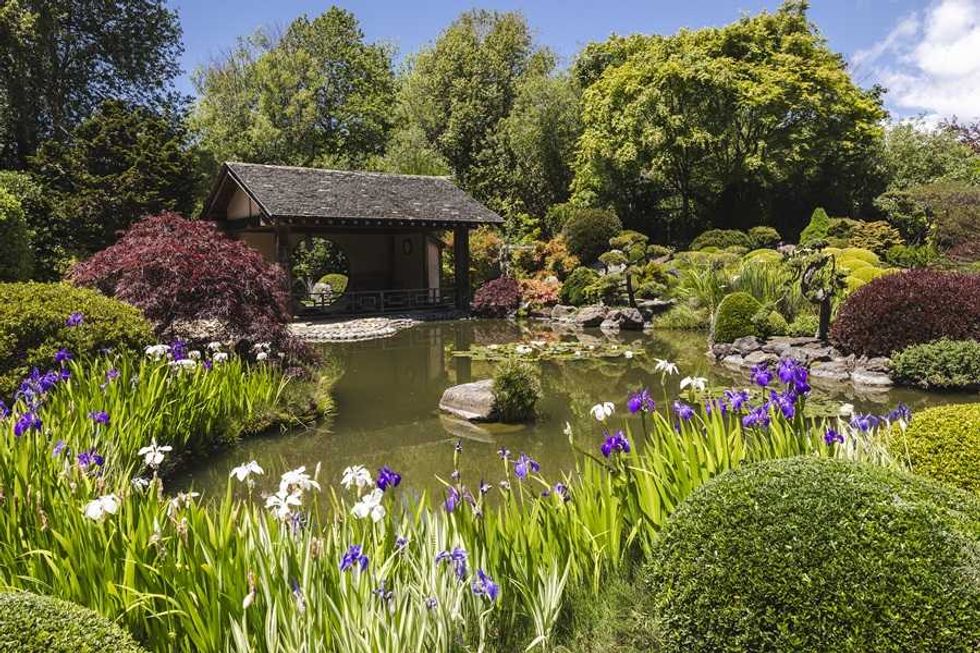 The meditation garden at Osmosis is ranked among the top Japanese gardens in the U.S.(Kelsey Joy)
After self-exfoliating on the outdoor deck, it's straight to the showers to wash off what remains. The cedar clings stubbornly but the endorphins are kicking in, sending calm coursing like electricity through my parasympathetic nervous system. Clean, dry, and once again berobed in a lightweight kimono, I float to the wooden deck in the meditation garden, a lovely labyrinth of water, vegetation, stones, and sand raked in perfect parallel-lined swirls which is ranked among the top Japanese gardens in the U.S.
Some experiences at Osmosis end here. Others continue with a 70-minute massage, an organic facial, or a 25-minute vibro-acoustic therapy session—a new offering designed to promote deep relaxation through a Vagus nerve-stimulating sound wave resonance therapy in a zero gravity lounger.
However you navigate through the sanctuary, any journey that begins with a cedar enzyme bath is, without question, the Bay Area’s most unique path to total body renewal.
// Cedar enzyme baths are $155/person for one, or $127.50/person for two or more; 209 Bohemian Hwy (Freestone), visit osmosis.com for more information and pricing on this and other services.
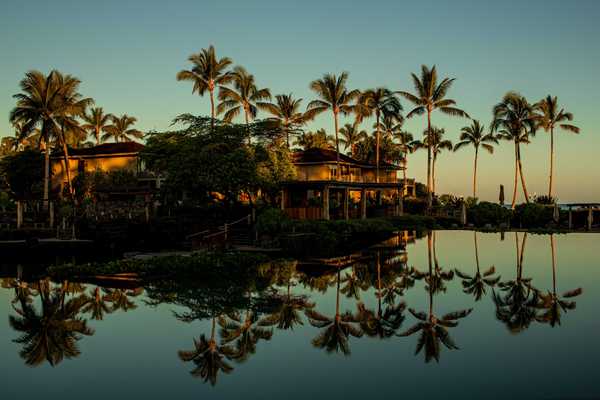
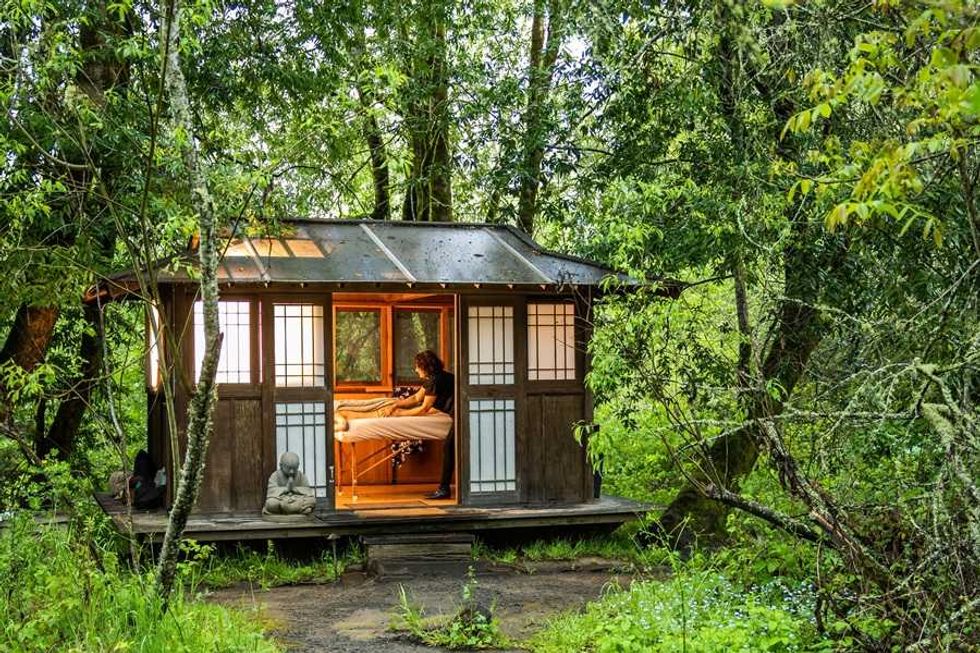 A secluded treatment pavilion at Osmosis Day Spa Sanctuary(Dave Collier)